

Every year, British businesses spend millions on trade show setups that often end up as landfill. With growing pressure to adopt sustainable practices, many UK marketing managers are searching for display options that outperform traditional american cardboard and disposable materials. Reusable display solutions offer a smarter way to cut costs and reduce waste, delivering flexible systems that elevate brand presence while supporting long-term environmental goals.
Table of Contents
- What Are Reusable Display Solutions?
- Types of Reusable Displays for Events
- Custom Features and Flexible Use Cases
- Lasting Benefits: Costs and Sustainability
- Comparing Reusable Vs. Disposable Displays
Key Takeaways
| Point | Details |
|---|---|
| Sustainability Advantage | Reusable display solutions significantly reduce waste and minimize carbon emissions compared to traditional disposable displays. |
| Cost Savings | Investing in reusable displays lowers long-term marketing expenses by eliminating repeated purchases of single-use materials. |
| Modular Design Flexibility | Modular systems allow for quick reconfiguration, enabling businesses to adapt displays to various event requirements without additional costs. |
| Customization Opportunities | Customizable features in reusable displays enhance marketing effectiveness, allowing for tailored presentations specific to industry needs. |
What Are Reusable Display Solutions?
Reusable display solutions represent an innovative approach to visual merchandising and trade show marketing that prioritizes sustainability, cost-effectiveness, and operational flexibility. Unlike traditional single-use displays made from disposable materials like cardboard, these advanced solutions are engineered for multiple deployments across different events and retail environments. Modular display technologies have transformed how businesses approach product presentation by offering durable, adaptable platforms that can be quickly reconfigured and reused.
These intelligent display systems typically feature robust construction using materials like reinforced plastics, aluminum frameworks, and high-performance textiles that withstand repeated setup and transportation. Modular design is a key characteristic, enabling marketing teams to adjust display configurations without purchasing entirely new equipment. For instance, a standard exhibition backdrop might transform from a full-height wall display to a smaller tabletop presentation simply by reconfiguring its modular components. This flexibility allows businesses to maximize their initial investment while maintaining a professional, consistent brand image across various marketing contexts.
Reusable display solutions offer significant advantages beyond mere adaptability. Research validates their potential to reduce solid waste and provide substantial cost savings compared to traditional disposable alternatives. By eliminating the need for repeated purchases of single-use displays, companies can dramatically reduce their marketing expenses and environmental footprint. These solutions support circular economy principles by minimizing material waste, reducing transportation emissions, and creating long-term value through sustainable design.
Pro tip: When selecting a reusable display solution, prioritize modular systems that offer at least three distinct configuration options to maximize your investment and adapt to different event requirements.
Types of Reusable Displays for Events
Reusable display solutions for events encompass a diverse range of innovative design options that cater to various marketing and promotional needs. Reusable display technologies span multiple categories, from portable systems to complex modular frameworks, each engineered to provide maximum flexibility and sustainability for businesses seeking efficient marketing solutions.
Modular Display Systems represent one of the most versatile categories of reusable event displays. These intelligent solutions typically include adjustable frame structures that can be rapidly reconfigured for different event spaces. Key variants include pop-up displays, tension fabric displays, and telescoping banner stands that allow marketing teams to create customized booth layouts without purchasing entirely new equipment. Aluminum frame systems with interchangeable graphic panels are particularly popular, enabling businesses to update visual messaging while maintaining a consistent structural foundation.
Another prominent category includes Portable Exhibition Displays, which are specifically designed for easy transportation and quick assembly. These displays often feature lightweight materials like high-performance textiles and collapsible frameworks that can be packed into compact carrying cases. Trade show professionals can choose from tabletop displays, banner stands, and freestanding structures that provide professional presentation capabilities without the logistical challenges of traditional heavy display equipment. Some advanced portable displays even incorporate digital elements like integrated tablet mounts or LED lighting systems, further enhancing their versatility and visual impact.
Pro tip: When selecting reusable displays, prioritize systems with universal mounting capabilities and interchangeable graphic panels to maximize long-term flexibility and cost-effectiveness.
The following table highlights key features of modular display systems and their business benefits:
| Feature | Description | Business Benefit |
|---|---|---|
| Modular Components | Parts can be rearranged for various setups | Supports diverse event requirements |
| Interchangeable Graphics | Visual panels are easily swapped | Enables frequent brand updates |
| Lightweight Materials | Uses high-performance textiles and aluminum | Simplifies transport, lowers shipping costs |
| Universal Mounting | Compatible with multiple accessories | Integrates digital and physical media |
| Tool-Free Assembly | Quick setup without specialized tools | Saves time and reduces labor needs |
Custom Features and Flexible Use Cases
Reusable display solutions offer unprecedented customization capabilities that transform traditional marketing approaches. Advanced display technologies enable businesses to create highly adaptable presentation systems that can seamlessly transition between diverse promotional environments. These intelligent design solutions incorporate modular features like adjustable shelving, foldable structural components, and interchangeable branding surfaces that provide marketing teams unprecedented flexibility.
Customization Options represent a critical advantage of modern reusable displays. Businesses can now configure display units with specialized features tailored to specific industry requirements. For example, retail environments might utilize displays with integrated product shelving and adjustable height mechanisms, while technology conferences could implement displays with built-in digital mounting points for tablets or interactive screens. Modular display frameworks support multiple load capacities and brand configurations, enabling seamless transitions between different marketing scenarios without requiring complete equipment replacement.
The versatility of these display solutions extends beyond physical adaptability to include sophisticated tracking and maintenance systems. Innovative pooling and inventory management technologies allow organizations to monitor display unit locations, track usage cycles, and implement proactive maintenance protocols. This approach transforms display equipment from a single-purpose marketing tool into a strategic asset that can be efficiently managed across multiple events, locations, and organizational departments. Such systems not only reduce waste but also provide granular insights into marketing resource utilization and performance.
Pro tip: When designing custom reusable displays, prioritize universal mounting points and standardized connection interfaces to maximize long-term adaptability and potential future upgrades.
Lasting Benefits: Costs and Sustainability
Sustainable display solutions represent a strategic investment that delivers substantial financial and environmental advantages for businesses across multiple sectors. By replacing traditional single-use marketing materials with durable, reusable alternatives, organizations can significantly reduce long-term operational expenses while simultaneously minimizing their ecological footprint. These intelligent display systems transform marketing infrastructure from a recurring expense into a sustainable, cost-effective asset.
The Economic Advantages of reusable displays extend far beyond initial procurement costs. Traditional cardboard and disposable display materials require frequent replacement, creating ongoing expenses that quickly accumulate. In contrast, reusable displays constructed from high-performance materials like reinforced plastics and aluminum frameworks can withstand hundreds of deployment cycles. Research validates their potential to reduce waste and operational expenses by eliminating repeated purchases and minimizing waste disposal costs. Marketing teams can expect significant cumulative savings through reduced material consumption, lower storage requirements, and decreased transportation expenses associated with lightweight, modular design systems.

Sustainability represents another critical dimension of reusable display technologies. By dramatically reducing solid waste generation and lowering carbon emissions, these innovative solutions directly support corporate environmental responsibility goals. Advanced pooling and redistribution systems enable organizations to maximize resource efficiency, with display units being systematically tracked, maintained, and repurposed across multiple events and marketing campaigns. This approach transforms traditional linear consumption models into circular economy principles, where marketing equipment is viewed as a long-term strategic asset rather than a disposable commodity. The environmental impact can be profound, with some studies suggesting that reusable displays can reduce waste generation by up to 80% compared to traditional single-use alternatives.
Pro tip: Calculate your potential cost savings by comparing the lifetime usage of reusable displays against traditional single-use marketing materials, factoring in replacement frequency, transportation, and disposal expenses.
Comparing Reusable vs. Disposable Displays
Comparative display technologies reveal significant advantages of reusable displays over traditional disposable alternatives. While single-use cardboard displays have long been the standard in retail and event marketing, innovative reusable solutions are fundamentally transforming how businesses approach product presentation and brand visibility. The core distinction lies not just in material composition, but in comprehensive performance across environmental, economic, and operational dimensions.
From an Operational Efficiency perspective, reusable displays demonstrate substantial superiority. Disposable cardboard displays require constant replacement, creating ongoing expenses and logistical challenges. In contrast, reusable displays constructed from durable materials like reinforced plastics and aluminum frameworks can withstand hundreds of deployment cycles. Emerging regulatory frameworks are increasingly favoring reusable solutions, with some European Union packaging regulations explicitly incentivizing businesses to adopt more sustainable display technologies. These systems not only reduce waste but also provide consistent product visibility and brand impact across multiple events and marketing campaigns.
The environmental implications of choosing reusable over disposable displays are profound. Traditional cardboard displays contribute significantly to waste generation, with most ending up in landfills after a single use. Reusable displays, by design, dramatically reduce carbon emissions and solid waste. Advanced pooling and redistribution systems enable organizations to track, maintain, and repurpose display units across different marketing contexts. Some studies suggest that businesses can reduce waste generation by up to 80% and lower greenhouse gas emissions substantially by transitioning to reusable display technologies. This approach transforms marketing infrastructure from a disposable expense into a strategic, sustainable asset that aligns with corporate environmental responsibility goals.
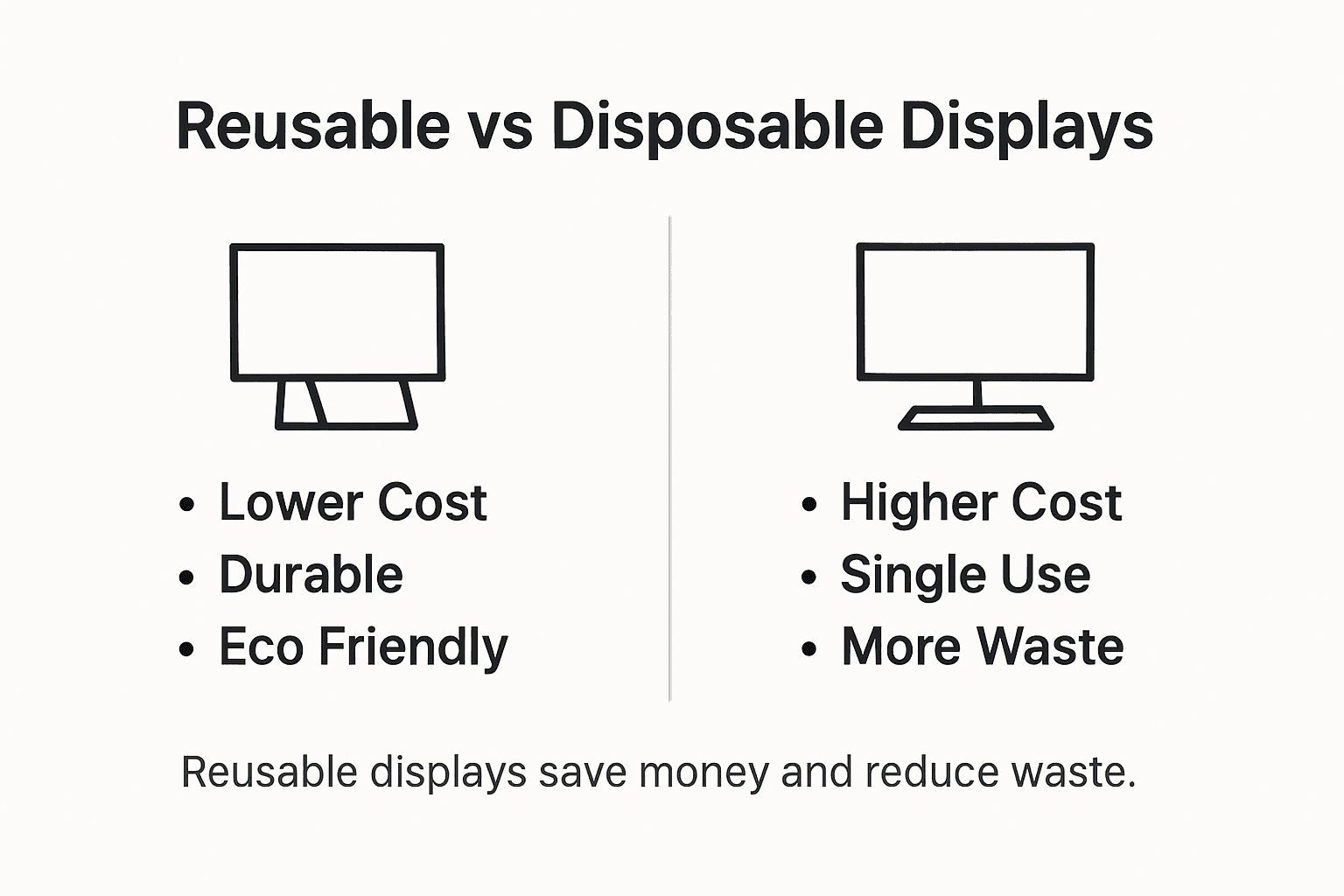
Here’s a summary of key differences between reusable and disposable display solutions:
| Aspect | Reusable Displays | Disposable Displays |
|---|---|---|
| Typical Material | Reinforced plastics, aluminum, textiles | Cardboard, paper-based |
| Usage Frequency | Multiple deployments | Single-use only |
| Initial Cost | Higher upfront investment | Low individual cost |
| Long-Term Expenses | Lower over product life | Higher due to frequent replacement |
| Environmental Impact | Reduced waste, lower carbon footprint | High waste, increased emissions |
| Maintenance | Requires tracking and upkeep | Minimal, often discarded |
| Flexibility | Modular, adapts to different events | Limited, not reconfigurable |
Pro tip: Conduct a comprehensive lifecycle cost analysis comparing your current disposable display expenses against potential reusable display investments, factoring in replacement frequency, transportation, storage, and waste disposal costs.
Maximize Your Event Impact with Sustainable Reusable Displays
The challenge of balancing cost savings with eco-friendly solutions is front and center in today’s marketing efforts. This article highlights how reusable displays offer modular design, reduced waste, and long-term cost-effectiveness—essential for businesses aiming to enhance brand visibility while supporting sustainability goals. If you are looking to cut down expenses on single-use materials and prefer adaptable display systems, exploring reusable options could transform your event strategy.
At Live Displays, we understand the importance of vibrant, durable promotional products that deliver lasting value without compromising the planet. Our selection includes versatile products like Roll Up Banner Stands and sturdy Gazebos designed with quality materials that support repeated use and easy customization. These solutions empower you to reduce waste, streamline setup, and maintain professional brand presence at every event.
Explore our range today to invest in reusable display solutions that align with your sustainability objectives and budget priorities. Visit Live Displays now to request a free quote or browse our collections and discover how smart display choices can elevate your events while lowering your environmental footprint.
Frequently Asked Questions
What are the benefits of using reusable displays over disposable displays?
Reusable displays offer significant advantages, including lower long-term costs, reduced waste generation, and a smaller environmental footprint. They are made from durable materials that can withstand multiple deployments, making them cost-effective over time.
How can reusable displays save money for businesses?
By investing in reusable displays, businesses can eliminate the costs associated with frequently replacing single-use displays. This includes savings on materials, storage, and transportation, leading to substantial cumulative savings over the display’s lifecycle.
What are modular display systems and why are they important?
Modular display systems are versatile setups that can be reconfigured for different events and marketing needs. Their importance lies in their adaptability, allowing businesses to use the same display components in various configurations without the need for new equipment.
What is the environmental impact of switching from disposable to reusable displays?
Switching to reusable displays can significantly reduce solid waste and lower carbon emissions. Some studies suggest that businesses can decrease waste generation by up to 80% by adopting reusable display technologies, aligning with sustainability goals.
Share:
Display Solutions: Choosing What Boosts Event Impact
Trade Show Marketing Explained: Maximizing Event Impact