
Over half of UK SMEs report struggling to stand out amid the crowd at trade shows packed with eye-catching American brands. Event coordinators and marketing professionals know that visual impact drives memorable interactions and sales, yet not all display solutions deliver the engagement British exhibitors need. Discover how tailored display technologies and creative promotional materials transform visibility, attract more visitors, and secure a competitive edge on the event floor.
Table of Contents
- What Are Display Solutions for Events
- Types of Display Solutions Explained
- Key Features: Customization and Technology
- Comparing Costs and Setup Efficiency
- Common Mistakes and What to Avoid
Key Takeaways
| Point | Details |
|---|---|
| Diverse Display Solutions | Event display solutions include both digital and physical options to cater to varied communication needs and enhance audience engagement. |
| Customization and Technology | Modern display technologies offer extensive customization, allowing tailored visual experiences to meet specific event objectives. |
| Cost-Effective Approaches | Rental options for display technologies can be budget-friendly, reducing upfront investment while ensuring high-quality visual outputs. |
| Avoiding Common Mistakes | Thorough planning and technical assessments are essential in preventing display selection errors that can adversely affect event success. |
What Are Display Solutions for Events
Display solutions for events are specialized visual communication tools designed to capture audience attention and enhance brand messaging across various professional environments. These strategic installations range from digital displays to physical promotional materials that transform ordinary spaces into engaging interactive experiences. By leveraging advanced display technology, event coordinators can create immersive environments that communicate complex information quickly and memorably.
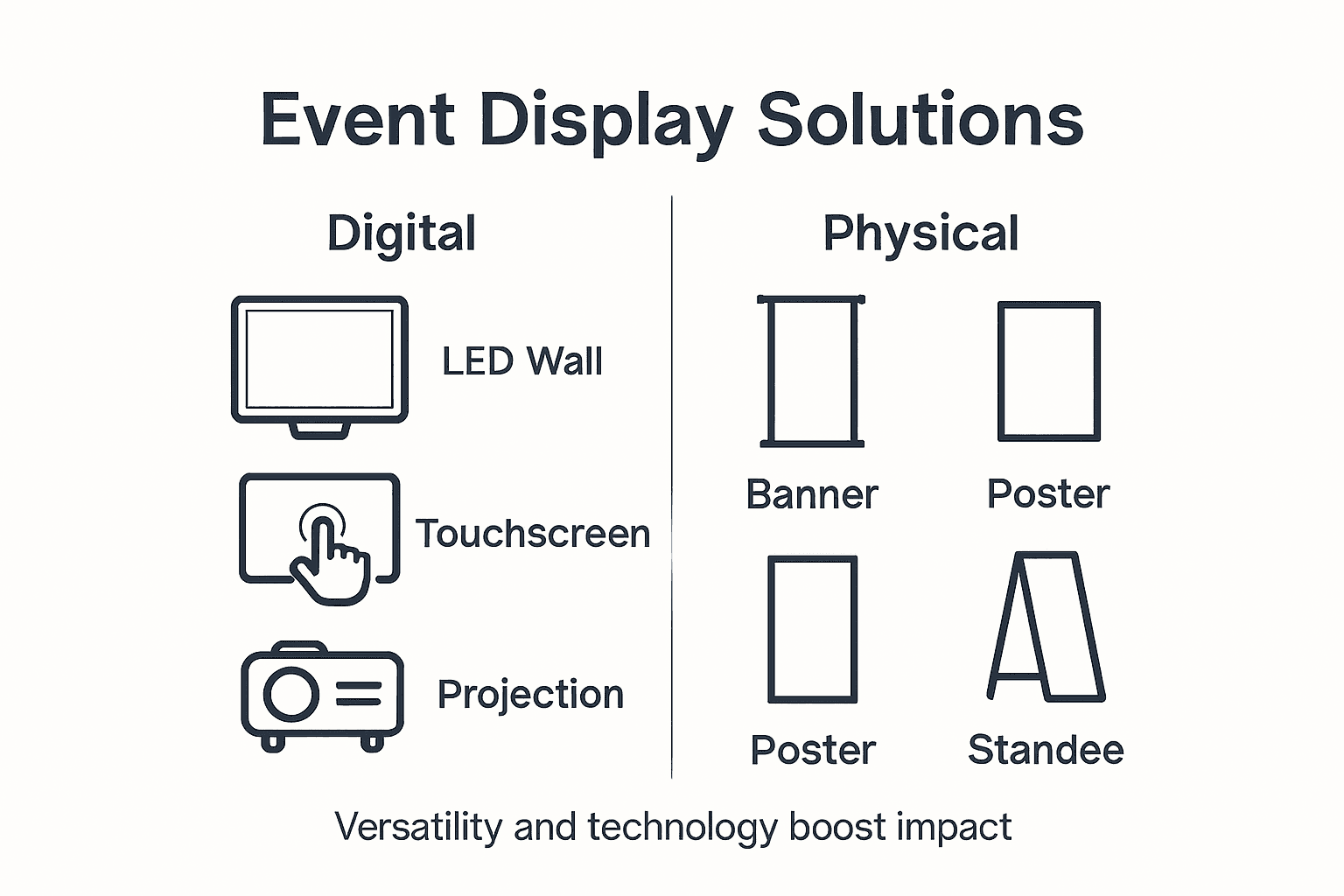
Technical display solutions typically encompass multiple categories, including digital and physical platforms. Digital displays such as LED video walls, interactive touchscreens, and projection systems offer dynamic content delivery capabilities. Physical displays like branded gazebos, rollup banners, flags, and custom tablecloths provide tangible brand representation. These solutions serve critical functions:
- Attracting potential client attention
- Communicating brand messages visually
- Creating memorable event experiences
- Supporting marketing and sales objectives
- Facilitating information exchange
The core purpose of display solutions extends beyond mere visual aesthetics. They represent strategic communication tools that transform passive spaces into active engagement platforms. Interactive display technologies enable real-time audience interaction, allowing event coordinators to collect data, provide personalized experiences, and create lasting impressions that extend far beyond traditional static presentation methods.
Pro tip: When selecting display solutions, prioritize versatility and alignment with your specific event goals to maximize visual impact and audience engagement.
Types of Display Solutions Explained
Display solutions encompass a diverse range of technologies designed to meet specific event communication needs, with LED display technologies offering remarkable versatility for modern event professionals. These solutions can be broadly categorized into digital and physical display types, each offering unique advantages for engaging audience experiences.
Digital Display Solutions represent a sophisticated category of visual communication tools. These include:
- LED Video Walls
- Interactive Touchscreens
- Projection Systems
- Transparent LED Screens
- Flexible LED Panels
Each digital solution provides distinct capabilities for transforming event spaces. LED video walls create immersive visual experiences, while interactive touchscreens enable direct audience participation. Transparent LED screens offer cutting-edge design possibilities by allowing partial visibility through the display, making them ideal for high-end corporate and retail event environments.
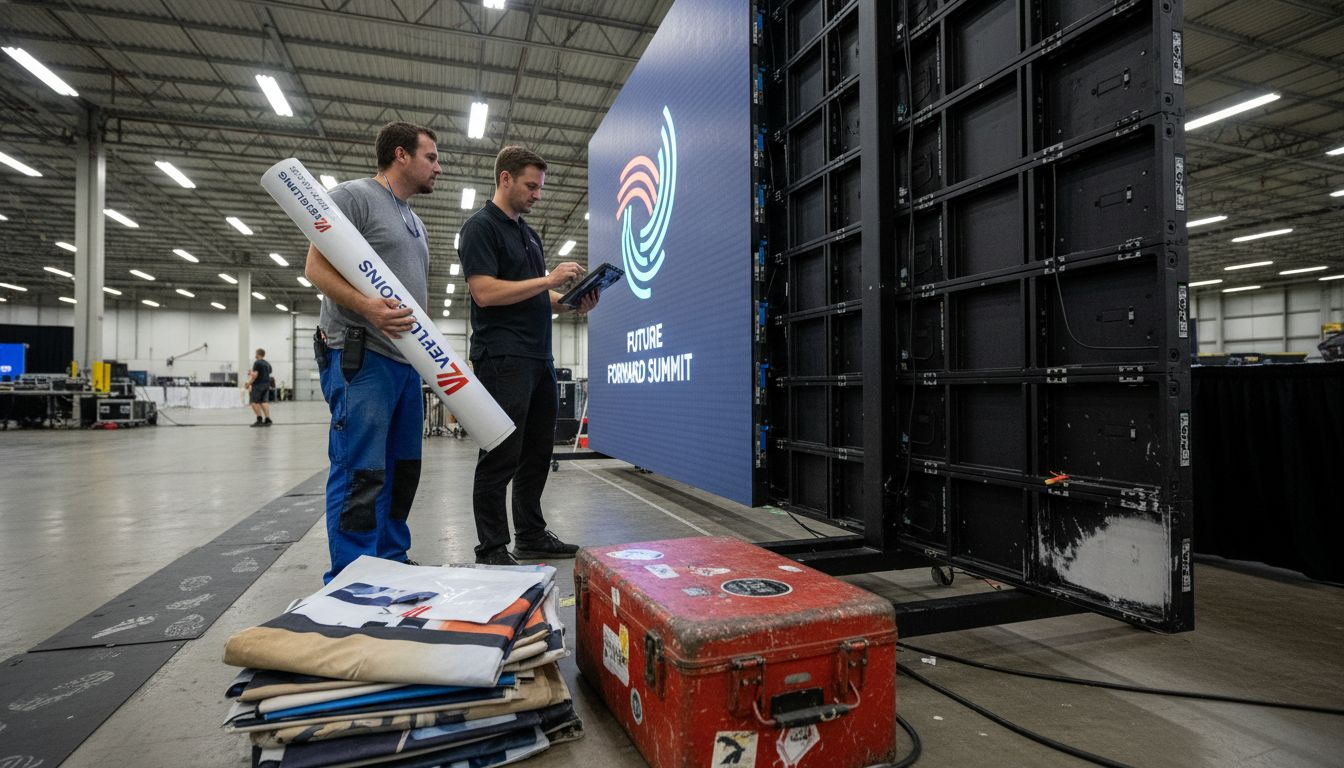
Physical display solutions complement digital technologies by providing tangible branding opportunities. These include branded gazebos, custom banners, flags, and modular display systems that can be quickly assembled and tailored to specific event requirements. Modular display configurations allow event coordinators to create flexible, adaptable environments that can be reconfigured to suit different spatial constraints and branding objectives.
Here is a summary comparing digital and physical display solutions for events:
| Aspect | Digital Displays | Physical Displays |
|---|---|---|
| Content Flexibility | Dynamic and real-time changes | Static, pre-printed materials |
| Interactivity | Touch and sensor-enabled | Usually non-interactive |
| Setup Complexity | Requires power and configuration | Quick assembly, minimal tools |
| Branding Potential | Animated logos and video | Visual impact through structure |
| Adaptability | Adjusts to audience engagement | Fixed shape and graphics |
Pro tip: Always conduct a site survey and technical assessment before selecting display solutions to ensure compatibility with your venue’s technical infrastructure and aesthetic requirements.
Key Features: Customization and Technology
Display solutions have evolved dramatically, with display customization technologies offering unprecedented flexibility for event professionals. Modern display systems provide comprehensive options to tailor visual experiences precisely to specific event requirements, transforming how organizations communicate and engage audiences.
Customization Features represent the core strength of contemporary display technologies. Event coordinators can now access a wide range of adaptive capabilities:
- Screen Size Modifications
- Resolution Adjustments
- Layout Reconfiguration
- Content Dynamic Scaling
- Interactive Interface Personalization
Technical specifications play a critical role in display effectiveness. Panel Technologies like TN and IPS offer diverse performance characteristics, with options such as optical bonding to enhance visibility in challenging lighting conditions. These advanced features enable displays to perform optimally across different environmental contexts, from bright conference halls to dimly lit presentation spaces.
Adaptive display solutions now integrate sophisticated technologies that go beyond traditional visual presentation. Display system configurations can be engineered to meet specific spatial and audience engagement needs, ranging from compact, ruggedized modules to expansive, high-brightness panels. This technological versatility allows event professionals to create immersive, responsive environments that dynamically adjust to audience interactions and environmental requirements.
Pro tip: Always request detailed technical specifications and conduct comprehensive compatibility testing before finalizing your display solution to ensure seamless integration and optimal performance.
Comparing Costs and Setup Efficiency
Event display solutions require strategic financial planning, with rental LED screen options emerging as a cost-effective alternative to traditional purchasing models. These innovative solutions dramatically reduce upfront capital investment while providing high-performance visual technologies that adapt seamlessly to various event environments.
Cost Considerations for display solutions involve multiple critical factors:
- Upfront Equipment Investment
- Rental vs. Purchase Expenses
- Transportation and Logistics
- Setup and Breakdown Labor
- Maintenance and Technical Support
- Energy Consumption Rates
Modern display technologies prioritize setup efficiency, with modular designs enabling rapid deployment and configuration. Rental systems particularly excel in this domain, offering plug-and-play solutions that minimize technical complexity and reduce overall event preparation time. Display system configurations now integrate advanced features like quick-connect technologies and standardized mounting systems, allowing event professionals to dramatically streamline their technical setup processes.
The financial landscape of event displays has transformed, moving beyond simple purchase decisions to more nuanced, strategic resource allocation. Event coordinators can now access scalable solutions that provide maximum visual impact while maintaining budgetary flexibility. This approach allows organizations to invest intelligently, selecting display technologies that offer optimal performance without unnecessary financial strain.
Pro tip: Request comprehensive cost comparisons and total ownership calculations, including rental, transportation, setup, and potential future upgrade expenses, to make the most informed display investment decision.
Common Mistakes and What to Avoid
Event professionals must navigate a complex landscape of display technology challenges, with critical LED display selection errors potentially undermining event success and wasting valuable resources. Understanding these potential pitfalls is crucial for making informed decisions that maximize visual impact and technological performance.
Common Display Selection Mistakes include:
The table below highlights potential consequences of common display selection mistakes:
| Mistake | Possible Consequence | Event Impact |
|---|---|---|
| Mismatched pixel pitch | Blurry or unreadable visuals | Reduced attendee engagement |
| Ignoring environmental compatibility | Overheating or poor visibility | System failures, attendee discomfort |
| Poor thermal management | Shortened display lifespan | Increased replacement costs |
| Inadequate power assessment | Unexpected device shutdowns | Interruptions during presentations |
| Overlooking integration requirements | Unresponsive or unsupported systems | Difficult content management |
- Mismatching Pixel Pitch to Viewing Distance
- Neglecting Environmental Compatibility
- Overlooking Thermal Management Requirements
- Ignoring Control System Integration
- Underestimating Power and Stability Needs
- Failing to Conduct Comprehensive Technical Assessments
Technical compatibility represents a significant challenge for many event coordinators. Displays must be precisely matched to specific environmental conditions, considering factors like ambient light, temperature variations, and spatial constraints. Display system configurations require careful evaluation of technical specifications to ensure seamless performance across different event scenarios.
Most mistakes stem from inadequate planning and a superficial understanding of display technology complexities. Event professionals should prioritize comprehensive technical consultations, conduct thorough site assessments, and develop detailed technical specifications before selecting any display solution. This approach minimizes risks and ensures that chosen technologies align perfectly with event objectives and venue requirements.
Pro tip: Always request detailed technical documentation and conduct a comprehensive pre-event technology compatibility test to identify and mitigate potential display performance issues before your event.
Elevate Your Event Impact with Tailored Display Solutions
Struggling to choose the right display solutions that truly boost your event presence The article highlights the challenges of matching display technology to event goals and venue specifics while avoiding common pitfalls like poor setup or mismatched visuals. Your goal is to capture attention and communicate your brand effectively with customizable, high-quality displays that offer both visual impact and practical ease of use.
At Live Displays you find a comprehensive range of premium promotional products designed to solve these exact problems. From versatile gazebos that provide instant branded shelter to eye-catching roll up banner stands perfect for dynamic messaging every piece is crafted with advanced printing technology for vivid colors and sharp detail. Our user-friendly website https://live-displays.co.uk delivers quick quotes free artwork proofs and bespoke customization to ensure your displays perfectly align with your event strategy.
Discover the ease of selecting the ideal display solutions that avoid common mistakes and maximize audience engagement Visit Live Displays now to explore our expertly designed collections and take the first step toward transforming your next event with customized displays that truly stand out. Order today and make your event unforgettable.
Frequently Asked Questions
What are the primary types of display solutions for events?
Display solutions for events can be categorized into digital and physical types. Digital solutions include LED video walls, interactive touchscreens, and projection systems, while physical solutions encompass branded gazebos, rollup banners, and flags.
How can I maximize audience engagement with display technologies?
To maximize engagement, choose versatile display solutions that offer interactivity, such as touchscreens. Additionally, prioritize dynamic and visually appealing content that resonates with your event goals and audience interests.
What should I consider when selecting display solutions for my event?
Consider factors such as content flexibility, interactivity, setup complexity, and technical compatibility with your venue. Conducting a site survey and assessing your specific event objectives will also help in making an informed decision.
What are common mistakes to avoid when choosing display technologies?
Common mistakes include mismatching pixel pitch to viewing distance, neglecting environmental compatibility, and overlooking power assessments. Ensuring thorough planning and consultation will help mitigate these issues.
Share:
Lead Generation with Displays: Boosting Event ROI
Reusable Displays: Cost Savings and Eco Impact