
Trade show floors are competitive arenas where even an american brand can struggle to stand out. For Marketing Managers at British SMEs, grabbing attention is not enough—real success means converting that interest into actual business leads. With interactive displays driving up to 60 percent more engagement compared to static booths, this guide outlines how custom display solutions transform casual event interactions into measurable growth.
Table of Contents
- What Is Lead Generation with Displays?
- Types of Displays for Event Lead Capture
- How Display Features Drive Engagement
- Interactive and Digital Display Trends 2025
- Costs, ROI, and Common Mistakes
- Optimizing Displays for Post-Event Follow-Up
Key Takeaways
| Point | Details |
|---|---|
| Strategic Planning | Effective lead generation requires thoughtful design and execution of displays that align with brand identity and engage target audiences. |
| Interactive Technologies | Utilizing interactive elements, such as touchscreen panels and digital kiosks, enhances data collection and engagement, leading to higher-quality leads. |
| Post-Event Follow-Up | Implementing structured follow-up strategies, including lead segmentation and personalized communication, is essential for converting initial interactions into business opportunities. |
| Emerging Trends | Staying updated with display technology trends, such as flexible OLED and interactive digital signage, can significantly enhance engagement and lead capture capabilities at events. |
What Is Lead Generation with Displays?
Lead generation with displays represents a strategic approach for businesses to capture potential customer information during events, trade shows, and conferences. At its core, this method involves using visually compelling promotional displays to attract, engage, and collect contact details from prospective clients. Lead generation strategies combine sales and marketing techniques to transform event interactions into valuable business opportunities.
The process typically involves creating interactive and visually appealing display setups that draw attendees’ attention and encourage meaningful conversations. Marketing teams design these displays with specific goals: capturing contact information, sparking interest in products or services, and initiating potential sales pipelines. By integrating eye-catching graphics, strategic messaging, and interactive elements, businesses can transform passive event participation into active lead acquisition.
Successful lead generation with displays requires thoughtful planning and execution. This means selecting display designs that reflect brand identity, creating compelling calls to action, and implementing efficient data collection mechanisms. Engagement techniques might include interactive touchscreens, product demonstrations, digital survey stations, or gamified experiences that motivate attendees to share their contact details. Targeted display strategies help businesses identify high-quality business leads and drive meaningful conversions beyond traditional marketing approaches.
Pro tip: Design your display with a clear, concise value proposition that immediately communicates why potential leads should engage with your brand and share their contact information.
Types of Displays for Event Lead Capture
Event displays are crucial tools for capturing potential customer information, with multiple technological options designed to maximize engagement and lead generation. Advanced visual display technologies have transformed conference interactions, offering businesses innovative ways to attract and interact with potential clients. These displays range from traditional setups to cutting-edge interactive solutions that seamlessly blend visual appeal with data collection capabilities.
The primary types of displays for event lead capture include several strategic options:
- Banner Displays: Portable and versatile, these provide high-visibility branding opportunities
- Interactive Touchscreen Panels: Enable direct audience engagement and immediate information capture
- LED Video Walls: Create immersive visual experiences that draw attendees’ attention
- Digital Kiosks: Allow self-service lead registration and information collection
- Modular Exhibition Stands: Offer customizable spaces for comprehensive brand storytelling
Each display type serves a unique purpose in lead generation, with interactive technologies playing an increasingly important role. Modern display solutions integrate sophisticated data collection mechanisms, allowing businesses to track attendee interactions, capture contact details, and qualify leads in real-time. How to Choose Promotional Displays for Maximum Event Impact becomes critical in selecting the right approach for specific marketing objectives.
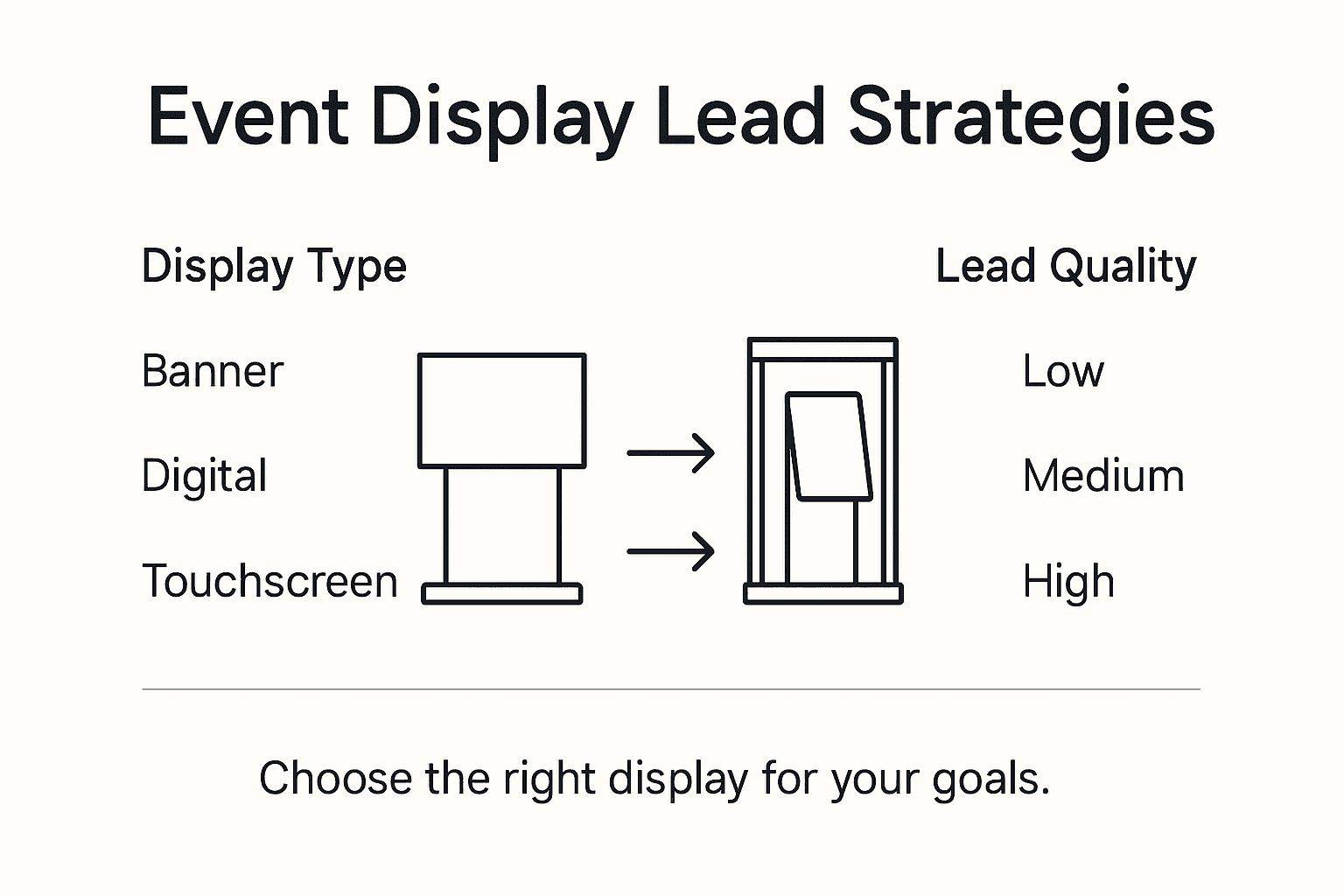
Here’s a comparison of display types and their impact on lead quality:
| Display Type | Typical Use Case | Lead Quality Impact |
|---|---|---|
| Banner Display | Basic brand visibility | Low, mainly awareness leads |
| Interactive Touchscreen | Data-rich engagement | High, detailed contact data |
| LED Video Wall | Mass attention generation | Medium, visual capture |
| Digital Kiosk | Self-registration | High, direct info entry |
| Modular Exhibition Stand | Storytelling and demos | Medium-High, context-based |
Pro tip: Select display technologies that align with your target audience’s preferences and enable seamless, non-intrusive lead capture mechanisms.
How Display Features Drive Engagement
Display design plays a critical role in capturing and maintaining attendee attention during events. Color, imagery, and design complexity significantly influence engagement effectiveness, with different approaches needed for functional and experiential marketing contexts. Successful displays transform passive visual experiences into active audience interactions.
Key engagement-driving display features include:
- Color Psychology: Utilizing color schemes that evoke emotional responses
- Visual Complexity: Creating visually stimulating designs that draw sustained attention
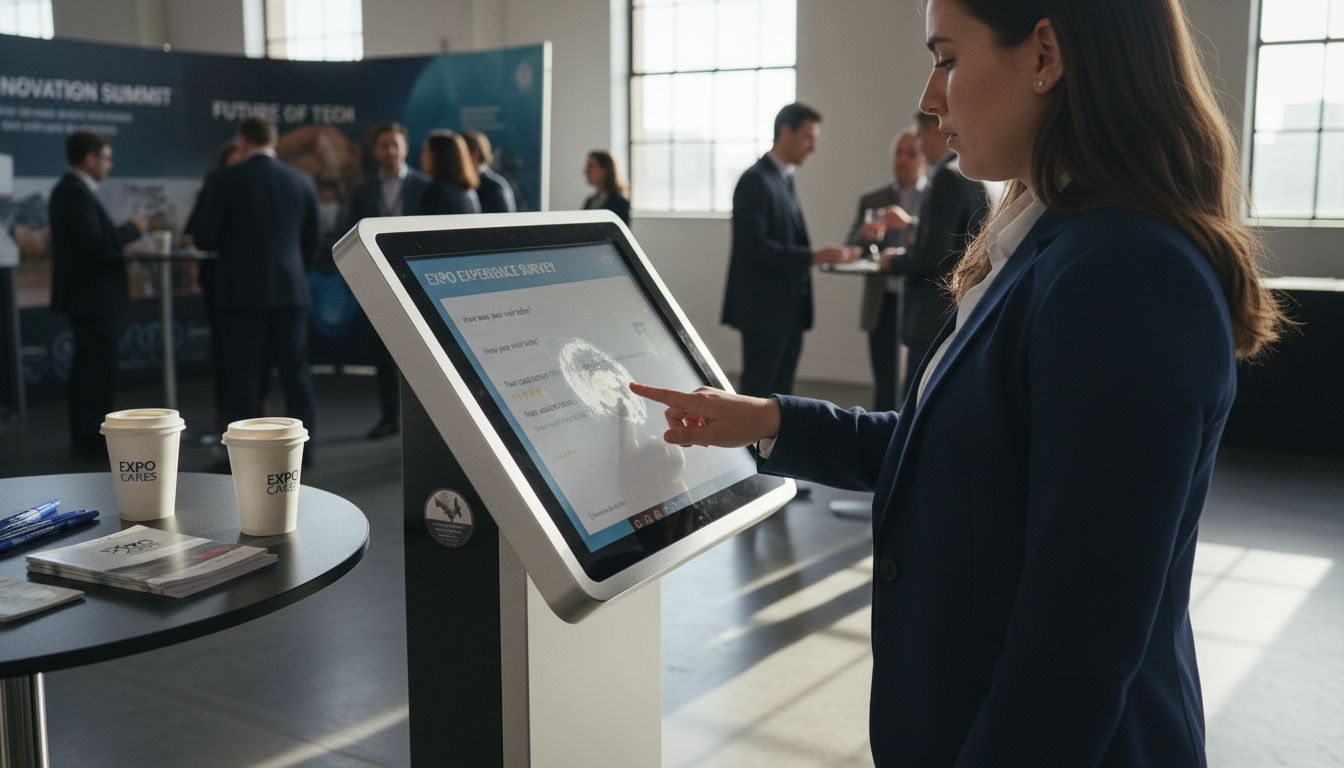
- Interactive Elements: Incorporating touchpoints that encourage direct audience participation
- Dynamic Content: Implementing motion graphics and real-time updates
- Personalization Options: Allowing attendees to customize their viewing experience
User interface design directly impacts audience interaction and information retention, making thoughtful display design critical for event success. The most effective displays balance aesthetic appeal with functional usability, creating intuitive experiences that naturally guide attendee engagement. Modern display technologies enable businesses to create immersive environments that transform passive observers into active participants.
Pro tip: Design display features that tell a compelling visual story, using a strategic mix of emotional triggers and interactive elements to maximize attendee engagement.
Interactive and Digital Display Trends 2025
Global display technology trends for 2025 are revolutionizing how businesses approach event marketing and lead generation. Emerging technologies are creating unprecedented opportunities for interactive and immersive audience engagement, transforming traditional display approaches into dynamic, data-driven experiences. These innovations promise to dramatically reshape how companies capture and interact with potential leads at professional events.
Key emerging display technologies include:
- Flexible OLED Displays: Offering unprecedented design versatility
- Micro-LED Innovations: Providing superior brightness and energy efficiency
- Quantum Dot Screens: Enhancing color reproduction and visual clarity
- Interactive Digital Signage: Enabling real-time audience interaction
- Projection-Based Solutions: Creating adaptive, context-aware display environments
The worldwide LED and digital display market is experiencing significant technological disruption, with price reductions and advanced technologies making sophisticated display solutions more accessible. Seamless video walls and touch-interactive displays are becoming standard, not luxury, offering businesses powerful tools for capturing attendee attention and generating high-quality leads. The most successful organizations will be those that strategically integrate these emerging technologies into their event marketing approaches.
Pro tip: Invest in display technologies that offer both visual sophistication and interactive data collection capabilities to maximize your event lead generation potential.
Costs, ROI, and Common Mistakes
Event industry research highlights critical financial considerations for display investments, revealing the complex landscape of budgeting and return on investment. Understanding the true cost of display technologies requires a nuanced approach that goes beyond simple price comparisons. Marketing managers must evaluate not just upfront expenses, but potential long-term value and lead generation capabilities.
Common financial mistakes in display investments include:
- Underestimating Total Cost: Overlooking installation, maintenance, and training expenses
- Ignoring Scalability: Selecting displays with limited future adaptability
- Neglecting Performance Metrics: Failing to track meaningful engagement indicators
- Overinvesting in Unnecessary Features: Choosing complex technologies without clear strategic purpose
- Inadequate Budgeting for Content Creation: Underestimating costs of quality visual materials
Measuring event display ROI requires both quantitative and qualitative assessment strategies, encompassing direct lead generation metrics and broader brand engagement outcomes. Successful organizations develop comprehensive tracking frameworks that capture multiple dimensions of display investment performance. This holistic approach enables more accurate evaluation of technological investments, moving beyond simplistic financial calculations to understand true strategic impact.
Pro tip: Develop a comprehensive ROI measurement framework that tracks both hard metrics like direct leads and soft metrics like audience engagement before making significant display technology investments.
Optimizing Displays for Post-Event Follow-Up
Successful event lead generation extends far beyond the initial interaction, requiring strategic and systematic post-event engagement approaches. Structured debriefing and evaluation frameworks are critical for transforming collected lead data into actionable insights, ensuring that the time and resources invested in display technologies translate into meaningful business opportunities.
Key strategies for post-event lead follow-up include:
- Rapid Lead Segmentation: Categorizing leads based on interaction depth and potential
- Personalized Communication: Crafting targeted follow-up messages reflecting specific display interactions
- Multi-Channel Engagement: Utilizing email, phone, and social media for comprehensive outreach
- Detailed Lead Scoring: Assigning numerical values to gauge lead quality and conversion potential
- Automated Tracking Systems: Implementing CRM integrations to monitor lead progression
The most effective post-event follow-up processes create a seamless narrative between the initial display interaction and subsequent relationship building. This requires developing a comprehensive communication strategy that respects the attendee’s initial interest while providing genuine value. Advanced organizations use sophisticated data analysis techniques to understand interaction patterns, enabling more intelligent and responsive lead nurturing approaches that significantly improve conversion rates.
Below is a summary of key post-event follow-up actions and why they matter:
| Action | Business Benefit | Optimal Timing |
|---|---|---|
| Lead Segmentation | Prioritizes high-value leads | Within 24 hours |
| Personalized Messaging | Increases engagement likelihood | 1-2 days after event |
| Multi-Channel Outreach | Broadens response opportunities | Ongoing for one week |
| Lead Scoring | Focuses resources on hot leads | During first week |
| Automated Tracking | Ensures no lead is lost | Immediately after sync |
Pro tip: Design your post-event follow-up workflow before the event, creating predetermined communication paths that can be quickly activated based on display interaction data.
Elevate Your Event Lead Generation with Customized Display Solutions
The challenge of turning event attendees into quality leads requires displays that do more than just attract attention. To truly boost your event ROI, you need high-impact visual solutions that engage visitors and encourage meaningful interactions. Our range of customizable Roll Up Banner Stands and durable Gazebos are designed with these goals in mind. They combine vibrant, professional printing with practical functionality to help you capture leads efficiently and make a lasting impression.
Take control of your event success today by choosing display products that reflect your brand’s energy and invite conversations. Visit Live Displays to explore tailored options and discover how easy it is to create a seamless, engaging event presence. With our expert support and quick customization, you can transform every interaction into a valuable business opportunity right now.
Frequently Asked Questions
What is lead generation with displays?
Lead generation with displays refers to the use of visually appealing promotional setups at events to capture potential customer information and engage attendees, transforming interactions into valuable business opportunities.
What types of displays are effective for lead generation at events?
Effective display types include banner displays for visibility, interactive touchscreen panels for direct engagement, LED video walls for immersive experiences, digital kiosks for self-registration, and modular exhibition stands for comprehensive storytelling.
How can display features drive attendee engagement?
Display features that drive engagement include color psychology to evoke emotions, visual complexity to capture attention, interactive elements encouraging participation, dynamic content for real-time interest, and personalization options for tailored experiences.
What are common mistakes to avoid when investing in display technologies?
Common mistakes include underestimating total costs (installations and maintenance), ignoring scalability of displays, neglecting performance metrics, overinvesting in unnecessary features, and inadequate budgeting for content creation.
Share:
Importance of Display Accessories for Event Success
Display Solutions: Choosing What Boosts Event Impact