

Selecting the right display accessories can generate up to double the attendee engagement at trade shows compared to ordinary set-ups, according to recent studies. For event coordinators and marketing managers across the UK, the difference between a memorable presence and a forgettable booth often depends on strategic choices rather than american-style extravagance. This guide offers practical insights to help British businesses strengthen event performance by focusing on impactful, audience-driven display solutions.
Table of Contents
- Defining Display Accessories And Core Concepts
- Popular Types Of Event Display Accessories
- How Accessories Enhance Branding And Engagement
- Key Cost Factors And Value For Businesses
- Avoiding Common Pitfalls In Accessory Selection
Key Takeaways
| Point | Details |
|---|---|
| Display Accessories as Strategic Tools | They enhance visual communication and brand engagement at events, moving beyond mere decoration. |
| Holistic Selection Approach | Choose accessories based on functionality, branding, and adaptability to avoid common pitfalls. |
| Long-Term Value Consideration | Assess display accessories not just for immediate use but for their potential in future events to maximize ROI. |
| Consistency in Branding | Maintain a unified visual narrative across all accessories to create a compelling brand experience. |
Defining Display Accessories and Core Concepts
Display accessories represent the strategic visual elements and complementary equipment that transform ordinary event spaces into compelling brand experiences. These components go far beyond simple decorative items, serving as critical communication tools that help businesses effectively convey their messaging, attract attention, and create memorable interactions with potential clients and stakeholders.
At their core, display accessories encompass a wide range of physical items designed to enhance visual communication and spatial presentation. Event design professionals recognize these accessories as fundamental tools for creating immersive environments that guide visitor perception and engagement. These can include items like banners, flags, backdrop panels, signage systems, display stands, lighting equipment, and promotional materials that work together to construct a cohesive narrative about a brand or organization.
The strategic selection of display accessories involves understanding their multifaceted roles in event communication. They serve not just as decorative elements but as powerful communication instruments that can instantly communicate brand identity, showcase product features, and create emotional connections with event attendees. Effective display accessories should be carefully chosen to align with an organization’s visual branding, target audience expectations, and specific event objectives.
Pro tip: When selecting display accessories, prioritize versatility and alignment with your brand’s core visual identity to create a consistent and memorable event presence.
Popular Types of Event Display Accessories
Event display accessories represent a diverse array of visual communication tools that enable businesses to create powerful, engaging presentations across various professional environments. Comprehensive research on display technologies reveals the critical importance of selecting the right accessories for maximum impact, highlighting the strategic significance of these seemingly simple equipment choices.
The most popular types of event display accessories can be categorized into several key groups: structural elements, visual communication tools, interactive displays, and supplementary equipment. Structural elements include pop-up displays, modular booth systems, and banner stands that provide the foundational framework for event presentations. Visual communication tools encompass branded backdrops, tension fabric displays, and graphic panels that convey a company’s core messaging and visual identity.
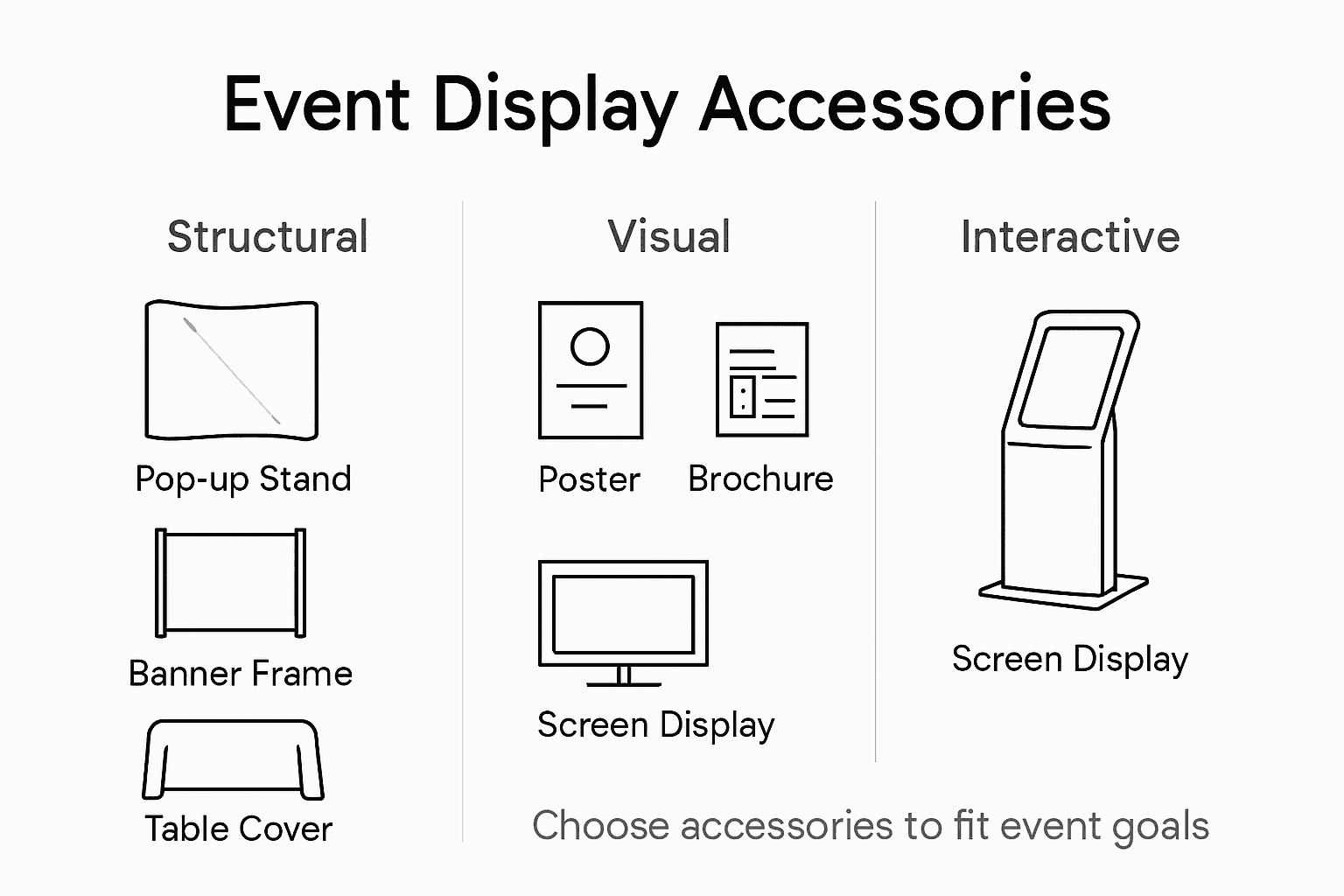
Interactive displays have become increasingly important in modern event marketing, featuring technologies like touchscreen kiosks, digital signage, and multimedia presentation systems that engage attendees through dynamic content. Supplementary equipment such as lighting systems, display stands, literature holders, and promotional counters further enhance the overall event experience by providing functional and aesthetic support to the primary display elements.
Pro tip: Prioritize versatile display accessories that can be easily reconfigured and transported to maximize your investment and adapt to different event requirements.
Here’s a comparison of key display accessory categories and their primary business impact:
| Category | Main Purpose | Example Impact |
|---|---|---|
| Structural Elements | Define event layout and flow | Boosts brand visibility |
| Visual Communication Tools | Convey branding and messages | Reinforces identity, clarity |
| Interactive Displays | Engage attendees actively | Increases attendee interaction |
| Supplementary Equipment | Support functionality and aesthetics | Enhances overall experience |
How Accessories Enhance Branding and Engagement
Display accessories serve as powerful strategic tools that transform passive event spaces into dynamic brand storytelling environments. Effective event branding relies on creating consistent visual experiences that engage attendees across multiple touchpoints, allowing businesses to communicate their core identity and value proposition through carefully curated visual elements.

The strategic deployment of branded accessories plays a critical role in creating memorable brand interactions. By integrating consistent color schemes, logos, messaging, and design elements across display materials, companies can create immersive experiences that resonate emotionally with event participants. This approach transforms standard display equipment into powerful communication channels that go beyond mere visual decoration, functioning as sophisticated brand ambassadors that communicate organizational personality, professionalism, and unique market positioning.
Engagement is further enhanced through interactive and thoughtfully designed display accessories that invite audience participation. Innovative elements like touchscreen displays, multimedia presentations, and strategically placed promotional materials can transform passive observers into active participants, creating deeper connections between brands and their target audiences. These accessories not only capture attention but also provide memorable experiences that extend the brand’s narrative beyond traditional marketing approaches.
Pro tip: Design your display accessories with a consistent visual language that tells a compelling story, ensuring every element works together to create a unified and impactful brand experience.
Key Cost Factors and Value for Businesses
Display accessories represent a strategic investment with multifaceted financial implications for businesses seeking to maximize their event marketing effectiveness. Comprehensive event ROI analysis reveals that carefully selected display accessories can generate significant returns through enhanced brand visibility and audience engagement, transforming what might seem like an expense into a powerful marketing asset.
The cost factors associated with display accessories encompass several critical dimensions beyond initial purchase price. Direct costs include the upfront investment in equipment such as modular displays, graphics, lighting, and interactive technologies. Indirect costs involve transportation, storage, maintenance, and potential customization expenses. Businesses must also consider long-term value metrics like brand recognition, lead generation potential, and the ability to reuse accessories across multiple events, which can significantly offset initial expenditures.
Strategic procurement of display accessories requires a nuanced approach to value assessment. Companies should evaluate accessories not merely as single-use items but as versatile marketing tools with potential for repeated deployment. Modular designs that can be reconfigured, high-quality materials that withstand multiple uses, and accessories compatible with various event formats represent smart investments that distribute cost effectiveness over multiple marketing opportunities.
Pro tip: Calculate your display accessory investment using a comprehensive ROI model that considers both tangible expenses and intangible brand-building benefits to make more informed purchasing decisions.
Consider these cost and value factors when evaluating display accessories:
| Factor Type | Description | Long-Term Value |
|---|---|---|
| Direct Costs | Initial purchase, graphics, tech | Investment can be reused |
| Indirect Costs | Transportation, storage, maintenance | Lower costs with modular pieces |
| Strategic ROI | Leads, brand recognition, reuse potential | Sustains presence across events |
Avoiding Common Pitfalls in Accessory Selection
Comprehensive event planning research reveals critical mistakes that can undermine display accessory effectiveness, highlighting the importance of strategic and thoughtful selection processes. Businesses frequently encounter significant challenges when choosing display accessories that fail to align with their core marketing objectives and audience expectations.
One of the most prevalent selection errors involves prioritizing aesthetic appeal over functional utility. Many organizations choose display accessories based solely on visual attractiveness, neglecting critical factors such as adaptability, transportation ease, and actual event environment compatibility. This myopic approach can result in expensive investments that look impressive but provide minimal practical value, creating displays that are difficult to set up, transport, or effectively communicate brand messaging.
Successful accessory selection requires a holistic evaluation approach that considers multiple dimensions. Companies must assess potential display tools through a comprehensive lens that encompasses brand consistency, audience engagement potential, technical compatibility, and long-term versatility. This means examining not just the immediate visual impact, but also factors like modular design capabilities, ease of customization, durability across different event environments, and the potential for reuse across multiple marketing scenarios.
Pro tip: Develop a structured accessory selection checklist that evaluates potential display tools against specific criteria including brand alignment, technical requirements, transportation logistics, and long-term cost effectiveness.
Elevate Your Event Success with Expert Display Accessories
Struggling to create an impactful and memorable event presence? This article highlights key challenges like choosing display accessories that align with your brand identity, engage your audience, and provide long-term value. At Live Displays, we understand the importance of versatile, high-quality promotional tools such as Roll Up Banner Stands – LIVE DISPLAYS and Flags – LIVE DISPLAYS that help you avoid common pitfalls and maximize your event ROI.
Discover our premium custom solutions designed to bring your brand story to life with vibrant printing and easy customization options. Visit Live Displays now to explore products that support seamless setup, reuse, and professional engagement. Don’t wait to transform your event presence into a powerful marketing asset—start building your standout display today.
Frequently Asked Questions
What are display accessories, and why are they important for events?
Display accessories are strategic visual elements that enhance event spaces, transforming them into compelling brand experiences. They are essential for effective communication, helping businesses convey their messaging, attract attention, and create memorable interactions with attendees.
What types of display accessories are commonly used in events?
Common types of display accessories include structural elements like pop-up displays and banner stands, visual communication tools like branded backdrops, interactive displays such as touchscreen kiosks, and supplementary equipment like lighting systems and promotional counters.
How do display accessories contribute to branding and engagement at events?
Display accessories help create a cohesive visual identity and enhance attendee engagement. By integrating branding elements consistently across accessories, they act as communication channels that deepen connections with audiences, making events more impactful and memorable.
What factors should be considered when choosing display accessories?
When selecting display accessories, consider their versatility, alignment with brand identity, adaptability to different environments, ease of transportation, and potential for reuse. A holistic evaluation minimizes selection errors and maximizes overall event effectiveness.
Share:
How to Plan Trade Show Displays for Maximum Impact
Lead Generation with Displays: Boosting Event ROI