

Nearly 60 percent of trade show exhibitors say that a strong visual presence impacts visitor engagement more than giveaways or presentations, outpacing even many american event strategies. For UK marketing managers aiming to stand out at crowded venues, every display decision shapes how attendees perceive your brand. This guide uncovers actionable steps for building displays that do more than just look good—they attract, communicate, and cement your branding advantage.
Table of Contents
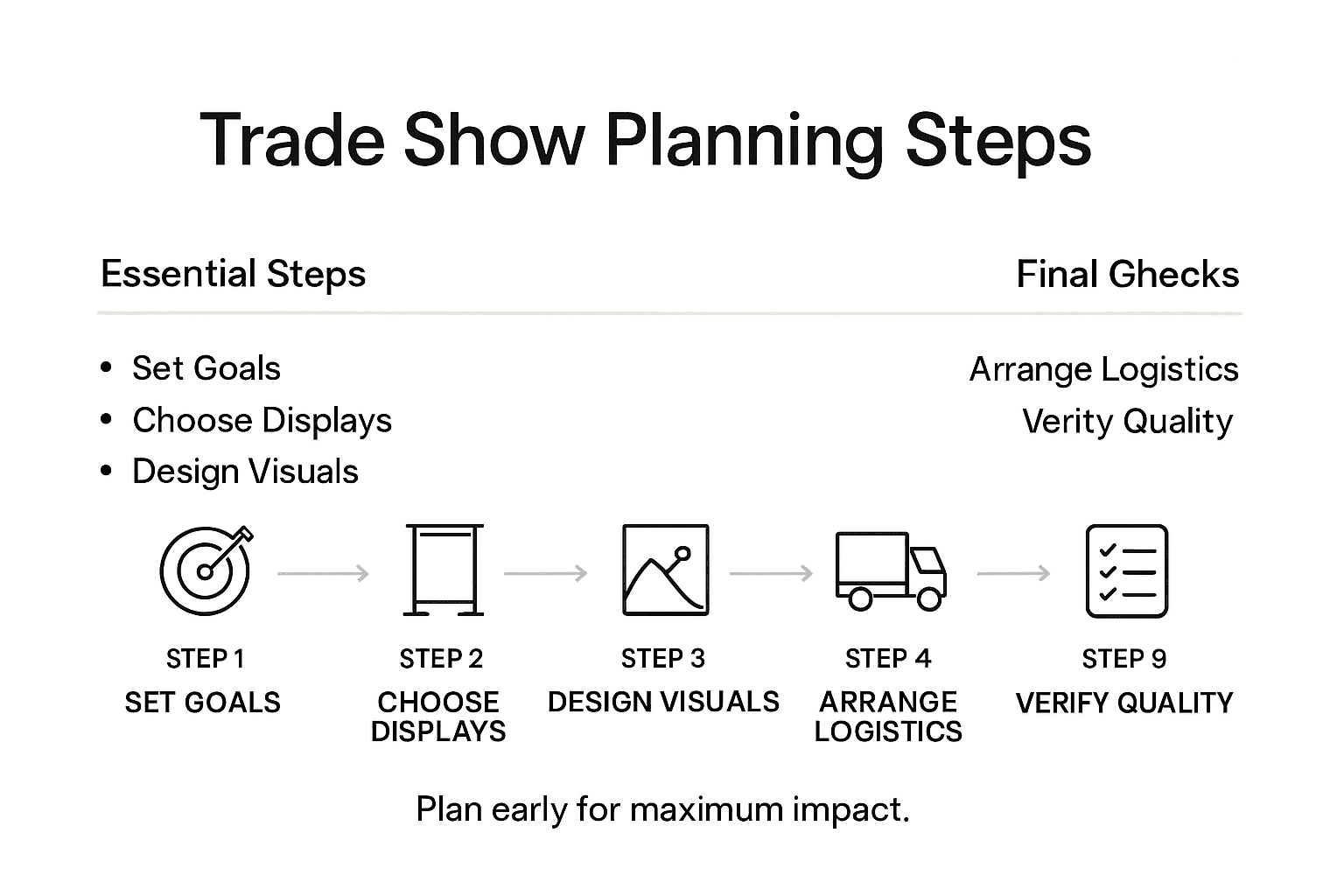
- Step 1: Define Event Goals And Branding Objectives
- Step 2: Select Display Products And Customization Options
- Step 3: Design Visuals For Maximum Audience Engagement
- Step 4: Coordinate Logistics And Setup Requirements
- Step 5: Verify Display Quality And Readiness Before Launch
Quick Summary
| Key Point | Explanation |
|---|---|
| 1. Define Clear Event Goals | Establish specific objectives like lead generation or brand visibility to guide your strategy. |
| 2. Choose Effective Display Products | Select display options that fit your brand and allow for customization, enhancing audience interaction. |
| 3. Design for Audience Engagement | Create captivating visuals that tell your brand story and invite audience interaction through innovative elements. |
| 4. Plan Logistics Thoroughly | Develop a detailed plan for transportation, setup, and requirements, minimizing complications on-site. |
| 5. Verify Readiness Before Launch | Conduct a final check of all visual and functional elements to maintain high standards of presentation. |
Step 1: Define event goals and branding objectives
Successful trade show displays start with crystal clear goals and strategic branding objectives. Your approach determines whether you will transform an ordinary event appearance into a powerful marketing opportunity that drives meaningful business results.
To develop impactful event goals, you need a systematic approach that aligns trade show objectives with broader business strategies. Begin by examining your core business targets: Are you focused on lead generation, launching a new product, increasing brand visibility, or networking with industry professionals? Each objective requires a tailored strategy. For lead generation, prioritize interactive booth designs and compelling conversation starters. Product launches demand immersive demonstrations and eye-catching visual displays that communicate your innovation.
Consider establishing specific measurable targets such as collecting 100 qualified leads, scheduling 25 direct sales meetings, or generating a specific percentage of brand awareness within your target market segment. These quantifiable goals transform your trade show presence from a passive display into an active business development platform.
Professional tip: Create a one-page brief documenting your event goals, target metrics, and specific branding strategies to ensure your entire team remains aligned and focused.
Step 2: Select display products and customization options
Choosing the right trade show display products and tailoring them to your brand represents a critical step in creating a memorable event presence. Your selections will directly impact how potential customers perceive and interact with your brand.
Begin by exploring comprehensive display options that match your specific event requirements. Consider key products like modular booth systems, pop up displays, tension fabric graphics, and promotional counters that offer flexibility and visual impact. Each product type brings unique advantages such as portability, ease of setup, and potential for customized branding. For instance, tension fabric displays provide seamless graphics and lightweight transportation while modular systems allow for multiple configuration possibilities.
Here’s how different trade show display products compare by function and brand impact:
| Display Type | Key Function | Branding Potential |
|---|---|---|
| Modular Booth System | Flexible configurations | High brand adaptability |
| Pop Up Display | Quick setup | Strong for bold graphics |
| Tension Fabric Display | Lightweight, seamless look | Sleek, premium impression |
| Promotional Counter | Staff interaction point | Easy message customization |
When customizing your display, focus on creating a cohesive visual narrative that communicates your brand identity. Select color schemes matching your corporate palette, integrate high resolution graphics that showcase your products or services, and ensure typography and design elements align with your overall marketing strategy. Pay attention to practical considerations like booth size, venue restrictions, and transportation logistics to guarantee a smooth event experience.
Professional tip: Request digital mockups or physical samples of your display products before the event to validate design consistency and identify potential visual improvements.
Step 3: Design visuals for maximum audience engagement
Creating trade show display visuals that captivate and connect with your audience requires strategic thinking and creative execution. Your visual design is the critical first impression that determines whether potential customers will stop and engage with your brand.

Designing interactive trade show displays demands a comprehensive approach to visual storytelling that goes beyond static graphics. Focus on developing visuals that communicate your brand narrative through compelling imagery, clear messaging, and strategic color psychology. Integrate digital technologies like touchscreens or augmented reality elements that transform passive viewing into an immersive experience. Consider using large format graphics with high resolution images that showcase your products or services from unique perspectives.
Ensure your visual design maintains consistent branding elements while creating visual hierarchy that guides attendees eye movement. Utilize contrasting colors, strategic typography, and white space to highlight key messages. Place your most important communication points at eye level and create visual pathways that naturally draw viewers deeper into understanding your brand proposition. Think of your display as a visual conversation starter that invites interaction and communicates your unique value proposition within seconds.
Professional tip: Create a visual design mockup and test it with team members who are unfamiliar with your brand to validate its clarity and immediate comprehension.
Step 4: Coordinate logistics and setup requirements
Successful trade show participation hinges on meticulous logistics planning that ensures your display arrives intact, sets up smoothly, and represents your brand professionally. Comprehensive preparation prevents last minute complications that could compromise your event performance.
International event logistics management requires strategic planning across multiple critical domains, including transportation, customs clearance, and on-site handling. Begin by creating a detailed shipping and setup timeline that accounts for potential delays. Confirm specific venue requirements such as booth dimensions, electrical specifications, weight restrictions, and material handling protocols. Coordinate with event organizers to understand precise setup windows, access points, and any specialized equipment needed for installation.
Prepare comprehensive documentation including detailed equipment inventories, shipping manifests, and backup plans for potential logistical challenges. Pack display components strategically with clear labeling and protective packaging. Consider shipping your materials well in advance to allow buffer time for potential transit issues. Assign a dedicated team member to manage logistics coordination and serve as the primary point of contact for transportation and setup negotiations.
Professional tip: Create a comprehensive logistics checklist with multiple contingency scenarios to streamline your setup process and minimize potential disruptions.
Step 5: Verify display quality and readiness before launch
Final display verification represents the critical last checkpoint that separates professional trade show performance from potential embarrassment. Your thorough inspection ensures your brand presentation meets the highest standards of quality and functionality.
A comprehensive trade show exhibitor checklist provides a systematic approach to final display readiness, helping you eliminate potential issues before they become visible to attendees. Conduct a meticulous walkthrough of your entire display setup, examining every component for visual perfection and functional integrity. Test all digital elements like touchscreens or multimedia presentations, verify graphic alignments, check lighting functionality, and ensure structural components are secure and properly assembled. Evaluate your display from multiple perspectives simulating attendee interactions testing ease of navigation and visual appeal.
Pay special attention to subtle details that can compromise your professional image. Inspect printed materials for print quality, color accuracy, and potential damage during transportation. Verify that promotional materials are current and aligned with your event messaging. Confirm that staff uniforms match your brand aesthetic and that all team members understand their roles and can effectively communicate your brand story. Perform a final equipment functionality test including electrical connections, interactive displays, and any technological components to guarantee seamless performance.
Below is a summary of critical quality checks before your trade show launch:
| Checkpoint | What to Inspect | Purpose |
|---|---|---|
| Visual Elements | Graphics and alignment | Maintain visual standards |
| Functional Technology | Screens and connections | Ensure smooth operation |
| Structural Integrity | Assembly and stability | Prevent setup issues |
| Brand Consistency | Uniforms, messaging | Support cohesive branding |
Professional tip: Recruit an objective third party to conduct a final display review and provide unfiltered feedback about your booth presentation.
Elevate Your Trade Show Presence with Custom Display Solutions
Planning a trade show display for maximum impact takes clear goals, strategic branding, and flawless execution. You want your booth to attract attention and engage visitors immediately. Live Displays understands these challenges and offers a wide range of customizable promotional products that align perfectly with your event objectives. Whether you need eye-catching Roll Up Banner Stands to showcase key messages or versatile Gazebos that create a professional and inviting space, we provide all the tools to craft a cohesive and memorable brand story.
Don’t leave your trade show success to chance. Take control of your event appearance today with vibrant, high-quality displays from Live Displays. Explore our collections to customize every detail of your booth and enjoy features like free artwork proofs and quick quotes to streamline your preparations. Act now to secure the perfect setup that delivers maximum visual impact at your next trade show.
Frequently Asked Questions
How do I define impactful goals for my trade show display?
To define impactful goals for your trade show display, first identify your core business targets, such as lead generation or brand visibility. Create a one-page brief to document these goals along with specific measurable targets, like collecting 100 qualified leads, to maintain team alignment.
What display products should I consider for maximum impact?
Consider various display products such as modular booth systems or tension fabric graphics that match your event requirements. Evaluate each option for its visibility, portability, and ease of setup to ensure your display captures attention effectively.
How can I design visuals that engage my trade show audience?
To design engaging visuals for your trade show display, focus on high-resolution graphics and interactive elements like touchscreens. Use contrasting colors and a clear hierarchy in your messaging to draw in attendees and convey your brand story quickly.
What logistics should I plan for before the trade show?
Plan logistics by creating a detailed shipping and setup timeline that includes venue requirements and potential challenges. Organize your display components systematically, labeling them for easy identification, and ensure everything arrives on time for smooth setup.
How do I verify my display’s quality before the trade show launch?
Verify your display’s quality by conducting a comprehensive walkthrough of all components, checking for visual perfection and functionality. Test all technology elements and ensure your promotional materials are current to present a polished brand image at the event.
Share:
Role of Branding at Events – Boosting Impact and Engagement
Importance of Display Accessories for Event Success