
Most trade show booths struggle to stand out in busy halls where only bold strategies make a difference. With competitors inspired by American event trends, British coordinators need more than eye-catching logos to capture attention. Effective event branding offers immersive experiences that spark real audience engagement and shape long-term brand loyalty. Discover proven methods to help your brand connect deeply with attendees, drive meaningful interactions, and leave a lasting impression at your next industry showcase.
Table of Contents
- Defining The Role Of Event Branding
- Types Of Branding Displays For Events
- How Branding Drives Audience Engagement
- Maximizing ROI Through Effective Branding
- Common Mistakes In Event Branding
Key Takeaways
| Point | Details |
|---|---|
| Event Branding is Strategic | It goes beyond visual elements to create emotional connections between brands and audiences. |
| Types of Displays Matter | Selecting the right branding display type directly impacts audience engagement and brand messaging. |
| Audience Engagement is Multifaceted | Incorporating cognitive, emotional, and behavioral strategies enhances participant connections with the brand. |
| Common Mistakes Can Undermine Success | Inconsistencies and lack of strategic planning can severely diminish audience engagement and brand credibility. |
Defining the Role of Event Branding
Event branding transforms traditional marketing approaches by creating immersive, memorable experiences that connect audiences directly with a company’s core identity. At its essence, event branding goes far beyond simple logo placement or visual decorations—it represents a strategic communication method designed to forge meaningful emotional connections between brands and participants.
Research demonstrates that effective event branding can profoundly influence brand perception. Academic studies on event marketing impact reveal that carefully crafted event experiences can shape consumer attitudes and build long-term brand equity. This means trade show coordinators and marketing managers have a powerful tool to transform passive encounters into active engagement opportunities.
The core elements of successful event branding typically include:
- Consistent visual identity across all event touchpoints
- Strategic messaging that reinforces brand values
- Interactive experiences that invite audience participation
- Storytelling techniques that humanize brand narratives
- Thoughtful design of physical and digital brand environments
Pro Tip: Strategic Alignment: Always align your event branding strategy with your broader marketing objectives, ensuring every visual element and interaction reinforces your brand’s fundamental promise and core messaging.
By understanding event branding as a holistic communication strategy, organizations can transform traditional marketing interactions into powerful, memorable brand experiences that resonate long after the event concludes.
Types of Branding Displays for Events
Branding displays serve as powerful visual communication tools that transform event spaces into immersive brand experiences. Organizations can leverage multiple display types to create compelling narratives and engage audiences effectively. University research on display strategies highlights the critical importance of selecting displays that align with brand messaging and event objectives.
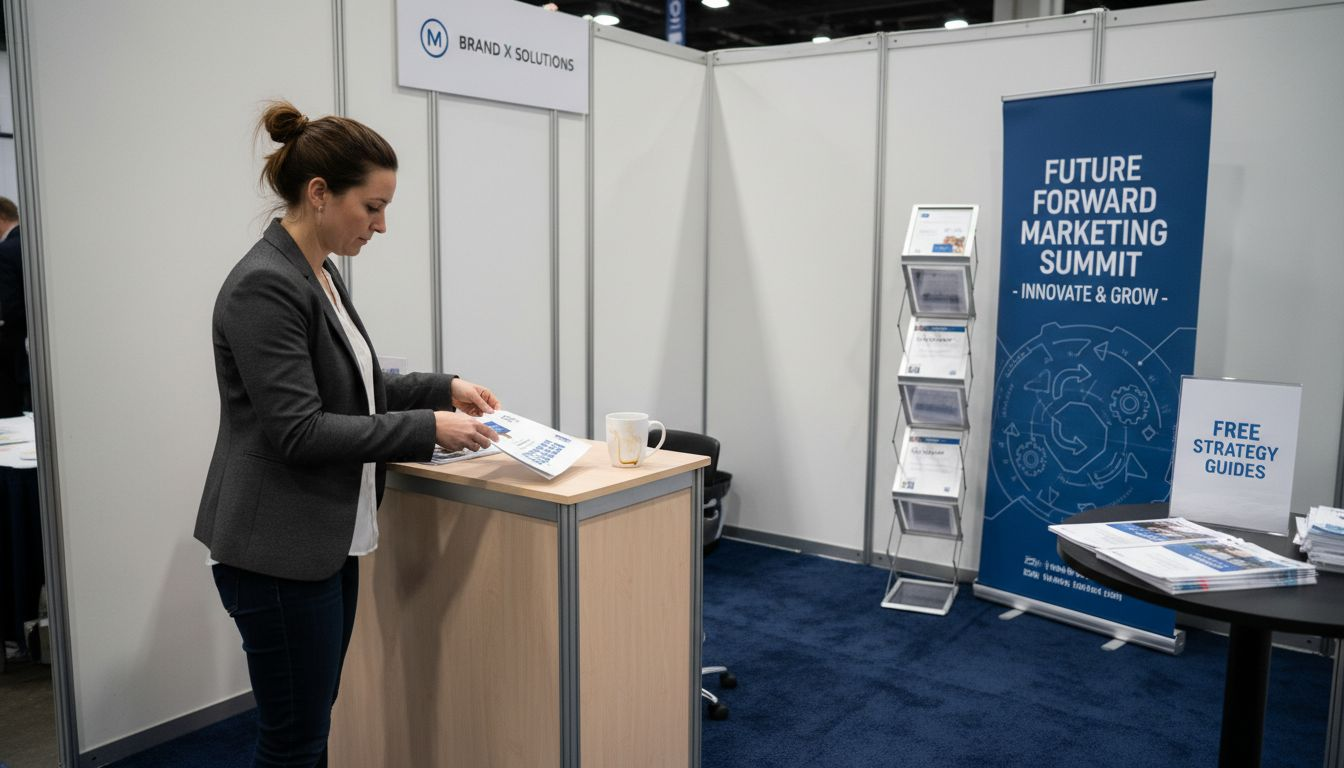
The primary categories of branding displays include:
Static Displays:
- Banners and backdrops
- Posters and signage
- Branded tablecloths and floor graphics
- Standing display units
Interactive Displays:
- Digital touchscreens
- Multimedia presentation stations
- Augmented reality experiences
- Interactive product demonstration zones
Physical Engagement Displays:
- Branded product demonstration areas
- 3D structural brand installations
- Modular exhibition stands
- Immersive brand environment designs
Successful branded displays for events require strategic planning that considers visual consistency, audience interaction potential, and alignment with overall marketing goals. Trade show coordinators must think beyond mere visual aesthetics and design displays that create meaningful connections with attendees.
Pro Tip: Display Coherence: Ensure all branding displays maintain a consistent color palette, typography, and messaging to create a unified and professional brand presentation that reinforces your organization’s visual identity.
By understanding and implementing diverse display strategies, marketing professionals can transform event spaces into dynamic brand storytelling platforms that capture attention and drive engagement.
Here’s a comparison of key event branding display types and their impact:
| Display Type | Best Use Case | Audience Impact | Cost Implication |
|---|---|---|---|
| Static | Entry points, wayfinding | Clear messaging, high recall | Generally low |
| Interactive | Demos, digital experiences | High engagement, memorable | Moderate to high |
| Physical Engagement | Product showcases, installations | Immersive connection, tactile value | High |
How Branding Drives Audience Engagement
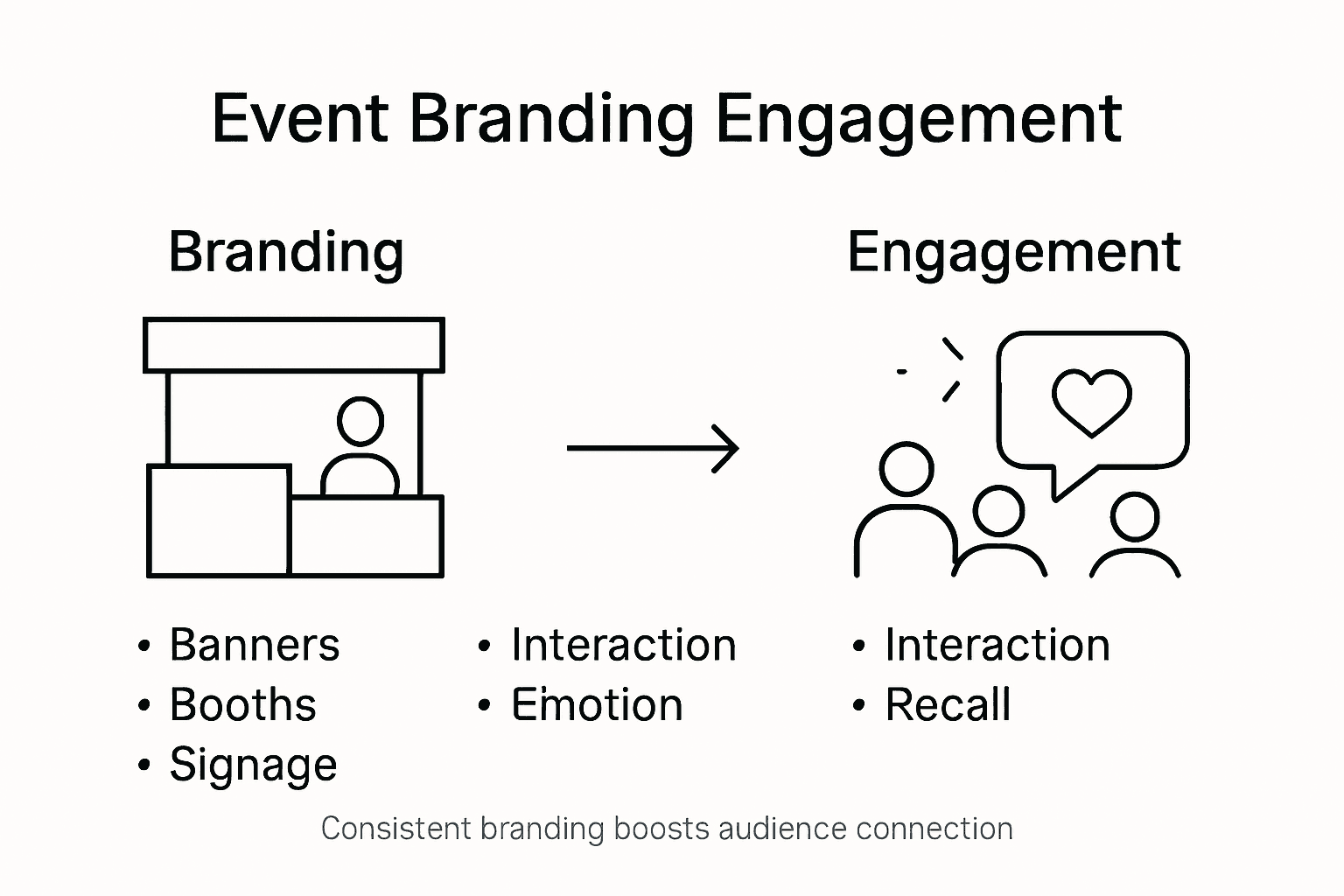
Branding at events is far more than visual decoration—it’s a strategic mechanism for creating profound psychological connections with audiences. Academic research on brand engagement frameworks reveals that sophisticated branding triggers complex cognitive, emotional, and behavioral responses that transform passive attendees into active participants.
The engagement process unfolds through multiple interconnected dimensions:
Cognitive Engagement:
- Generating intellectual curiosity
- Presenting compelling brand narratives
- Stimulating mental processing of brand messages
- Creating memorable knowledge touchpoints
Emotional Engagement:
- Establishing authentic brand connections
- Triggering positive emotional associations
- Building trust and relatability
- Creating sensory experiences that resonate
Behavioral Engagement:
- Encouraging interactive experiences
- Facilitating direct brand interactions
- Promoting participatory brand experiences
- Enabling real-time feedback mechanisms
Through strategic event branding approaches, organizations can design immersive environments that invite audiences to become active contributors rather than passive observers. This transformation requires understanding audience psychology, designing multisensory experiences, and creating meaningful interaction pathways.
Pro Tip: Engagement Architecture: Design your event branding strategy with intentional interaction points that encourage audience participation, allowing attendees to co-create experiences and feel genuinely connected to your brand narrative.
By embracing a holistic approach to audience engagement, brands can convert traditional marketing interactions into powerful, memorable experiences that build lasting connections and drive meaningful relationships.
Maximizing ROI Through Effective Branding
Maximizing return on investment (ROI) through event branding requires a strategic, multifaceted approach that goes beyond traditional marketing metrics. Event branding guidelines for ROI optimization demonstrate that successful strategies create unified experiences that generate both tangible and intangible returns.
Key ROI Measurement Dimensions:
- Financial Returns
- Direct sales generated
- Lead conversion rates
- Cost per acquisition
- Brand Equity Metrics
- Audience engagement levels
- Brand recall and recognition
- Social media mentions
- Relationship Capital
- Network expansion
- Partnership opportunities
- Customer loyalty indicators
Strategic event branding transforms marketing expenditures into investments by creating measurable impact across multiple channels. Trade show branding strategies enable organizations to design experiences that not only capture immediate attention but also build long-term brand value.
Modern ROI calculation transcends simple financial calculations. Contemporary marketing professionals understand that brand experiences generate value through complex, interconnected outcomes that extend far beyond immediate revenue generation.
Pro Tip: Comprehensive Tracking: Develop a holistic ROI tracking system that captures both quantitative financial metrics and qualitative brand perception indicators, allowing for nuanced performance evaluation.
By adopting a comprehensive approach to event branding, organizations can transform marketing expenses into strategic investments that yield sustainable competitive advantages and meaningful audience connections.
Use this summary to align branding objectives with measurable ROI outcomes:
| Branding Objective | Primary ROI Metric | Long-Term Benefit |
|---|---|---|
| Boost brand recognition | Social reach, recall rates | Higher customer retention |
| Increase engagement | Participation, feedback volume | Community and loyalty growth |
| Drive sales/leads | Number of leads, conversion rates | Increased revenue opportunities |
Common Mistakes in Event Branding
Event branding demands precision and strategic thinking, yet many organizations repeatedly fall into predictable traps that undermine their marketing efforts. Comprehensive analysis of event branding pitfalls reveals critical errors that can significantly diminish brand credibility and audience engagement.
Top Event Branding Mistakes:
- Inconsistent Brand Messaging
- Misaligned visual elements
- Contradictory communication tone
- Scattered brand narrative
- Lack of Strategic Planning
- No clear event objectives
- Undefined target audience
- Random design approach
- Poor Visual Execution
- Outdated design elements
- Cluttered display layouts
- Ineffective color schemes
- Neglecting Audience Experience
- Passive interaction design
- Minimal engagement opportunities
- Overlooking emotional connection
Strategic event display design requires meticulous attention to detail and a deep understanding of brand communication principles. Organizations must recognize that every visual element and interaction point communicates a sophisticated narrative about their brand identity.
Successful event branding transcends superficial aesthetics. It demands a holistic approach that integrates visual design, strategic messaging, and audience psychology into a cohesive, compelling experience.
Pro Tip: Diagnostic Alignment: Conduct a comprehensive brand audit before your event, ensuring every design element, messaging point, and interaction mechanism aligns perfectly with your core brand values and communication objectives.
By understanding and proactively addressing these common mistakes, marketing professionals can transform potential branding challenges into opportunities for meaningful audience connection.
Elevate Your Event Branding with Tailored Display Solutions
Creating a memorable and immersive brand experience at your next event demands attention to every detail from visuals to interaction. The article highlights the challenge of turning passive attendees into engaged participants through consistent messaging and dynamic displays. If you are aiming to boost impact and audience engagement, our curated range of customizable products can help you align your event branding with your strategic goals and maximize your ROI.
Discover high-quality options such as Roll Up Banner Stands designed to deliver clear and consistent messaging at key event touchpoints. Whether you want vibrant banners, eye-catching flags, or branded tablecloths, Live Displays offers advanced printing for vivid visuals that resonate long after the event ends.
Take control of your event presence today with solutions crafted for seamless customization and quick turnaround. Visit Live Displays to explore our full collection and receive free artwork proofs that ensure your branding is flawless. Don’t miss the chance to transform your next event into a lasting connection that drives tangible results.
Frequently Asked Questions
What is the role of branding in events?
Branding in events serves as a strategic mechanism to create immersive experiences that establish emotional connections between the brand and its audience. It goes beyond visual decoration to engage participants meaningfully.
How can effective event branding enhance audience engagement?
Effective event branding can enhance audience engagement by provoking emotional responses, fostering interaction, and presenting compelling brand narratives that make the experience memorable.
What are some common types of branding displays used at events?
Common types of branding displays at events include static displays like banners and signage, interactive displays such as digital screens, and physical engagement displays like product showcase areas or immersive installations.
How can organizations measure the ROI of their branding efforts at events?
Organizations can measure ROI through various metrics, including direct sales, audience engagement levels, brand recall, and qualitative indicators like customer loyalty, all of which reflect the effectiveness of their branding strategies.
Share:
7 Innovative Corporate Event Display Ideas for Engagement
How to Plan Trade Show Displays for Maximum Impact