

Trade shows remain one of the most powerful ways to grow brand visibility, yet over 80 percent of attendees remember a brand based on booth design and engagement. For event coordinators and small business owners in the UK, mastering trade show marketing means standing out from the crowd with creative solutions inspired by both British and American event trends. Discover practical approaches and smart display options that will help your company attract attention, generate leads, and create meaningful connections.
Table of Contents
- Defining Trade Show Marketing Strategies
- Major Types of Trade Show Display Solutions
- Essential Components For Event Success
- Measuring ROI And Tracking Results
- Common Pitfalls And How To Avoid Them
Key Takeaways
| Point | Details |
|---|---|
| Strategic Preparation is Key | Effective trade show marketing hinges on thorough pre-show preparation to align objectives with target audiences. |
| Engagement Focused on Quality | Successful interactions prioritize meaningful connections over sheer volume, fostering long-term relationships. |
| Utilize Diverse Display Solutions | Selecting the right type of trade show display enhances brand visibility and can greatly influence attendee engagement. |
| Measure Success Beyond Sales | Track both quantitative and qualitative metrics to understand the full impact of trade show participation and inform future strategies. |
Defining Trade Show Marketing Strategies
Trade show marketing represents a strategic approach to business development that transforms conventional networking into powerful brand-building opportunities. By understanding the multifaceted landscape of trade show engagement, companies can create comprehensive strategies that deliver measurable outcomes. Trade show marketing performance research reveals that successful exhibitors combine face-to-face interactions with sophisticated relationship enhancement techniques.
A robust trade show marketing strategy involves three critical stages: pre-show preparation, active event engagement, and strategic post-show follow-up. Companies must meticulously select events aligned with their target audience and business objectives. This means analyzing attendee demographics, understanding competitive landscape, and establishing clear performance metrics. Global sourcing platforms suggest that integrating digital and traditional marketing methods can significantly amplify event impact and accelerate sales cycles.
The core components of effective trade show marketing include developing compelling booth designs, training staff in engagement techniques, preparing targeted marketing collateral, and establishing a systematic lead capture and follow-up process. Successful strategies prioritize quality interactions over quantity, focusing on creating meaningful connections that translate into long-term business relationships. Event participants should approach trade shows as strategic platforms for brand positioning, knowledge exchange, and relationship building.
Pro Tip: Create a comprehensive trade show playbook that outlines roles, communication protocols, and follow-up strategies at least one month before the event to ensure seamless team coordination and maximum performance.
Major Types of Trade Show Display Solutions
Trade show display solutions represent critical tools for businesses seeking to create memorable brand experiences and attract potential clients. Trade show display options range from compact tabletop configurations to expansive custom-designed booth environments, each serving unique marketing objectives and spatial requirements.
The primary categories of trade show displays include portable displays, modular systems, and custom-built exhibits. Portable displays like pop-up banners and tension fabric displays offer lightweight, easy-to-transport solutions ideal for smaller events or companies with limited shipping budgets. Modular systems provide greater flexibility, allowing businesses to reconfigure booth layouts and components between different events. Custom-built exhibits represent the most sophisticated option, delivering fully immersive brand experiences with intricate design elements tailored to specific marketing narratives.
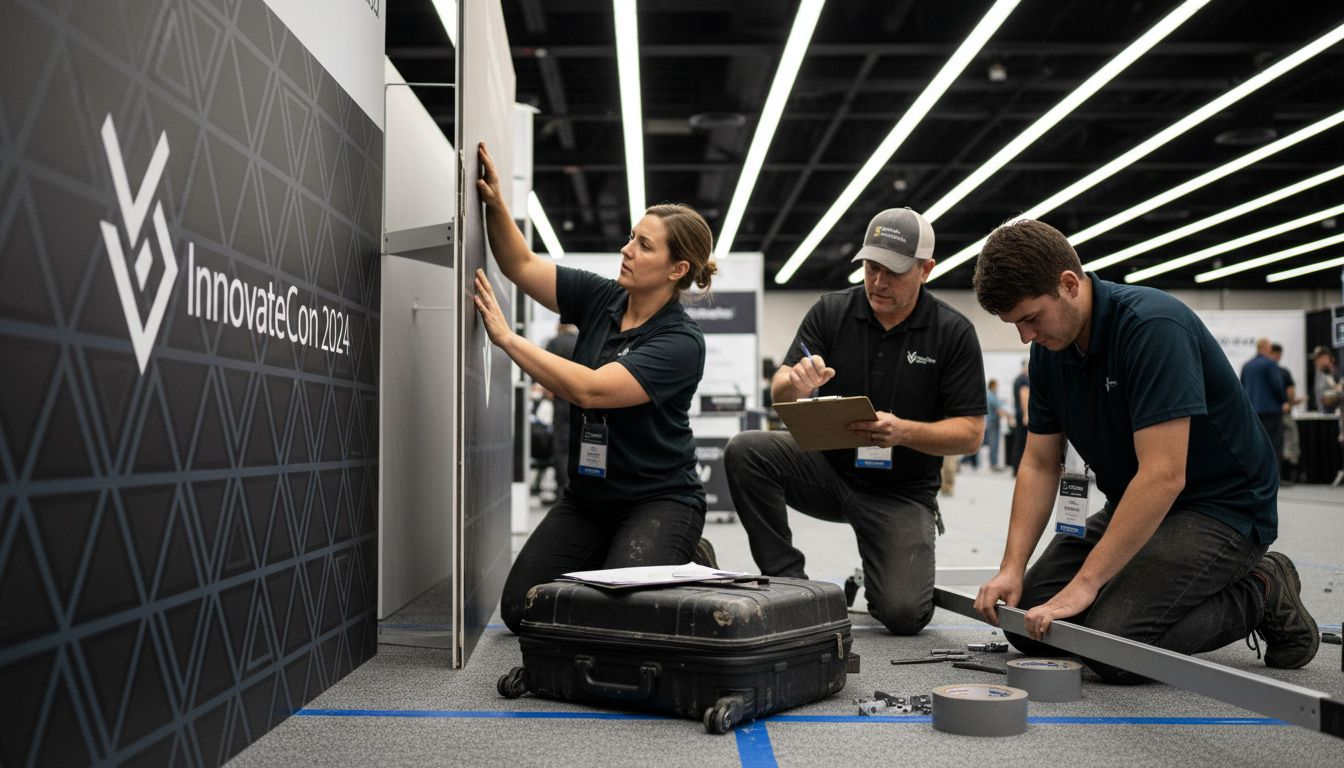
When selecting display solutions, businesses must consider factors such as booth size, event frequency, transportation logistics, and budget constraints. Lightweight aluminum frame systems, fabric graphic displays, and inflatable structures offer innovative alternatives to traditional booth designs. These solutions enable companies to create visually striking presentations that capture attendee attention while maintaining practical considerations like ease of setup, storage, and transport.
Here’s a quick summary of the three main types of trade show displays and their business advantages:
| Display Type | Key Features | Ideal Usage Scenario | Business Impact |
|---|---|---|---|
| Portable Displays | Lightweight, quick setup | Small events, frequent travel | Low cost, flexible branding |
| Modular Systems | Reconfigurable components | Multiple events, changing layouts | Versatile, scalable presence |
| Custom-Built Exhibits | Unique design, immersive experience | Major industry shows, brand launches | High impact, strong brand positioning |
Pro Tip: Invest in versatile display components that can be easily reconfigured for different event spaces and marketing objectives to maximize your trade show display investment.
Essential Components for Event Success
Successful trade show participation demands a comprehensive strategic approach that encompasses careful planning, execution, and follow-up. Strategic trade show planning requires businesses to establish clear objectives that align with their broader marketing and sales goals, whether focusing on lead generation, brand awareness, or direct product demonstrations.
The core components of event success include meticulous pre-event preparation, dynamic on-site engagement strategies, and structured post-event follow-up. Booth design plays a critical role in attracting attendee attention, with interactive elements like product demonstrations, gamification techniques, and personalized consultation zones creating memorable brand experiences. Businesses must invest in training booth staff to deliver compelling narratives, answer technical questions, and convert potential leads through professional and engaging interactions.
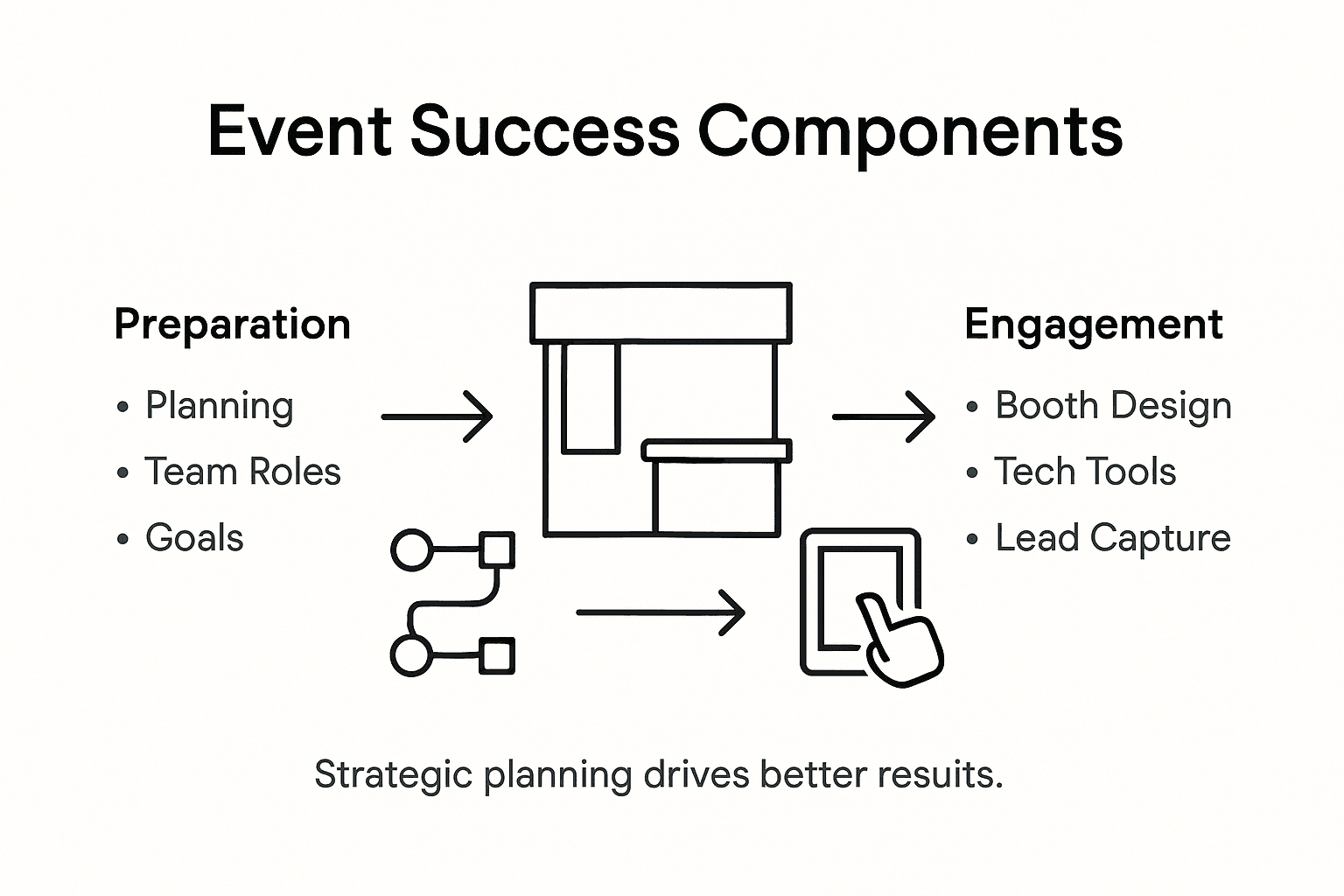
Technological integration has become a fundamental aspect of modern trade show success. Digital tools enable real-time lead capture, social media engagement, and instant analytics tracking. Businesses should leverage technologies such as QR code scanning, digital business card exchanges, and integrated customer relationship management systems to streamline lead collection and post-event communication. Flexibility and rapid responsiveness to unexpected challenges can significantly differentiate a company’s event performance.
Pro Tip: Create a comprehensive event playbook that includes detailed scripts, engagement protocols, and contingency plans to ensure your team maintains consistent professionalism under varying event conditions.
Measuring ROI and Tracking Results
Measuring the return on investment (ROI) for trade show participation requires a comprehensive approach that goes beyond simple financial calculations. Trade show ROI measurement demands a sophisticated strategy of tracking both tangible and intangible outcomes, enabling businesses to understand the true value of their event investments.
The primary metrics for evaluating trade show success include quantitative performance indicators such as qualified leads generated, lead-to-opportunity conversion rates, and direct sales attributable to the event. Businesses should develop a structured tracking system that captures multiple dimensions of performance. This involves establishing clear baseline metrics before the event, implementing robust lead capture technologies, and creating a comprehensive follow-up process that allows for accurate tracking of lead progression through the sales funnel.
Beyond financial metrics, companies must also consider qualitative performance indicators that contribute to long-term brand value. These include brand awareness improvements, social media engagement, networking opportunities, competitive intelligence gathering, and relationship-building potential. Advanced attribution modeling and customer relationship management (CRM) integration can help businesses connect event interactions to broader marketing and sales outcomes, providing a more nuanced understanding of trade show impact.
Compare quantitative and qualitative metrics for measuring trade show ROI:
| Metric Type | Example Indicators | How It Adds Value |
|---|---|---|
| Quantitative | Number of qualified leads, new sales | Direct financial outcomes |
| Qualitative | Brand awareness, networking quality | Long-term business growth |
Pro Tip: Create a standardized lead scoring and tracking system before the event to ensure consistent and objective measurement of potential customer interactions and their subsequent value.
Common Pitfalls and How to Avoid Them
Trade show marketing success hinges on proactively identifying and mitigating potential challenges that can undermine event performance. Common trade show mistakes often stem from inadequate preparation, unclear strategic objectives, and ineffective execution strategies that can significantly diminish potential returns.
One of the most critical pitfalls involves poor event selection and preparation. Businesses frequently make the mistake of participating in trade shows without conducting comprehensive research on audience relevance, event demographics, and alignment with specific marketing goals. Companies should develop a rigorous screening process that evaluates potential events based on multiple criteria, including attendee profile, industry reputation, historical performance, and potential for meaningful business connections. Thorough pre-event research enables more strategic decision-making and resource allocation.
Another significant challenge involves booth design and team performance. Ineffective booth layouts, poorly trained staff, and lack of engaging interactive elements can render even the most expensive event participation ineffective. Successful organizations invest in comprehensive staff training, develop clear communication protocols, and create visually compelling booth environments that facilitate meaningful customer interactions. This requires developing detailed engagement scripts, preparing staff with in-depth product knowledge, and establishing clear protocols for lead capture and follow-up.
Pro Tip: Conduct a comprehensive post-event debrief with your entire team, documenting specific lessons learned and creating actionable improvement strategies for future trade show participation.
Elevate Your Trade Show Impact with Tailored Display Solutions
The article highlights critical challenges in trade show marketing such as creating compelling booth designs, efficient lead capture, and maximizing ROI through strategic preparation and follow-up. If you want to overcome common pitfalls like ineffective booth layouts or poor engagement tactics, investing in visually striking, custom display solutions is essential. Live Displays specializes in helping businesses transform their event presence with high-quality gazebos, banners, flags, and accessories that bring your brand narrative to life and captivate your audience.
Discover how easy it is to amplify your trade show performance by choosing versatile, impactful displays from Live Displays. Visit our custom display solutions page to explore a wide range of promotional products designed for quick setup and maximum visibility. Start with a free artwork proof and benefit from seamless customization options that ensure your messaging stands out. Take action now to create unforgettable brand experiences that convert visitors into valuable leads and secure your spot as a trade show leader.
Frequently Asked Questions
What are the key components of a successful trade show marketing strategy?
A successful trade show marketing strategy involves pre-show preparation, active engagement during the event, and a structured post-show follow-up. Key components include selecting the right events, engaging booth design, staff training, and efficient lead capture processes.
How can I increase my booth’s visibility at a trade show?
To increase your booth’s visibility, invest in eye-catching display designs, use interactive elements to attract attendees, and ensure staff is trained to engage effectively. Utilizing both digital and traditional marketing materials can also enhance your booth’s presence.
What are the benefits of using modular systems in trade show displays?
Modular systems provide flexibility and adaptability, allowing you to reconfigure your booth layout for different events. They are beneficial for companies participating in multiple shows, as they can save on costs and offer a versatile branding approach.
How should I measure the ROI of my trade show participation?
To measure ROI, track quantitative metrics like qualified leads generated and direct sales attributable to the event, alongside qualitative metrics such as brand awareness and networking quality. Implementing a structured lead capture system will facilitate accurate tracking of results.
Share:
Reusable Displays: Cost Savings and Eco Impact
Step-by-Step Guide to Event Marketing Materials Success