
Over ninety percent of American brands now use pop-up displays to boost their presence at trade shows and public events. As consumer attention spans get shorter, standing out in a crowded venue matters more than ever. Learning how the right pop-up display transforms a blank space into an engaging, branded environment helps any American business make a memorable impact and connect meaningfully with its audience.
Table of Contents
- Defining Pop-Up Displays For Events
- Popular Types And Their Distinct Features
- How Pop-Up Displays Work In Practice
- Benefits For Trade Shows And Marketing
- Cost Factors And Mistakes To Avoid
Key Takeaways
| Point | Details |
|---|---|
| Versatile Marketing Tool | Pop-up displays are portable and adaptable, making them essential for creating impactful brand experiences at various events. |
| Variety of Configurations | Different display types, such as fabric tension and hardwall displays, cater to specific marketing objectives and event needs. |
| Strategic Deployment | Proper planning and execution allow businesses to create immersive environments that enhance audience engagement and communication. |
| Cost Considerations | Understanding upfront investment and potential hidden costs is crucial for maximizing return on investment in pop-up displays. |
Defining Pop-Up Displays for Events
A pop-up display is a versatile, portable promotional tool designed to create instant visual impact at events, trade shows, conferences, and marketing activations. These temporary structural solutions allow businesses to rapidly establish a branded presence in almost any physical space. Temporary environments play a critical role in creating memorable consumer experiences, making pop-up displays an essential marketing strategy for companies seeking dynamic engagement.
Pop-up displays come in various configurations, typically featuring lightweight frames that can be quickly assembled and disassembled. Their core design involves collapsible mechanisms, tension fabric graphics, and modular components that enable rapid setup and transportation. Professionals appreciate these displays for their flexibility - they can transform bland spaces into compelling brand storytelling platforms within minutes. Businesses can choose from different styles including:
- Fabric tension displays
- Hardwall pop-up displays
- Curved and straight backdrop configurations
- Tabletop pop-up variants
- Modular expandable systems
The strategic deployment of pop-up displays goes beyond simple visual communication. These temporary spaces represent targeted channels for brands to meet specific marketing objectives, whether as distribution points, communication platforms, or complementary brand extensions. Event professionals rely on these displays because they offer an unparalleled combination of portability, visual impact, and professional presentation that traditional static signage cannot match.
Understanding the nuanced role of pop-up displays requires recognizing their power as dynamic communication tools. They are not merely backdrops but strategic assets that can be rapidly deployed to create immersive brand experiences in diverse environments - from trade show floors to retail spaces, corporate events to community gatherings. Their adaptability makes them an indispensable resource for modern marketing professionals seeking to make memorable impressions.
Popular Types and Their Distinct Features
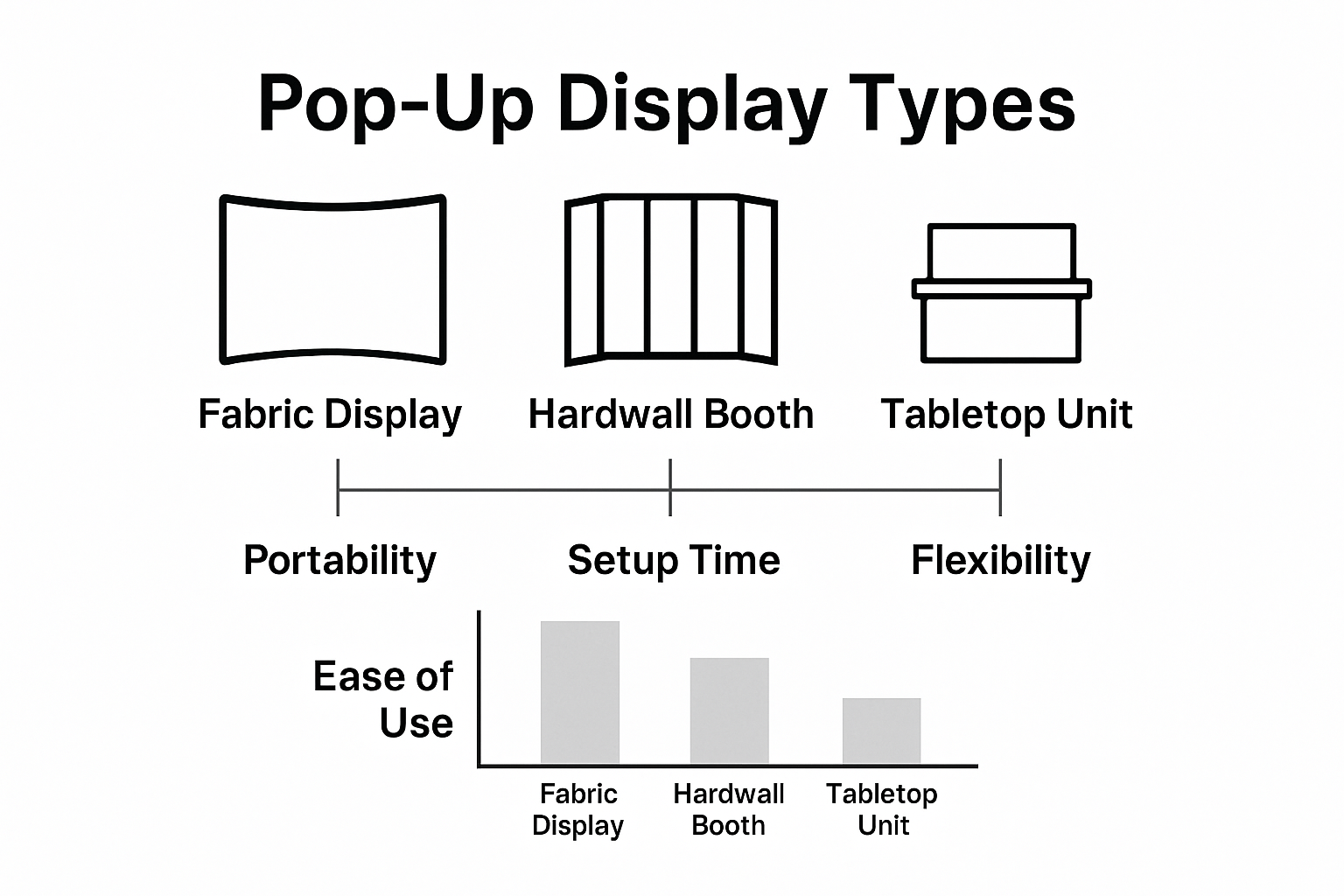
Event professionals utilize several distinct pop-up display configurations that cater to different marketing objectives and spatial requirements. Design factors play a critical role in determining the effectiveness of these temporary brand environments, making it essential to understand the unique characteristics of each display type.
The primary pop-up display categories include:
- Fabric Tension Displays
- Lightweight and highly portable
- Seamless graphic presentation
- Quick assembly with tension-based frame systems
- Ideal for conferences and trade shows
- Hardwall Pop-Up Displays
- Rigid panel construction
- More substantial and professional appearance
- Enhanced durability for repeated use
- Suitable for corporate events and long-term installations
- Modular Pop-Up Systems
- Highly customizable configurations
- Adaptable to various booth sizes
- Interchangeable graphic panels
- Provides maximum flexibility for different event requirements
The expansion of pop-up concepts demonstrates their versatility across commercial activities, reflecting their importance in modern marketing strategies. Each display type offers unique advantages, allowing businesses to select the most appropriate solution based on their specific event goals, budget constraints, and spatial limitations.
Understanding these variations helps event professionals make informed decisions. The right pop-up display can transform an ordinary space into a compelling brand narrative, creating immersive experiences that capture audience attention and communicate brand messaging effectively. Ultimately, selecting the appropriate display type is about matching form with function, ensuring that every visual element supports the broader marketing objectives.
How Pop-Up Displays Work in Practice
In practical event scenarios, pop-up displays function as dynamic, adaptable marketing tools that transform spaces through strategic design and rapid deployment. Designing pop-up events requires careful consideration of structural flexibility and environmental context, enabling professionals to create immersive brand experiences in diverse settings.
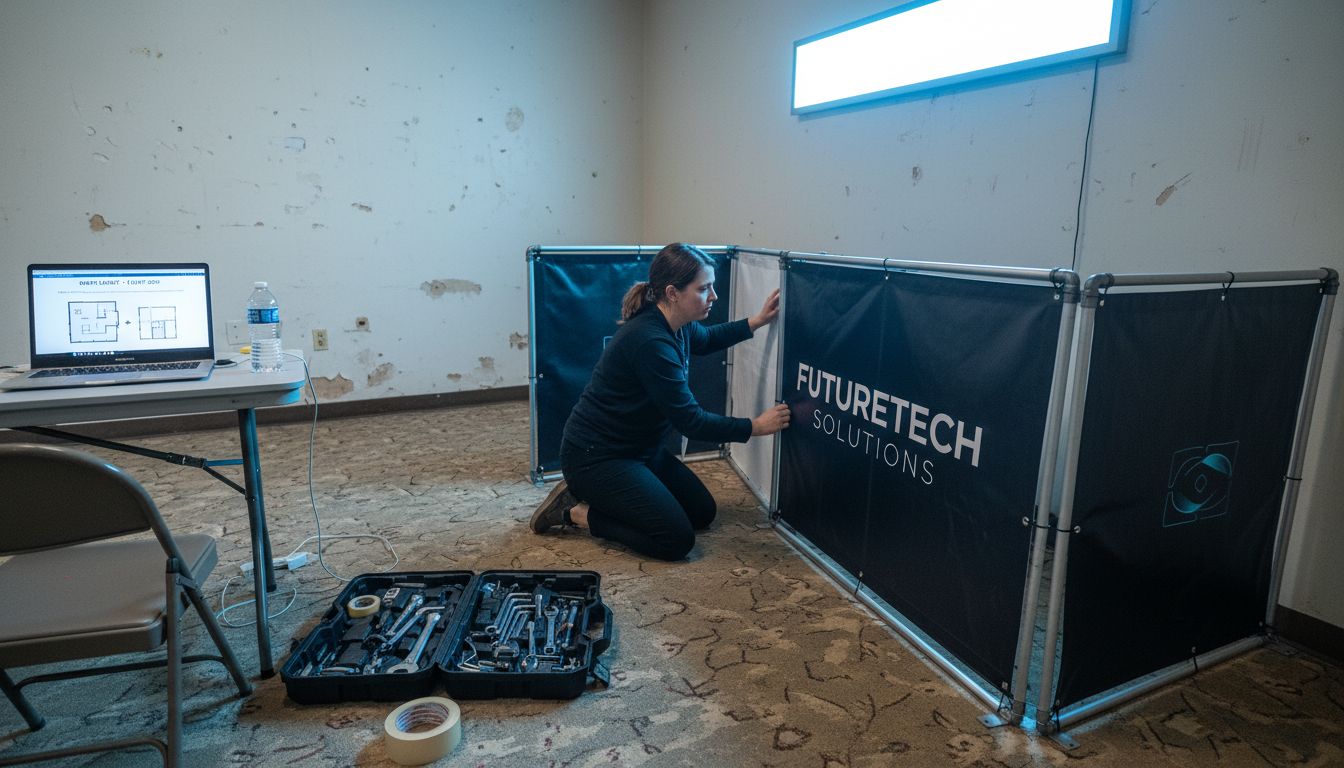
The typical workflow for implementing a pop-up display involves several key stages:
- Pre-Event Planning
- Assess event space dimensions
- Select appropriate display type
- Design graphic content
- Prepare transportation and setup logistics
- On-Site Setup
- Quickly assemble modular frame
- Attach tension fabric or graphic panels
- Level and align display components
- Integrate additional branding elements
- Event Execution
- Monitor display stability
- Adjust lighting and positioning
- Engage with event attendees
- Capture audience interactions
Pop-up environments demonstrate remarkable adaptability across different spatial configurations, allowing businesses to create responsive and dynamic brand presentations. These displays are engineered with precision, featuring lightweight materials, collapsible mechanisms, and seamless graphic integration that enable rapid transformation of physical spaces.
The strategic deployment of pop-up displays goes beyond mere visual communication. They serve as powerful narrative tools that compress complex brand stories into compact, memorable experiences. By understanding the intricate mechanics of these displays - from frame engineering to graphic design - event professionals can craft compelling visual narratives that capture audience attention and communicate brand messages with unprecedented efficiency.
Benefits for Trade Shows and Marketing
Pop-up displays have revolutionized marketing strategies by providing businesses with powerful, flexible tools for creating memorable brand experiences. Design elements play a critical role in enhancing consumer engagement and brand awareness, transforming traditional marketing approaches into dynamic, interactive narratives.
The key benefits of pop-up displays for trade shows and marketing include:
Brand Visibility Advantages
- Instant visual impact
- Cost-effective brand positioning
- Ability to create immersive experiences
- Quick setup and teardown
- Highly customizable messaging
Strategic Marketing Benefits
- Direct audience interaction
- Opportunities for real-time feedback
- Flexible deployment across multiple venues
- Enhanced brand storytelling capabilities
- Measurable audience engagement metrics
Pop-up store design factors significantly influence consumer behavior and marketing objectives, enabling businesses to craft targeted promotional strategies. These displays serve as compact marketing platforms that compress complex brand narratives into visually compelling, easily digestible experiences.
Traditional marketing channels often struggle to create genuine connections. Pop-up displays solve this challenge by providing an immersive, interactive environment where brands can directly engage potential customers. By transforming physical spaces into dynamic storytelling platforms, these displays enable businesses to break through marketing noise, capture attention, and create meaningful interactions that traditional advertising methods cannot replicate.
Cost Factors and Mistakes to Avoid
Pop-up displays represent a significant investment for businesses, requiring strategic financial planning and careful consideration of potential pitfalls. Design factors play a crucial role in determining the overall cost-effectiveness of these marketing tools, making it essential to understand the financial nuances of implementation.
Common cost considerations include:
Initial Investment Factors
- Display frame and structure costs
- Graphic design and printing expenses
- Transportation and logistics
- Storage requirements
- Potential rental or venue fees
Potential Financial Mistakes
- Overlooking hidden setup expenses
- Inadequate budget for graphic customization
- Neglecting transportation and handling costs
- Failing to plan for multiple event uses
- Underestimating maintenance requirements
Strategic planning is critical to avoiding common implementation errors that can escalate expenses, ensuring businesses maximize their return on investment. Event professionals should conduct thorough cost-benefit analyses, considering not just the upfront expenses but the long-term value of their display investment.
Successful pop-up display deployment requires a balanced approach that combines financial prudence with creative marketing strategy. Smart businesses view these displays as reusable assets, amortizing costs across multiple events and marketing initiatives. By anticipating potential expenses, negotiating strategic partnerships, and designing versatile displays that can be adapted for various settings, companies can transform what might seem like a significant investment into a cost-effective marketing solution that delivers substantial brand visibility and engagement.
Elevate Your Brand Presence with Expert Pop-Up Displays
If you are seeking to create unforgettable brand experiences that captivate audiences instantly at trade shows or corporate events pop-up displays offer the perfect solution. These versatile and portable setups solve the challenge of transforming dull spaces into dynamic storytelling platforms with quick assembly and high visual impact. Whether you want seamless fabric tension displays or rigid hardwall backdrops the right display can dramatically boost your event visibility and customer engagement.
Discover high-quality custom solutions at Live Displays where you can explore a wide range of premium options including Roll Up Banner Stands – LIVE DISPLAYS and Gazebos – LIVE DISPLAYS designed to meet the demanding needs of event professionals. These products feature advanced printing technology to provide vibrant displays that capture attention and enable effortless setup so you can focus on delivering your message.
Don’t let your brand blend into the background. Act now to enhance your event impact by investing in versatile pop-up displays and complementary promotional tools that match your specific goals. Visit Live Displays today to browse collections, request quick quotes, and get free artwork proofs. Start turning every event into a memorable brand moment.
Frequently Asked Questions
What is a pop-up display?
A pop-up display is a portable promotional tool designed for events, trade shows, and marketing activations. It allows businesses to establish a branded presence quickly in various environments.
What are the primary types of pop-up displays?
The primary types include fabric tension displays, hardwall displays, modular systems, and tabletop pop-ups. Each offers unique features and benefits suitable for different marketing objectives and spatial requirements.
How do pop-up displays benefit trade shows and marketing?
Pop-up displays enhance brand visibility, create immersive experiences, and facilitate direct audience engagement. They provide cost-effective marketing solutions with quick setup and customizable messaging.
What are common mistakes to avoid when using pop-up displays?
Common mistakes include overlooking hidden setup costs, inadequate budget for graphic customization, and underestimating maintenance needs. Strategic planning can help avoid these pitfalls and maximize return on investment.
Recommended
- 7 Essential Types of Event Displays for Maximum Impact – LIVE DISPLAYS
- 7 Smart Portable Display Options List for Event Success – LIVE DISPLAYS
- Complete Guide to the Role of Portable Displays – LIVE DISPLAYS
- What Is Display Technology? Complete Guide for Events – LIVE DISPLAYS
- 8 Essential Event Planning Tools for Every Organizer - WhenNOT Blog
- Guía esencial completa para usar el diseño en tus eventos. - Mister Mikel
- Mats4EU | Logo Mats Making a Lasting Impression – Mats4U USA
Share:
Role of Event Displays in Boosting Brand Recall
What Is Event Branding and Why It Matters