
Over 80 percent of American event attendees believe that striking visual displays help them remember brands long after the event ends. In crowded exhibition halls and bustling conferences, businesses face fierce competition to stand out and leave a lasting mark on potential customers. Discover how thoughtfully crafted event displays actually shape audience perception and boost brand recall, giving forward-thinking organizations a winning edge.
Table of Contents
- Defining Event Displays And Brand Recall
- Types Of Event Displays For Branding
- How Visual Displays Influence Audience Memory
- Design Strategies That Enhance Brand Recall
- Common Event Display Mistakes To Avoid
Key Takeaways
| Point | Details |
|---|---|
| Event Displays Enhance Brand Recall | Thoughtfully constructed event displays improve audience memory retention through compelling visual and sensory engagement. |
| Strategic Design is Essential | Consistent color schemes, clear messaging, and interactive elements align with audience expectations and strengthen brand identity. |
| Avoid Common Pitfalls | Maintaining clarity and focus in design prevents cognitive overload and ensures effective communication of brand messages. |
| Utilize Various Display Types | Different display formats serve unique branding objectives, enabling organizations to create impactful, immersive experiences. |
Defining Event Displays and Brand Recall
Event displays represent strategic visual communication tools that organizations use to create memorable brand experiences during trade shows, conferences, and marketing events. According to Iowa State University Extension and Outreach, these displays encompass a range of visual setups including backdrops, banners, and signage designed to enhance brand visibility and recognition among event attendees.
At their core, event displays serve as three-dimensional brand ambassadors that communicate an organization’s identity, values, and messaging through carefully crafted visual elements. They transform abstract brand concepts into tangible, immersive experiences that potential customers can directly interact with. By strategically designing displays with consistent color schemes, logos, and messaging, businesses can create powerful visual anchors that help audiences connect and remember their brand.
Research from the American Marketing Association highlights the critical role of visual exposure in brand recall. When event displays are thoughtfully constructed, they can significantly improve audience memory retention by creating compelling, multi-sensory impressions. Effective displays go beyond mere aesthetic appeal - they function as sophisticated communication platforms that engage viewers through:
- Consistent brand imagery
- Strategic color psychology
- Compelling graphic design
- Interactive visual elements
- Clear, memorable messaging
Successful event displays transform passive observation into active brand engagement, helping organizations forge stronger emotional connections with their target audiences.
Types of Event Displays for Branding
According to the Montana Department of Agriculture, event displays come in multiple formats, each serving unique branding and communication objectives. The primary types include panel displays, exhibit systems, table-top displays, pop-up displays, and pull-up stands - strategic visual tools that organizations can leverage to create impactful brand experiences.
Panel displays represent modular systems that allow businesses to create customized, configurable brand environments. These versatile structures enable companies to showcase their brand narrative through strategic graphic placement, allowing for maximum visual flexibility across different event spaces. Exhibit systems take this concept further by providing comprehensive, immersive brand installations that can be adapted to various venue configurations.
Research from the North American Hardware and Paint Association highlights the power of vignette displays, which present products within realistic contextual settings. These displays transform traditional marketing approaches by helping potential customers visualize product usage, creating deeper emotional connections and enhancing brand recall.
The most effective event display types include:
- Pop-up displays: Lightweight, portable, and quick to assemble
- Pull-up banners: Compact and ideal for smaller event spaces
- Table-top displays: Perfect for conferences and trade show booths
- Modular exhibit systems: Scalable and adaptable to different event requirements
- Vignette displays: Create immersive product storytelling environments
By carefully selecting and designing event displays that align with brand identity and audience expectations, organizations can create memorable visual experiences that significantly boost brand recognition and engagement.
How Visual Displays Influence Audience Memory
Research from the American Marketing Association reveals that visual displays play a critical role in transforming how audiences perceive and remember brand information. The human brain processes visual stimuli dramatically faster than text, making visual displays powerful tools for creating lasting memory impressions. By strategically designing displays that engage multiple sensory channels, organizations can significantly enhance audience recall and retention.
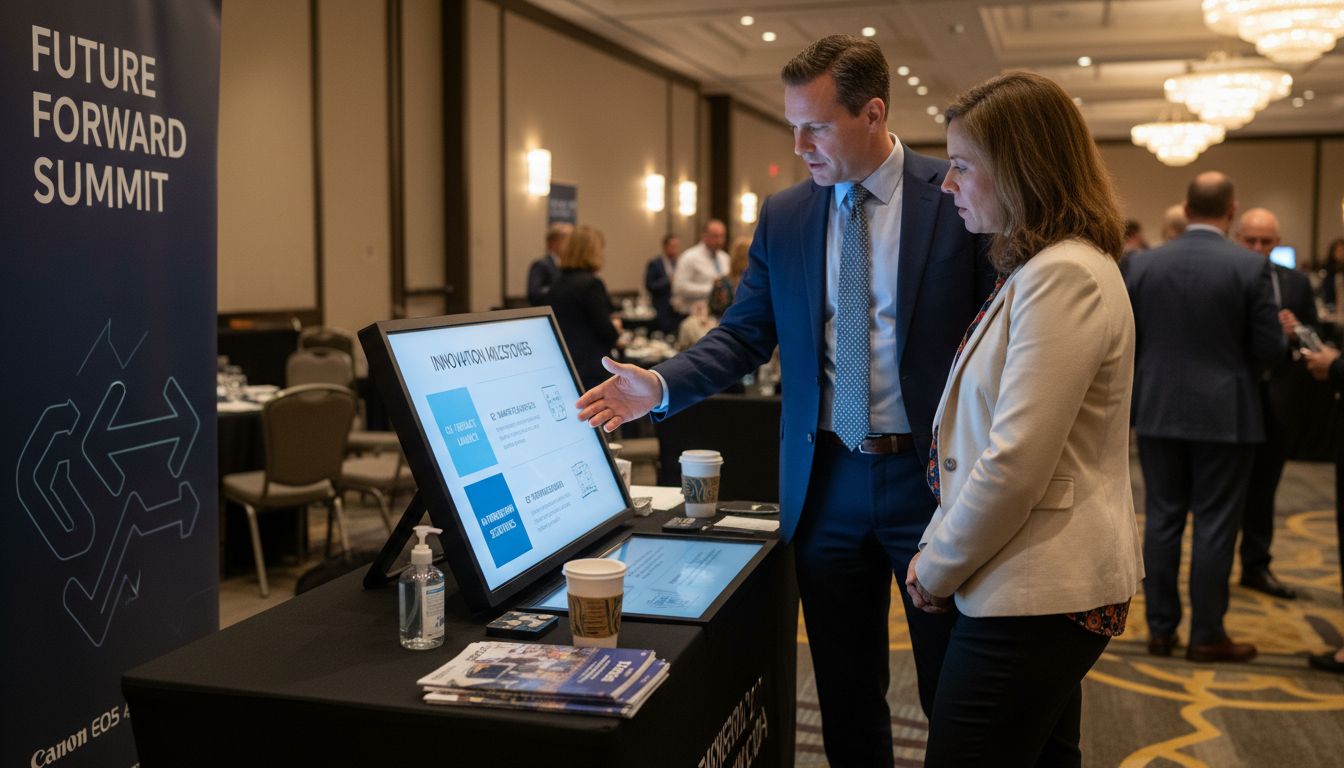
Cognitive processing of visual information occurs through complex neurological pathways that prioritize engaging, distinctive imagery. When a visual display breaks typical perceptual patterns, it triggers heightened neural activity, compelling viewers to pay closer attention. This neurological response means that unique, well-crafted displays can create memory imprints that persist far beyond the initial exposure moment.
Innovative visual solutions demonstrate how strategic placement and design can amplify memory retention. Key mechanisms for influencing audience memory include:
- Emotional resonance: Creating displays that evoke specific feelings
- Color psychology: Using color schemes that trigger psychological responses
- Spatial positioning: Strategically placing displays in high-attention zones
- Narrative elements: Incorporating storytelling within visual compositions
- Interactive components: Encouraging direct audience engagement
By understanding these neurological and psychological principles, brands can design visual displays that not only capture attention but also embed themselves deeply into audience memory, transforming passive viewing into meaningful brand experiences.
Design Strategies That Enhance Brand Recall
According to Events101, maintaining consistent brand messaging across all event materials is fundamental to creating memorable brand experiences. Successful display design requires a holistic approach that integrates visual elements, communication strategies, and psychological principles to create compelling brand narratives that resonate with audiences long after the event concludes.
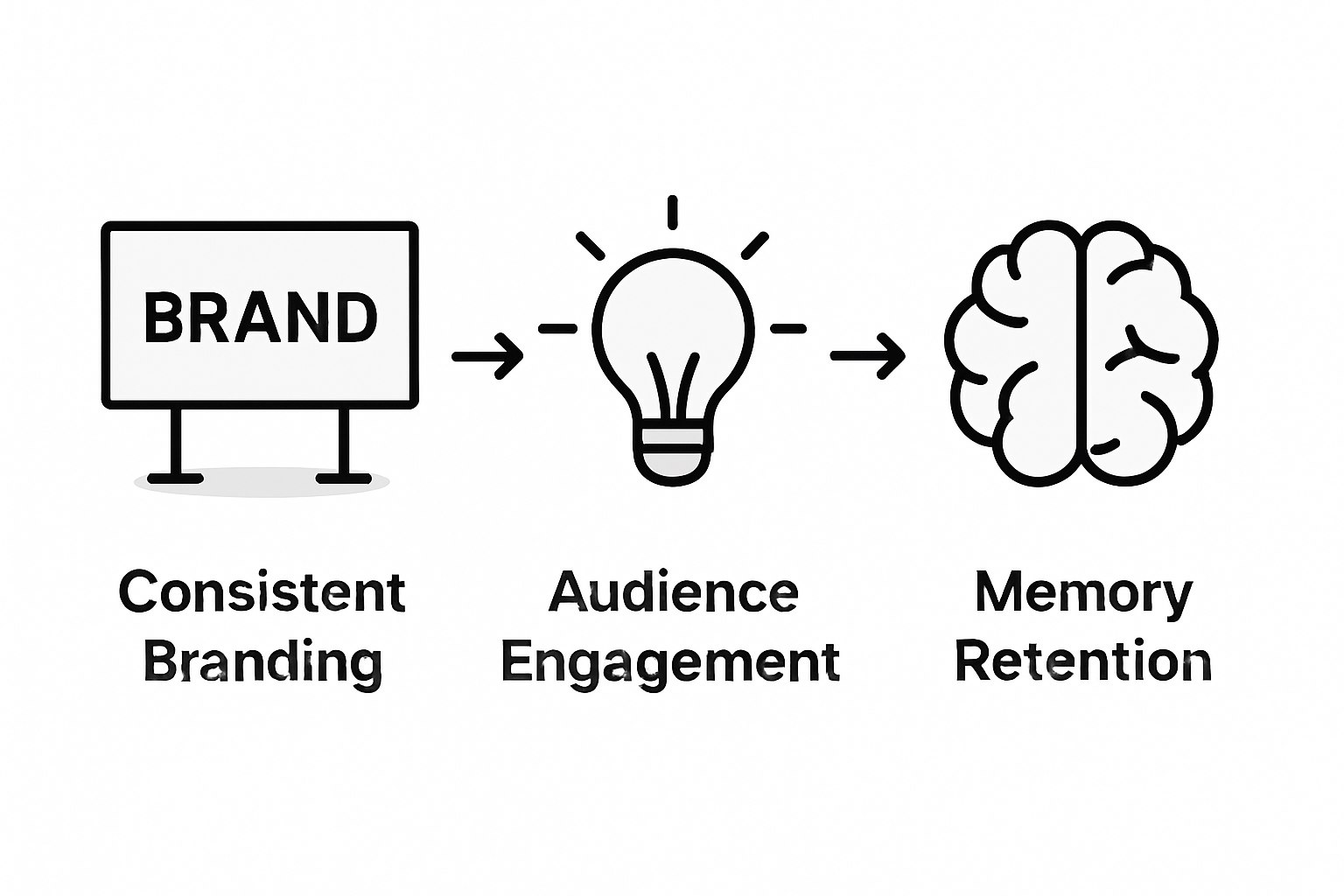
Strategic visual consistency represents the cornerstone of effective brand recall. This approach involves meticulously aligning color schemes, typography, imagery, and messaging to create a unified brand language that speaks directly to target audiences. By developing a cohesive visual identity, organizations can transform their event displays from mere promotional tools into powerful communication platforms that forge deep emotional connections.
Fintech News research highlights the critical importance of creating eye-catching custom displays that capture audience attention. Key design strategies for enhancing brand recall include:
- Color psychology: Utilizing brand-specific color palettes that trigger emotional responses
- Visual hierarchy: Organizing display elements to guide audience focus
- Storytelling components: Embedding narrative elements within display design
- Interactive technology: Incorporating digital or tactile engagement methods
- Consistent branding: Maintaining uniform visual language across all display elements
Successful brand recall emerges from displays that are not just visually striking, but also intellectually and emotionally engaging, transforming passive observation into memorable brand experiences.
Common Event Display Mistakes to Avoid
According to Fintech News research, many organizations inadvertently undermine their event display effectiveness by committing critical design errors that compromise brand communication. These mistakes can transform potentially powerful marketing tools into confusing, forgettable visual experiences that fail to engage target audiences.
Visual clutter represents one of the most prevalent display design pitfalls. Overcrowding displays with excessive graphics, competing color schemes, and overwhelming informational elements creates cognitive confusion for attendees. Successful displays require strategic simplification, focusing on core brand messages and creating clear visual pathways that guide audience attention and comprehension.
Research from Events101 emphasizes the critical importance of maintaining consistent brand messaging across all event materials. Common mistakes that can derail event display effectiveness include:
- Information overload: Cramming too many details into limited display space
- Inconsistent branding: Misaligning visual elements from other marketing materials
- Lack of focal point: Failing to create a clear central visual narrative
- Neglecting audience perspective: Designing without considering viewer experience
- Ignoring contextual relevance: Using generic designs that lack specific event connection
Avoiding these pitfalls requires a disciplined, strategic approach that prioritizes clear communication, visual simplicity, and authentic brand representation.
Elevate Your Brand Recall with Custom Event Displays
The article highlights the powerful role of event displays in boosting brand recall by engaging audiences through consistent branding, color psychology, and interactive elements. If you want to overcome common challenges like visual clutter and inconsistent messaging, choosing the right display solutions is crucial. At Live Displays, we understand how vital it is to create immersive brand experiences that stick in your audience’s memory.
Discover our range of expertly crafted options such as Roll Up Banner Stands designed to deliver vibrant visuals and clear messaging. Whether you need portable, eye-catching banners or comprehensive custom setups, our high-quality printing and bespoke customization empower you to capture attention effectively.
Boost your brand visibility today by exploring our full collection at Live Displays. Take the first step toward creating unforgettable event experiences with easy ordering, free artwork proofs, and fast shipping. Visit us now and transform your next trade show into a memorable brand engagement opportunity.
Frequently Asked Questions
What are event displays and how do they enhance brand awareness?
Event displays are strategic visual tools used during trade shows and marketing events to create memorable brand experiences. They enhance brand awareness by communicating an organization’s identity, values, and messaging through visual elements such as banners and signage.
How do visual displays affect audience memory and recall?
Visual displays significantly enhance audience memory and recall by influencing cognitive processing. The human brain processes visual information faster than text, meaning well-designed displays that engage multiple senses create lasting impressions and enhance brand recognition.
What types of event displays are most effective for branding?
The most effective types of event displays include panel displays, pop-up displays, pull-up banners, table-top displays, and vignette displays. Each type serves unique branding purposes and can enhance engagement depending on the event context.
What common mistakes should be avoided when designing event displays?
Common mistakes in event display design include visual clutter, information overload, inconsistent branding, and neglecting audience perspective. To avoid these pitfalls, focus on clear messaging, visual simplicity, and maintaining a cohesive brand identity.
Recommended
- Branded Displays for Events: Complete Guide – LIVE DISPLAYS
- 7 Essential Display Marketing Tips for Event Success – LIVE DISPLAYS
- How to Choose Promotional Displays for Maximum Event Impact – LIVE DISPLAYS
- How to Design Event Displays for Maximum Brand Impact – LIVE DISPLAYS
- Understanding the Role of Branding in Events - Blog
- Mats4EU | Logo Mats Making a Lasting Impression – Mats4U USA
Share:
Trade Show Branding Guide: Boost Visibility and Impact
What Is a Pop-Up Display and Why Event Pros Rely On Them