

Trade show floors are crowded with brands all fighting for attention, yet over 50 percent of attendees recall only the most striking visuals after the event. For marketing managers at UK businesses, mastering visual display strategy can mean the difference between blending in and standing out alongside dominant American competitors. This guide sheds light on the practical design principles, display types, and common pitfalls to help your brand capture immediate attention and build lasting connections at every trade show.
Table of Contents
- Defining Visuals In The Trade Show Context
- Main Types Of Trade Show Visual Displays
- Visual Design Strategies For Maximum Impact
- Enhancing Brand Visibility And Attendee Engagement
- Common Visual Display Pitfalls To Avoid
Key Takeaways
| Point | Details |
|---|---|
| Importance of Visuals | Visuals in trade shows are crucial for conveying brand messages and creating engaging experiences that attract attention. |
| Effective Display Types | Choose display types that align with marketing goals, including banners, digital screens, and interactive displays to enhance engagement. |
| Design Principles | Prioritize clarity, consistency, and strategic messaging to ensure visual elements communicate effectively within seconds. |
| Avoid Common Pitfalls | Simplify design to prevent information overload and maintain a professional appearance to enhance brand credibility. |
Defining Visuals in the Trade Show Context
In the dynamic world of trade shows, visuals serve as powerful communication tools that transform static displays into engaging brand experiences. Trade show visitors encounter complex marketing landscapes where graphical elements play a critical role in attracting attention and conveying brand messages effectively.
Visuals in trade show contexts encompass a wide range of design elements including logos, graphics, banners, product demonstrations, interactive displays, and strategic color schemes. These visual components are not merely decorative but serve strategic purposes: simplifying complex product information, creating emotional connections, and providing memorable brand representations that stand out in crowded exhibition spaces. Effective visual communication principles like clarity, balance, and hierarchy guide marketers in crafting impactful visual narratives that resonate with target audiences.
The primary objectives of trade show visuals extend beyond aesthetic appeal. They function as silent brand ambassadors, communicating company values, technological capabilities, and competitive advantages within seconds of viewer engagement. Successful visual strategies leverage color psychology, spatial design, and strategic information placement to create immersive experiences that transform passive observers into active prospects.
Pro tip: When designing trade show visuals, prioritize clean, high-contrast designs that can be understood quickly from a distance and incorporate your brand’s core messaging within the first three seconds of viewer interaction.
Main Types of Trade Show Visual Displays
Trade show visual displays represent a sophisticated arsenal of marketing tools designed to capture attention and communicate brand messages effectively. Booth designs range from traditional static displays to cutting-edge interactive experiences, offering businesses multiple strategies for engaging potential clients and partners.
The primary categories of trade show visual displays include large format banners and backdrops, which serve as critical visual anchors for booth design. These expansive graphics typically feature brand logos, key messaging, and high-resolution product images that communicate company identity from a distance. Digital screens and interactive displays have emerged as powerful engagement tools, allowing companies to showcase dynamic content, product demonstrations, and real-time information that encourages visitor interaction.
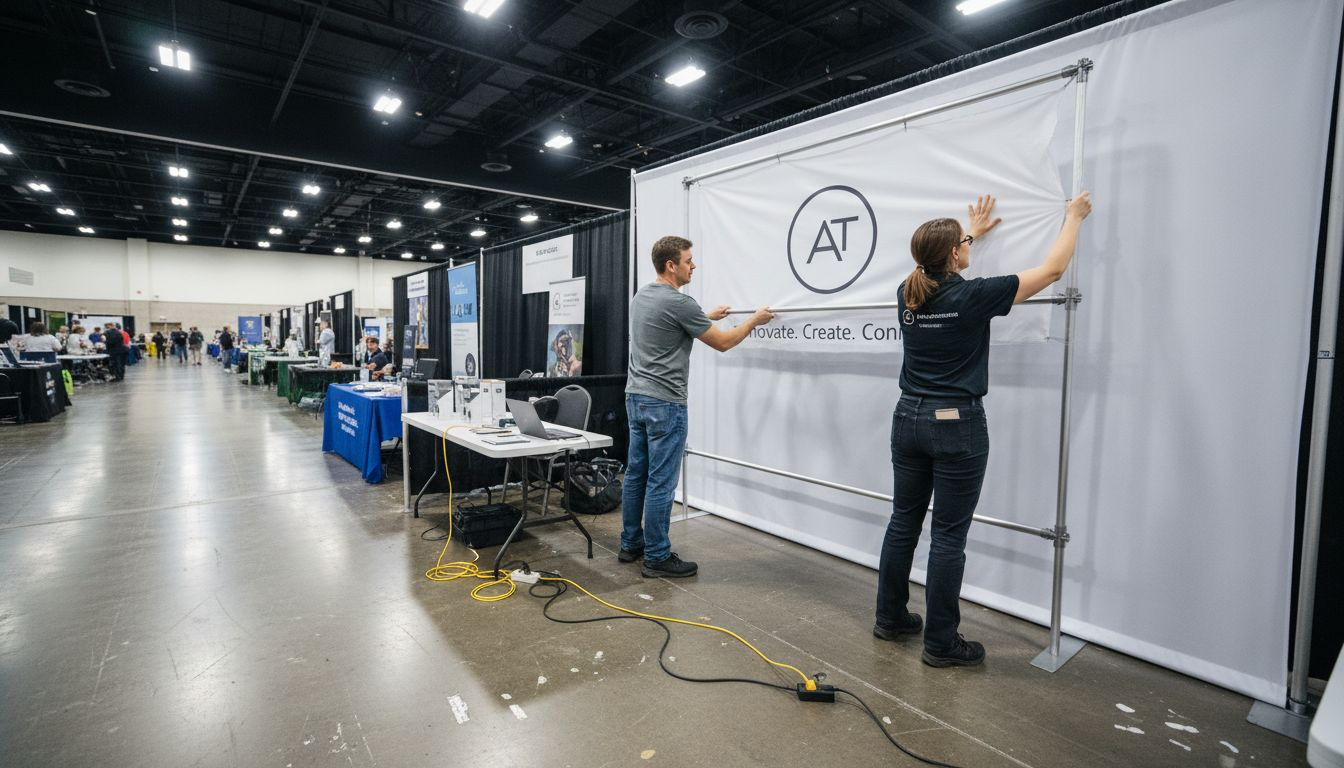
Additional visual display types encompass table covers with strategic branding, portable pop-up displays, modular exhibit systems, and targeted signage that guides visitor attention. Product showcase areas utilize specialized lighting, pedestals, and carefully designed presentation spaces to highlight specific offerings. The most effective trade show displays integrate multiple visual elements to create a cohesive narrative that communicates brand value, technological capabilities, and unique market positioning.
Here’s a comparison of common trade show visual display types and their strategic benefits:
| Display Type | Ideal Use Case | Engagement Level | Impact on Brand Identity |
|---|---|---|---|
| Banners & Backdrops | Large booth branding | Passive | Strong visual anchor |
| Digital Screens | Product demos, videos | Interactive | Modern, tech-savvy impression |
| Table Covers | Small items and literature focus | Moderate | Subtle logo reinforcement |
| Pop-Up Displays | Portability and easy setup | Passive | Fast branding for small booths |
| Product Showcase Area | Highlight featured product | Interactive | Creates hands-on experiences |
Pro tip: Select visual display types that align with your specific marketing objectives, considering factors like booth size, target audience, and the type of products or services you are presenting.
Visual Design Strategies for Maximum Impact
Successful trade show visual design requires a strategic approach that transforms booth spaces into compelling brand storytelling platforms. Effective design strategies emphasize creating inviting and open booth layouts that encourage visitor engagement, ensuring that visual elements communicate brand identity with clarity and purpose.
The core principles of impactful visual design center on simplicity, consistency, and strategic messaging. Graphic elements should follow precise design guidelines that prioritize readability and immediate comprehension, utilizing high-contrast color schemes, clean typography, and organized layouts that guide visitors’ visual attention. Successful designs create visual hierarchies that naturally draw the eye toward key brand messages, product details, and unique value propositions.
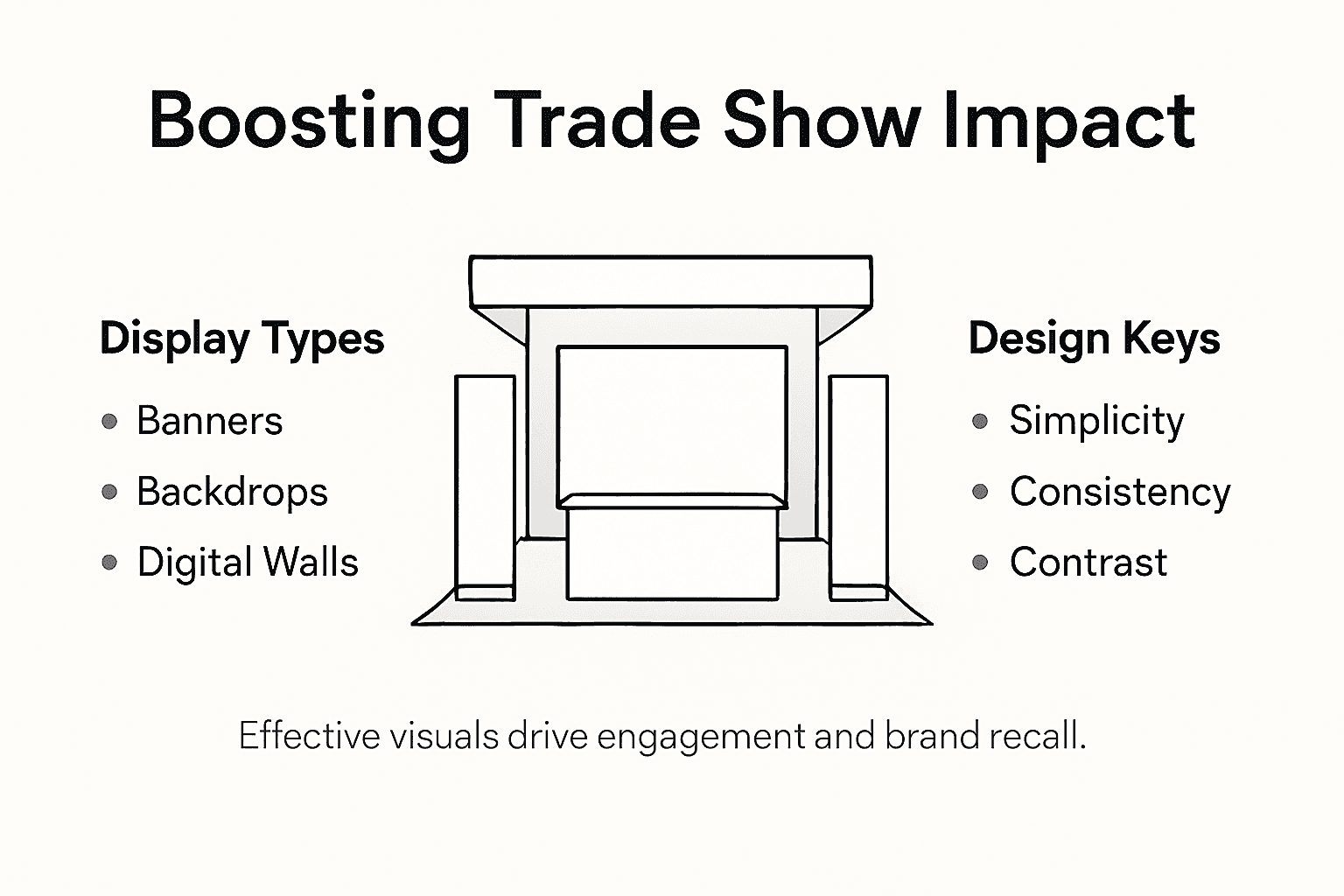
Advanced visual design strategies incorporate dynamic elements like interactive digital displays, motion graphics, and multimedia presentations that transform traditional static booth environments. These techniques not only capture attention but also provide immersive brand experiences that differentiate companies from competitors. Thoughtful integration of technological and design elements can transform a standard booth into an engaging, memorable brand interaction zone that resonates with target audiences.
Pro tip: Conduct a pre-event design review by photographing your booth setup and critically analyzing it from a visitor’s perspective, ensuring your visual elements communicate your core message within three seconds of engagement.
Enhancing Brand Visibility and Attendee Engagement
Visual strategies play a critical role in transforming trade show interactions from passive observations to dynamic brand experiences, particularly in environments where companies compete for limited attendee attention. Brand visibility goes beyond simple logo placement, requiring sophisticated visual communication that immediately captures and sustains visitor interest through strategic design and technological integration.
The most effective engagement approaches leverage multi-sensory visual experiences that encourage active participation. Interactive visual presentations enable simultaneous information absorption and emotional connection, allowing brands to communicate complex messages quickly and memorably. Advanced techniques include augmented reality demonstrations, touchscreen product explorations, and personalized digital interactions that transform traditional booth environments into immersive brand storytelling platforms.
Successful attendee engagement hinges on creating visual narratives that are both intellectually stimulating and emotionally resonant. This involves developing display strategies that anticipate audience curiosity, provide immediate value, and create memorable brand touchpoints. By carefully orchestrating visual elements that blend aesthetic appeal with informative content, companies can convert brief trade show interactions into meaningful connections that extend beyond the event.
Pro tip: Design your visual displays with a clear narrative arc that guides visitors through a logical progression of brand storytelling, ensuring each visual element builds upon the previous one to create a comprehensive and engaging experience.
Common Visual Display Pitfalls to Avoid
Visual communication failures can dramatically undermine a company’s trade show presence, transforming potentially powerful brand interactions into forgettable encounters. Understanding and preempting common design mistakes becomes crucial for marketers seeking to create compelling visual narratives that capture and sustain attendee attention.
One of the most significant design errors involves overwhelming visual displays with excessive information. Trade show graphics require strategic simplification to maintain audience engagement, which means avoiding dense text blocks, cluttered layouts, and complex graphics that confuse rather than communicate. Successful visual displays distill complex messages into clear, immediate communication that allows attendees to rapidly comprehend a brand’s core value proposition.
Technical execution plays an equally important role in avoiding visual display pitfalls. Critical mistakes include using low-resolution images, inconsistent color palettes, poor typography, and graphic elements that lack alignment with overall brand identity. These technical missteps can inadvertently signal unprofessionalism, undermining the credibility and perceived quality of a company’s offerings. Effective visual displays demand meticulous attention to design details, ensuring that every graphic element reinforces a cohesive and sophisticated brand narrative.
This summary highlights common visual design pitfalls and their business consequences:
| Pitfall | Description | Potential Business Impact |
|---|---|---|
| Information Overload | Too much text or graphics | Visitor confusion, missed message |
| Low-Quality Images | Pixelated or blurry visuals | Negative perceived credibility |
| Inconsistent Branding | Mixed colors, fonts, logos | Weak brand recognition |
| Poor Layout Organization | Cluttered visual arrangement | Reduced visitor engagement |
Pro tip: Conduct a ruthless 3-second review of your trade show visuals, asking whether an uninformed viewer could immediately understand your core message and brand identity.
Elevate Your Trade Show Presence with Powerful Visual Displays
Crafting visuals that instantly communicate your brand message is vital to turning trade show visitors into lasting customers. The article highlights how clarity, strategic messaging, and impactful display design challenge many marketers. If you want to avoid issues like cluttered layouts or low-quality images and instead deliver engaging, professional visuals your audience understands within seconds, Live Displays offers the tailored solutions you need.
Explore our extensive collection of superior-quality products such as Roll Up Banner Stands designed precisely for fast, clear branding impact. With high-resolution printing and customizable options, we help you create clean, vibrant visuals that boost brand visibility and attendee engagement at your next event.
Don’t let your booth go unnoticed. Visit Live Displays today to browse our wide range of event displays and start crafting a memorable brand experience that stands out. Act now to access free artwork proofs and quick quotes that simplify your preparation and maximize your trade show success.
Frequently Asked Questions
What are the main types of visuals used in trade shows?
The primary types of visuals include banners and backdrops, digital screens, table covers, pop-up displays, and product showcase areas. Each type serves strategic purposes, like branding, engaging visitors, and highlighting products effectively.
How can I design effective trade show visuals?
To design effective trade show visuals, prioritize simplicity, consistency, and strategic messaging. Use high-contrast colors, clean typography, and organized layouts to guide visitor attention and ensure your core message is communicated quickly.
What common mistakes should I avoid when creating trade show visuals?
Avoid overwhelming displays with too much information, using low-quality images, maintaining inconsistent branding, and poor layout organization. Each of these pitfalls can lead to confusion and reduce attendee engagement.
How do visuals enhance brand visibility at trade shows?
Visually engaging displays attract attention and create immersive experiences, turning passive observers into active participants. Effective visual strategies leverage multi-sensory elements and clear storytelling to build stronger emotional connections with attendees.
Share:
Master the Custom Display Creation Process for Events
Eco-Friendly Display Solutions: Boost Brand Impact Sustainably