

Reducing your trade show footprint is no longer just an american trend—over 60% of UK businesses now prioritise sustainability when choosing display technology. As brands across London, Manchester, and Glasgow shift focus, event coordinators face growing pressure to deliver fresh, eco-conscious messages without sacrificing visual impact. Discover what sets the latest generation of eco-friendly displays apart and how they can transform both brand visibility and environmental outcomes for your next event.
Table of Contents
- Eco-Friendly Display Solutions Defined
- Types of Eco Materials and Displays
- How Sustainable Displays Work
- Benefits For Brands and Attendees
- Costs, Risks, and Compliance Factors
- Comparing Traditional Versus Eco Displays
Key Takeaways
| Point | Details |
|---|---|
| Eco-Friendly Approach | Eco-friendly display solutions minimize environmental impact through sustainable materials and energy-efficient technologies while enhancing brand messaging. |
| Material and Energy Efficiency | Utilizing recycled materials and innovative designs, these displays significantly lower power consumption and carbon footprints compared to traditional options. |
| Competitive Advantage | Brands adopting eco-friendly displays benefit from improved corporate reputation, stakeholder trust, and alignment with consumer expectations for sustainability. |
| Compliance Considerations | Companies must navigate complex regulatory landscapes and ensure proper certification to validate their sustainability claims effectively. |
Eco-Friendly Display Solutions Defined
Eco-friendly display solutions represent strategic visual communication technologies designed to minimize environmental impact while delivering powerful brand messaging. These innovative approaches go beyond traditional display methods by integrating sustainable materials, energy-efficient technologies, and circular design principles that reduce waste and carbon footprint across event and marketing contexts.
At their core, eco-friendly displays focus on three critical dimensions: material sustainability, energy conservation, and lifecycle management. Sustainability reports from global display manufacturers demonstrate how advanced display technologies can simultaneously deliver high-performance visual experiences while dramatically reducing ecological consequences. This means selecting display materials that are recyclable, using manufacturing processes with lower carbon emissions, and creating products that consume minimal energy during operational cycles.
The technical landscape of eco-friendly display solutions encompasses multiple strategic approaches. Key characteristics include utilizing recycled aluminum frameworks, selecting biodegradable fabric graphics, implementing LED technologies with reduced power consumption, and designing modular display systems that enable component replacement instead of total product replacement. These technologies not only minimize environmental impact but also provide event coordinators with flexible, adaptable marketing tools that align with contemporary sustainability expectations.
Pro tip: When selecting eco-friendly display solutions, request specific sustainability certifications and energy efficiency ratings to validate manufacturer claims about environmental performance.
Types of Eco Materials and Displays
Eco-friendly display materials represent a revolutionary approach to visual communication technologies, encompassing innovative substances that minimize environmental impact while maintaining high-performance standards. Advanced research in quantum dot materials demonstrates how cutting-edge substances can transform traditional display manufacturing by eliminating toxic components and improving energy efficiency.
The spectrum of eco-materials used in display solutions includes several groundbreaking categories. Recycled plastics form a significant component, with manufacturers like LG developing laptop displays using up to 41% recycled content. Other prominent eco-materials include biodegradable fabric graphics, aluminum frameworks with high recyclability, and advanced polymer composites designed to reduce carbon footprint. These materials are strategically engineered to provide durability, visual clarity, and environmental responsibility.
Specific display technologies also contribute to sustainability efforts. Transparent OLED displays, LED panels with reduced power consumption, and modular design systems enable more environmentally conscious visual communication. These technologies prioritize energy efficiency, material recyclability, and reduced waste generation. By integrating advanced materials like quantum dot LEDs that eliminate heavy metal components, manufacturers can create display solutions that deliver exceptional visual performance while minimizing ecological impact.
Here’s a quick overview of common eco materials and their impact on displays:
| Eco Material Type | Environmental Benefit | Typical Display Use |
|---|---|---|
| Recycled plastics | Reduces landfill waste; lower emissions | Monitor casings, laptop screens |
| Biodegradable fabrics | Eliminates synthetic residue; compostable | Banner graphics, wraps |
| Recycled aluminum | Saves energy and raw materials | Display frameworks, mounts |
| Quantum dot LEDs | No toxic substances; energy efficient | High-clarity panels, signage |
Pro tip: Request detailed material composition reports and sustainability certifications when selecting eco-friendly display solutions to ensure genuine environmental credentials.
How Sustainable Displays Work
Sustainable displays function through sophisticated technological innovations that optimize energy consumption, material efficiency, and environmental performance across their entire lifecycle. Advanced green display technologies leverage intelligent algorithms and precision engineering to dramatically reduce power consumption and minimize ecological impact.
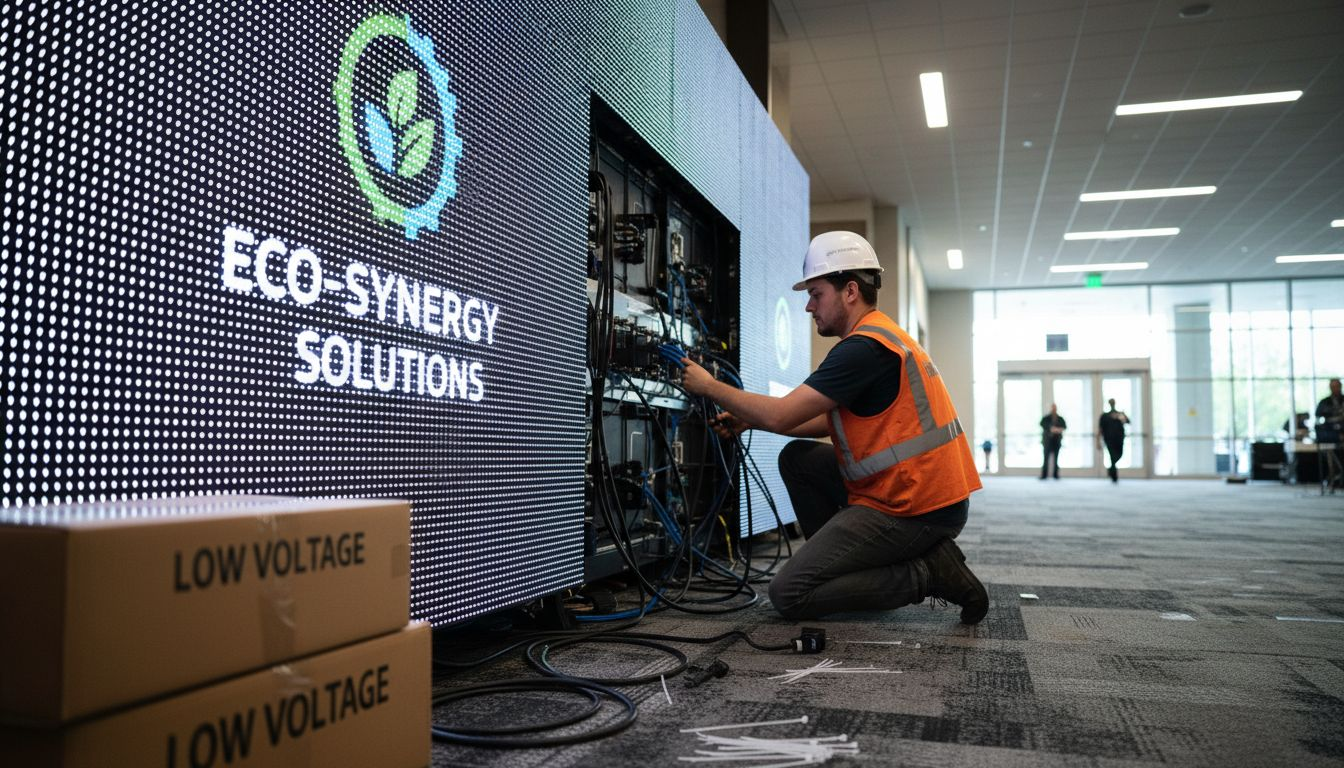
The core operational mechanisms of sustainable displays involve multiple strategic approaches. Manufacturers employ advanced thermal management systems that dynamically adjust voltage and brightness, ensuring optimal energy utilization. LED technologies play a crucial role, incorporating proprietary algorithms that can reduce power consumption by up to 35%. These systems also integrate high-efficiency components designed to maximize visual performance while minimizing electrical requirements, creating displays that are both environmentally responsible and technologically superior.
Life cycle assessments form another critical component of sustainable display functionality. By conducting comprehensive evaluations from manufacturing through disposal, display producers can identify and minimize environmental impacts at every stage. Techniques such as using recycled materials, reducing greenhouse gas emissions during production, and designing for future recyclability demonstrate a holistic approach to sustainable technology. Manufacturers like LG have successfully developed display panels that reduce carbon footprints by implementing these sophisticated design and production strategies.
Pro tip: Request detailed energy efficiency ratings and lifecycle assessment documentation when selecting sustainable display solutions to ensure genuine environmental credentials.
Benefits for Brands and Attendees
Eco-friendly display solutions offer transformative advantages for both brands and event attendees, creating a win-win scenario that transcends traditional marketing approaches. Corporate sustainability strategies demonstrate how environmentally conscious visual technologies can simultaneously enhance brand reputation and audience engagement while reducing ecological impact.
Brand Benefits extend far beyond traditional marketing metrics. Companies adopting sustainable display solutions gain significant competitive advantages, including enhanced corporate social responsibility profiles, improved stakeholder trust, and alignment with growing environmental expectations. These displays communicate a forward-thinking brand identity, signaling commitment to innovation and environmental stewardship. By choosing eco-friendly display technologies, organizations can differentiate themselves in crowded marketplaces, attracting environmentally conscious consumers and demonstrating authentic corporate values.
For event attendees, sustainable displays offer multiple experiential advantages. These technologies provide superior visual experiences through energy-efficient LED systems, reduced eye strain, and clearer imaging technologies. Moreover, environmentally aware participants appreciate brands that visibly demonstrate ecological responsibility, creating emotional connections that transcend traditional marketing interactions. The visual communication becomes more than a promotional tool - it becomes a statement of shared environmental values, fostering deeper engagement and positive brand perception.
Pro tip: Conduct pre-event sustainability assessments to quantify and communicate the specific environmental benefits of your eco-friendly display choices to maximize attendee and stakeholder appreciation.
Costs, Risks, and Compliance Factors
Navigating the landscape of eco-friendly display solutions requires a comprehensive understanding of potential financial and regulatory challenges. Emerging eco-design regulations present complex considerations for businesses seeking sustainable visual technologies, with nuanced implications for cost structures and compliance requirements.
Financial Considerations represent a critical dimension of sustainable display adoption. Initial investments in eco-friendly technologies can appear higher than traditional alternatives, with upfront costs potentially increasing due to advanced material sourcing and specialized manufacturing processes. However, long-term benefits include reduced energy consumption, lower maintenance expenses, and enhanced brand reputation. Companies must conduct thorough cost-benefit analyses that extend beyond immediate financial metrics, evaluating potential savings from improved operational efficiency and reduced environmental impact.
Compliance risks demand strategic attention from organizations implementing sustainable display solutions. Regulatory landscapes are increasingly complex, with international standards mandating stringent requirements for material efficiency, energy consumption, and carbon footprint reporting. Certification processes like Product Carbon Footprint and Eco Mark require extensive documentation and life cycle assessments, creating additional administrative overhead. Businesses must develop robust internal mechanisms to track, measure, and validate their sustainability claims, ensuring alignment with evolving environmental regulations and maintaining credibility in competitive markets.
Pro tip: Develop a comprehensive sustainability compliance checklist that includes detailed documentation of material sourcing, energy consumption metrics, and third-party certification requirements to streamline regulatory adherence.
Comparing Traditional Versus Eco Displays
The technological landscape of display solutions reveals stark contrasts between traditional and eco-friendly approaches, with sustainability emerging as a pivotal differentiator. Comprehensive analysis of display technologies demonstrates significant performance and environmental advantages of modern sustainable display solutions over conventional alternatives.
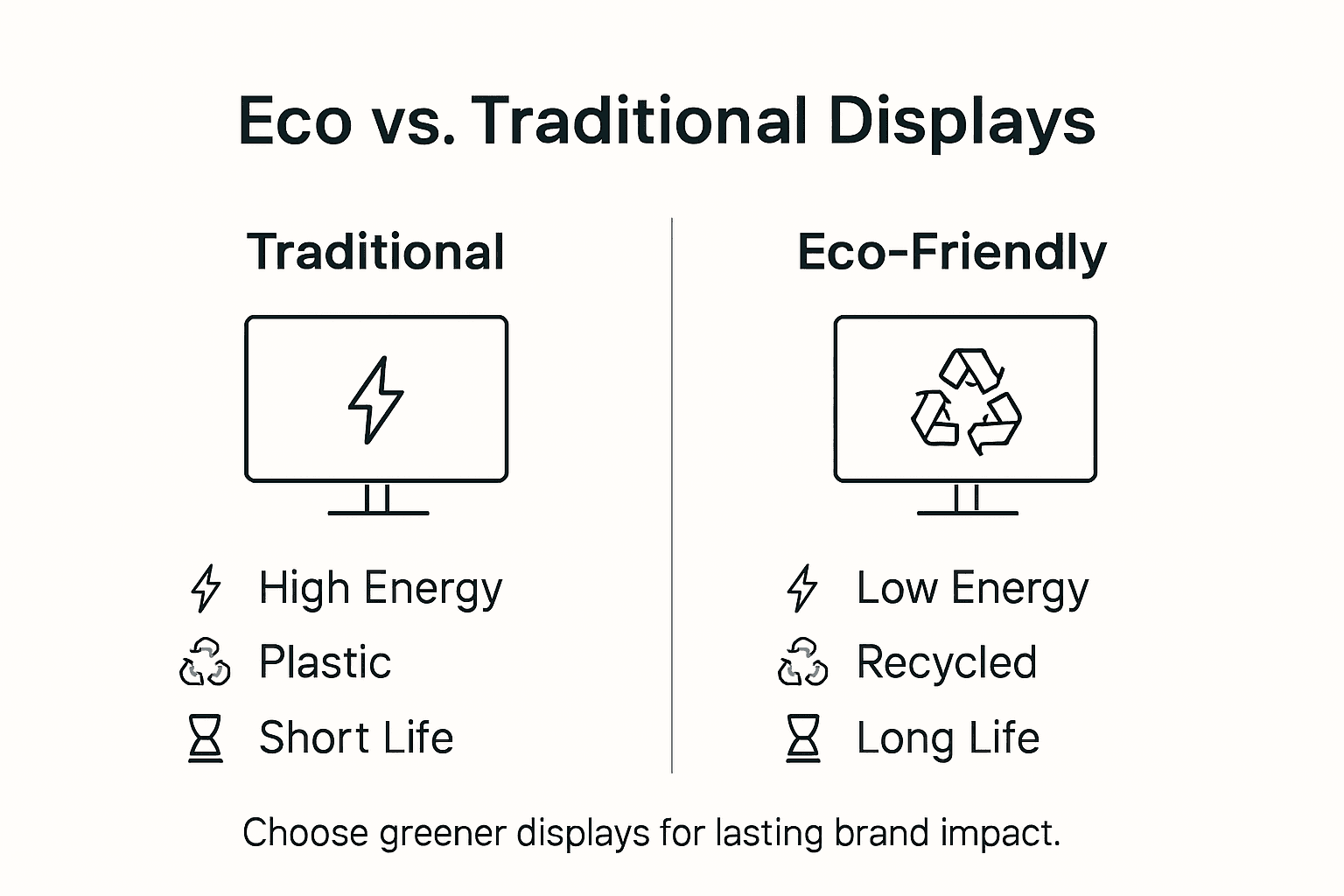
Energy Consumption represents the most immediate point of comparison between traditional and eco-friendly displays. Traditional displays typically rely on energy-intensive technologies with higher power requirements and less efficient thermal management. In contrast, eco-friendly displays incorporate advanced LED technologies, intelligent power management systems, and materials engineered for maximum energy efficiency. These innovations can reduce power consumption by up to 40%, translating into substantial operational cost savings and dramatically reduced carbon footprints for businesses and event organizers.
Material composition and lifecycle present another critical differentiating factor. Traditional displays often utilize non-recyclable materials and complex manufacturing processes that generate significant waste. Eco-friendly displays, however, strategically employ recyclable aluminum frameworks, biodegradable fabric graphics, and components designed for modular replacement. This approach not only minimizes environmental impact but also provides greater flexibility and longevity. The result is a display solution that meets contemporary sustainability expectations while delivering superior visual performance and reduced long-term environmental consequences.
Compare traditional and eco-friendly display solutions across key factors:
| Factor | Traditional Display Systems | Eco-Friendly Display Systems |
|---|---|---|
| Energy Usage | High power demand; little optimization | Reduced consumption; advanced management |
| Material Sources | Mostly virgin, non-recyclable | Recycled, biodegradable, modular |
| Maintenance Cost | Often rises over time | Lower long-term costs |
| Brand Perception | Neutral or outdated image | Modern, sustainability-focused impression |
Pro tip: Request detailed energy efficiency ratings and material composition reports when evaluating display technologies to make informed, sustainable purchasing decisions.
Elevate Your Brand with Eco-Friendly Display Solutions Today
Facing the challenge of creating impactful visuals while reducing environmental impact can feel overwhelming. This article highlights key goals such as energy-efficient displays, sustainable materials, and meaningful brand engagement through eco-friendly solutions. At Live Displays, we understand your need to deliver memorable marketing that aligns with modern sustainability standards without compromising on visual quality.
Discover our wide selection of eco-conscious options like Roll Up Banner Stands – LIVE DISPLAYS crafted from recyclable materials and energy-efficient fabrics. Complement your event setup with sustainable Gazebos – LIVE DISPLAYS that not only protect your team and guests but also reflect your commitment to responsible branding. We provide vibrant prints with advanced technology ensuring your message shines while honoring environmental priorities.
Seize the opportunity to boost brand impact sustainably by exploring the full range of customizable displays at Live Displays. Act now to request a free artwork proof and experience how eco-friendly solutions can transform your events with lasting impressions that truly resonate.
Frequently Asked Questions
What are eco-friendly display solutions?
Eco-friendly display solutions are visual communication technologies designed to minimize environmental impact through sustainable materials, energy-efficient technologies, and lifecycle management, all while delivering high-performance visual experiences.
How do sustainable displays work?
Sustainable displays function by optimizing energy consumption and using advanced materials that enhance efficiency while reducing ecological impact. They utilize technologies such as LED systems and thermal management to lower power usage significantly throughout their lifecycle.
What are the benefits of using eco-friendly displays for brands?
Using eco-friendly displays enhances brand reputation, attracts environmentally conscious consumers, and aligns corporate identity with sustainability. These displays also improve stakeholder trust and promote a forward-thinking image, helping brands stand out in crowded marketplaces.
What differences exist between traditional and eco-friendly display systems?
Traditional display systems typically use non-recyclable materials and have higher energy demands. In contrast, eco-friendly displays utilize recyclable materials, advanced energy-efficient technologies, and modular designs, leading to reduced environmental impact and long-term cost savings.
Share:
Role of Visuals in Trade Shows: Boosting Brand Impact
Master the Event Display Planning Process for Trade Shows