
Securing standout brand visibility at trade shows is no small feat when nearly 80 percent of attendees struggle to remember company names just hours after an event. Whether you are an experienced event planner or a growing small business marketer in the United Kingdom, designing displays that capture attention is vital. Learning from american trends and best practices can make your booth more memorable, helping you connect meaningfully with your target audience and achieve the impact you need.
Table of Contents
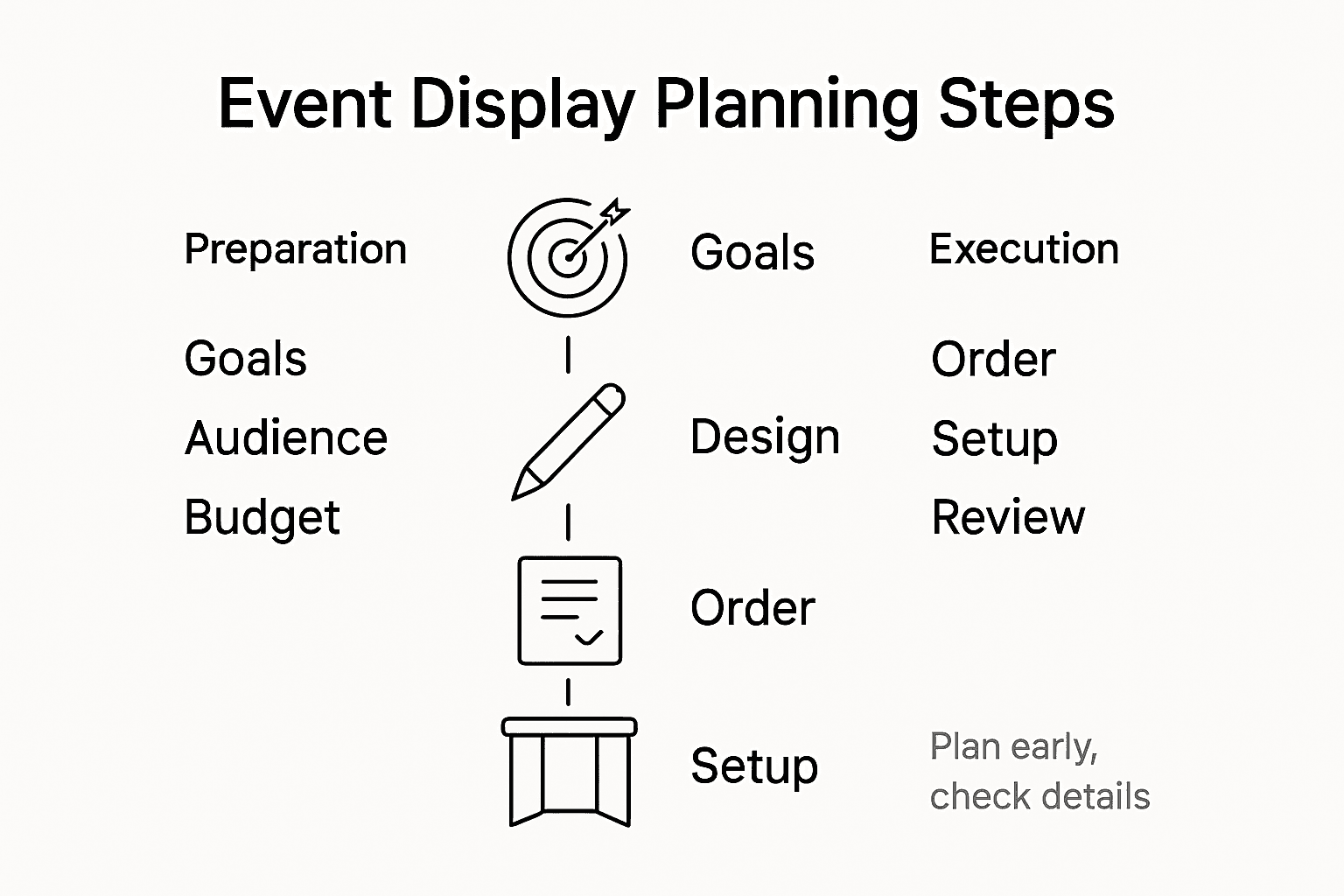
- Step 1: Define Event Goals And Audience Needs
- Step 2: Select And Customize Display Products
- Step 3: Request Quotes And Artwork Proofs
- Step 4: Finalize Orders And Schedule Delivery
- Step 5: Verify Branding Quality And Setup
Quick Summary
| Key Takeaway | Explanation |
|---|---|
| 1. Define clear goals and audience | Understanding goals and audience needs is crucial for effective planning and targeting at trade shows. |
| 2. Choose suitable display products | Select display types that match your objectives and enhance audience engagement for maximum impact. |
| 3. Request detailed quotes and proofs | Gather detailed quotes and proofs from vendors to ensure quality and fit within your budget before final decisions. |
| 4. Verify branding quality | Check all branding elements for consistency and clarity to ensure a professional presentation at the event. |
| 5. Maintain organized documentation | Keep all order confirmations and shipping documents in one place to streamline the production and delivery process. |
Step 1: Define event goals and audience needs
Successful trade show displays start with crystal clear goals and a deep understanding of your target audience. Defining precise objectives and audience characteristics will guide every subsequent decision in your event planning strategy.
Begin by conducting a comprehensive audience analysis that goes beyond basic demographics. Understanding the precise profile of event attendees involves segmenting potential participants by age, professional background, industry interests, and specific event expectations. Think about what motivates your ideal attendees: Are they seeking networking opportunities? Professional development? Product discoveries? Each segment might have different priorities.
Next, translate those audience insights into concrete event goals. Determining the scope and objectives early helps tailor your entire event strategy. Your goals could range from generating a specific number of qualified sales leads to increasing brand awareness within a target industry segment. Quantify these objectives whenever possible using metrics like expected attendee numbers, potential business connections, or projected engagement rates.
Insider Tip: Create a one-page audience persona document that captures the key characteristics, motivations, and expectations of your primary attendee groups to keep your planning laser-focused.
Step 2: Select and customize display products
Now that you understand your event goals and audience, it is time to choose display products that will capture attention and communicate your brand message effectively. Exhibit design requires strategic collaboration across multiple design disciplines to create environments that engage and inform your target audience.
Start by matching display products to your specific event objectives. The event management framework suggests integrating design, technical elements, and content development to support your strategic goals. Consider factors like booth size, available space, product showcase requirements, and audience interaction potential. Will you need modular displays that can be reconfigured? Lightweight pop up banners? Full custom structures? Each product type offers different advantages for communicating your brand story.
When customizing your displays, focus on visual consistency and messaging clarity. Select color schemes, graphics, and layouts that align with your brand identity while speaking directly to your target audience. Incorporate interactive elements like digital screens, product samples, or demonstration areas that encourage meaningful engagement.
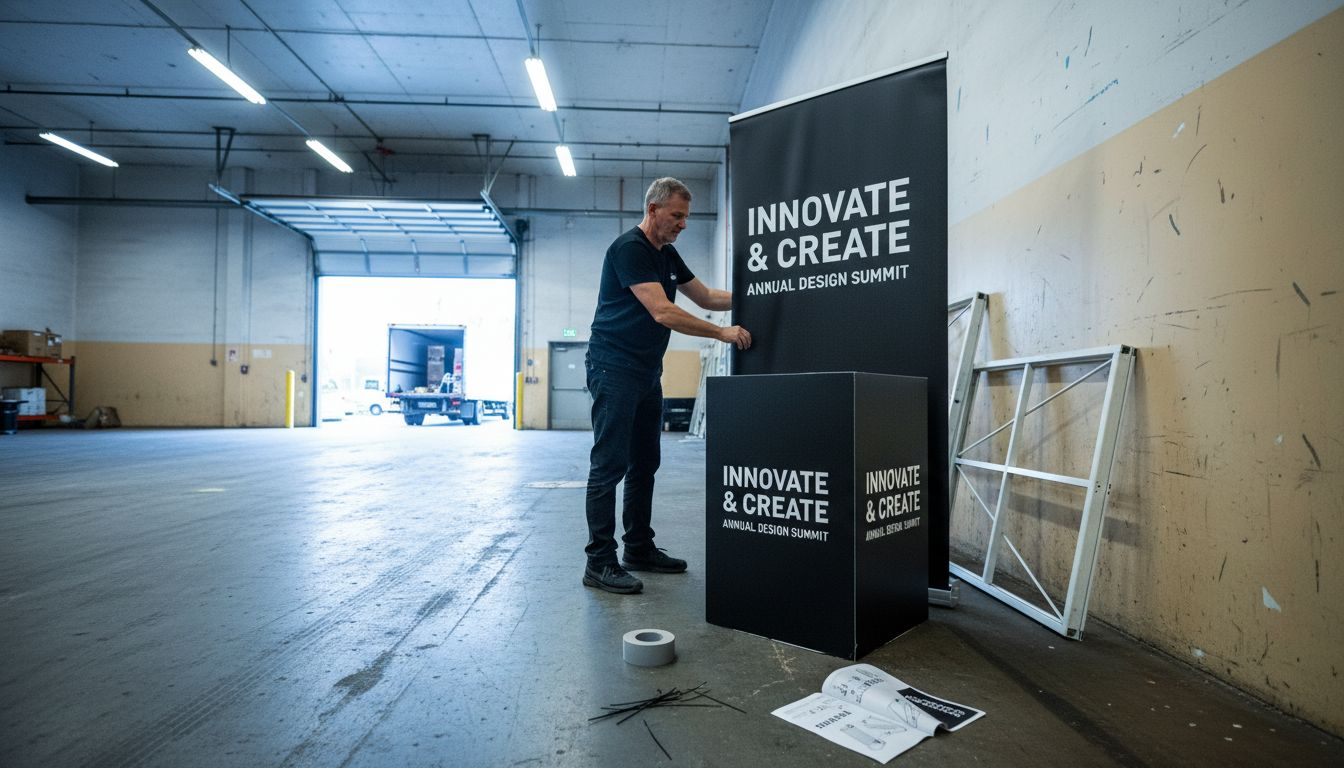
Pro Tip: Request digital mockups of your display design before final production to visualize how different design elements will work together and make precise adjustments.
Here is a comparison of common trade show display product types and their main benefits:
| Display Type | Best Use Case | Key Advantage | Typical Limitation |
|---|---|---|---|
| Modular Booth | Multiple events, flexibility | Easy reconfiguration | Higher upfront cost |
| Pop-Up Banners | Quick set-up, small spaces | Portable and lightweight | Limited branding area |
| Custom Structures | Impactful product launches | Unique brand presence | Longer production timelines |
| Tabletop Displays | Educational handouts, demos | Space-saving option | Less visibility from afar |
Step 3: Request quotes and artwork proofs
Requesting quotes and artwork proofs is a critical step in ensuring your trade show display meets your exact specifications and budget requirements. This process allows you to compare vendor offerings and validate your design before final production.
Start by gathering comprehensive details about your display requirements. Prepare a detailed brief that includes precise dimensions, color specifications, material preferences, and any unique customization needs. Include high resolution digital files of your artwork and branding elements. When communicating with potential vendors, be systematic about sample preparation and submission guidelines to ensure clarity and prevent potential misunderstandings.
Request multiple proofs from different vendors to compare quality, pricing, and turnaround times. Look for vendors who offer digital mockups that allow you to visualize the final product before committing to production. Pay close attention to print quality, color accuracy, and material durability. Ask for physical sample proofs when possible, especially for complex or high visibility display components.
Pro Tip: Always request a detailed quote that breaks down all costs including design work, printing, materials, and shipping to avoid unexpected expenses.
To streamline your order and production process, review this summary of key vendor evaluation factors:
| Factor | What to Check | Why It Matters |
|---|---|---|
| Quote Detail | Complete pricing breakdown | Prevents unexpected expenses |
| Proof Quality | Artwork accuracy, print clarity | Ensures brand consistency |
| Delivery Timeline | Clear production and ship dates | Minimizes risk of late arrival |
| Support Access | Responsive contact options | Enables quick troubleshooting |
Step 4: Finalize orders and schedule delivery
Order processing requires strategic coordination to ensure your trade show displays arrive precisely when and where you need them. This final step transforms your carefully planned designs into physical displays ready for your event.
Strategic supply chain planning helps balance production timelines, inventory management, and delivery coordination to meet your exhibition deadlines. Start by confirming all design specifications, quantities, and delivery requirements with your chosen vendor. Provide explicit instructions about your trade show location, setup timeline, and any specific handling instructions. Request a detailed production and shipping timeline that aligns with your event schedule, allowing buffer time for potential shipping delays or unexpected complications.
Review the final contract carefully before signing. Confirm all pricing details, including shipping costs, potential rush fees, and any customization charges. Request a written confirmation of production and delivery dates. Consider purchasing shipping insurance for valuable display materials and ensure you have a point of contact for tracking and potential last minute adjustments.
Pro Tip: Create a dedicated digital folder with all order confirmations, design proofs, and shipping documents to maintain organized documentation throughout the production process.
Step 5: Verify branding quality and setup
Branding quality verification is essential for creating a professional and cohesive visual identity that connects emotionally with trade show attendees. This critical step ensures your display accurately represents your company’s visual language and core messaging.
Comprehensive visual identity checks involve examining graphic resolution, formatting consistency, and design element alignment across all display components. Review every graphic element meticulously including logos, color schemes, typography, and imagery. Confirm that colors match your brand guidelines precisely digital or printed displays. Check that high resolution graphics maintain clarity and sharpness when scaled to different display sizes. Verify text readability from multiple viewing distances and angles typical of trade show environments.
Conduct a comprehensive walkthrough of your entire display setup. Ensure graphic placement feels intentional and strategic. Test lighting conditions to confirm how colors and design elements appear under different exhibition hall illumination. Take photographs of your complete setup and review them critically as if you were an attendee experiencing your brand for the first time.
Pro Tip: Bring backup digital files and a portable color printer to make immediate graphic adjustments if any last minute inconsistencies are discovered.
Elevate Your Trade Show Success with Expert Display Solutions
Mastering the event display planning process means conquering challenges like defining clear goals, selecting the perfect custom products, and ensuring flawless branding quality. If you are looking to turn your trade show booth into a captivating brand experience that connects emotionally and drives results you need reliable solutions tailored to your exact specifications. From vibrant banners and sturdy gazebos to eye-catching tablecloths and flags Live Displays specializes in providing high-quality custom promotional products with advanced printing technology that brings your vision to life.
Ready to transform your event presence with professional displays designed to engage your target audience and meet your strategic goals Discover how simple it is to get started by visiting Live Displays today. Benefit from free artwork proofs quick quote forms and seamless customization options all created to support your planning success. Don’t wait until the last minute secure your standout trade show display now and make an unforgettable impact.
Frequently Asked Questions
What are the first steps in planning an event display for a trade show?
Begin by defining your event goals and understanding your target audience’s needs. Conduct comprehensive audience analysis to identify their interests and priorities, then translate these insights into specific objectives for your display.
How do I choose the right display products for my trade show booth?
Select display products that align with your event goals and audience engagement strategies. Consider factors like booth size and interactivity potential when deciding between modular booths, pop-up banners, or custom structures, ensuring they fit your design vision and audience expectations.
What details should I include when requesting quotes for trade show displays?
Provide comprehensive details about your requirements, including dimensions, color specifications, and any unique customization needs. Prepare a thorough brief to make comparisons easier and prevent misunderstandings with vendors.
How can I ensure the quality of my trade show display’s branding?
Verify branding quality by checking graphic resolution, color accuracy, and alignment of design elements. Conduct a walkthrough of your display setup, testing lighting and assessing visibility, to ensure everything aligns with your brand identity before the event.
What should I do if I need to make last-minute adjustments to my display?
Bring backup digital files and a portable color printer to make immediate adjustments during setup. This proactive approach allows you to address any inconsistencies or last-minute changes quickly and effectively.
Share:
Eco-Friendly Display Solutions: Boost Brand Impact Sustainably
7 Inspiring Examples of Effective Booth Design for Events