
Over 80 percent of American companies attend at least one trade show each year to boost their brand exposure and connect face to face with potential clients. The right event display can make a business stand out in a crowded venue, opening the door to memorable interactions and lasting partnerships. Discover how thoughtful event displays go beyond simple visuals to truly elevate brands in the fast-paced world of American marketing.
Table of Contents
- Defining Event Displays And Their Purpose
- Types Of Event Displays And Their Uses
- Maximizing Branding And Audience Engagement
- Cost Benefits Versus Other Marketing Tools
- Mistakes To Avoid When Purchasing Displays
Key Takeaways
| Point | Details |
|---|---|
| Purpose of Event Displays | Event displays serve to showcase products, build brand awareness, and engage customers through immersive experiences. |
| Types of Event Displays | Different display formats like backdrop banners and interactive digital displays serve distinct marketing purposes and audience engagement strategies. |
| Cost Efficiency | Event displays offer significant cost advantages, providing measurable interactions and a higher return on investment compared to traditional marketing tools. |
| Avoiding Purchase Mistakes | Companies should carefully evaluate display compatibility, scalability, and brand alignment to maximize marketing effectiveness and avoid costly errors. |
Defining Event Displays and Their Purpose
Event displays are strategic visual presentations designed to help businesses communicate their brand message, showcase products, and engage directly with potential customers. At their core, these displays are carefully curated spaces where companies transform static marketing materials into immersive brand experiences. Trade shows are exhibitions where organizations create these interactive environments to demonstrate their latest innovations and connect with industry professionals.
The primary purpose of event displays extends far beyond simple product placement. These dynamic platforms serve multiple critical functions: attracting attention, generating leads, building brand awareness, and facilitating meaningful interactions. Businesses strategically design these displays to capture audience interest through compelling visuals, interactive elements, and professionally arranged product demonstrations. By creating a memorable visual narrative, companies can effectively communicate their unique value proposition in a competitive marketplace.
Event displays typically include a range of physical components such as custom backdrop banners, branded gazebos, informational signage, product pedestals, multimedia screens, and interactive demonstration areas. These elements work cohesively to create a comprehensive brand environment that tells a story and invites audience engagement. Businesses use these organized setups to present their products and services to a targeted audience, transforming traditional marketing approaches into immersive, memorable experiences.
Pro Tip: Design Your Display with Purpose: Before creating an event display, clearly define your core marketing objectives and ensure every visual element strategically supports those goals. Your display should communicate your brand’s unique story within seconds of audience interaction.
Types of Event Displays and Their Uses
Event displays come in a diverse range of formats, each designed to meet specific marketing objectives and audience engagement strategies. Trade shows provide platforms where businesses can select from multiple display types to showcase their products and brand identity effectively. The most common display categories include backdrop banners, pop-up displays, modular exhibits, interactive digital displays, and branded gazebos.
Traditional physical displays remain cornerstone marketing tools, offering tangible brand representation. Backdrop banners create impressive visual backdrops that communicate company messaging instantly. Pop-up displays provide portable, lightweight solutions for businesses needing quick setup and takedown. Modular exhibits offer flexible configurations that can be customized to different event spaces and marketing requirements. These physical displays allow companies to create immersive environments that capture audience attention and facilitate direct product interactions.

Digital and interactive display technologies have revolutionized event marketing by enabling more dynamic engagement strategies. Virtual tradeshows demonstrate how technology can extend brand reach beyond physical limitations. Interactive touchscreens, multimedia presentations, augmented reality experiences, and digital product demonstrations allow businesses to create memorable, technology-driven brand interactions. These advanced displays enable real-time data collection, instant audience feedback, and more personalized marketing experiences that traditional static displays cannot achieve.
Here’s a comparison of common event display types and their ideal uses:
| Display Type | Ideal For | Engagement Level |
|---|---|---|
| Backdrop Banner | Brand visibility, instant recognition | Visual, moderate |
| Pop-up Display | Portability, fast setup | Limited, informational |
| Modular Exhibit | Custom branding, flexible spaces | High, customizable |
| Interactive Digital | Real-time engagement, tech demos | Very high, digital-driven |
| Branded Gazebo | Outdoor events, brand shelter | Moderate, inviting |
Pro Tip: Strategic Display Selection: Carefully match your display type to your specific event goals, target audience, and brand personality. Consider factors like space limitations, audience demographics, and desired interaction level when choosing between physical and digital display options.
Maximizing Branding and Audience Engagement
Effective event displays transform passive marketing experiences into dynamic interactive opportunities that capture audience attention and create memorable brand connections. Digital signage technologies enhance attendee satisfaction by providing sophisticated mechanisms for delivering compelling visual narratives that resonate with target audiences. By strategically designing displays that communicate brand personality, companies can create immersive experiences that go beyond traditional marketing approaches.
Branding success at events hinges on creating cohesive visual storytelling that communicates core brand values instantly. This involves carefully selecting color schemes, typography, imagery, and messaging that align with the company’s identity. Interactive elements like touchscreens, augmented reality demonstrations, and personalized product presentations allow businesses to transform passive observers into actively engaged participants. These engagement strategies help create emotional connections that extend far beyond simple product information transmission.
Display Week demonstrates how cutting-edge technologies can revolutionize audience interaction. Advanced display techniques now enable real-time data collection, audience sentiment tracking, and personalized marketing experiences. Companies can leverage these technologies to gather immediate feedback, understand audience preferences, and adapt their messaging in real-time. By integrating analytics and interactive elements, brands can create more responsive and intelligent marketing experiences that feel tailored to individual audience members.
Pro Tip: Engagement Design: Develop your event display with a clear narrative arc that guides audience interaction, ensuring each visual and interactive element strategically contributes to telling your brand’s unique story and creating meaningful audience connections.
Cost Benefits Versus Other Marketing Tools
Event displays offer significant cost advantages compared to traditional marketing channels, providing businesses with a high-return investment strategy for brand promotion. Virtual tradeshows demonstrate how modern display technologies can dramatically reduce marketing expenses while maintaining exceptional audience engagement. Unlike digital advertising or print media with uncertain reach, event displays create direct, measurable interactions with potential customers at a fraction of the long-term marketing expenditure.
Compared to recurring advertising campaigns, event displays provide more concentrated and cost-effective brand exposure. Traditional marketing channels like television, radio, and online ads require continuous financial investment with diminishing returns. In contrast, a well-designed event display serves multiple strategic purposes: generating leads, building brand awareness, facilitating direct customer interactions, and creating lasting impressions. The initial investment in high-quality display materials can be leveraged across multiple events, spreading the cost over numerous marketing opportunities.
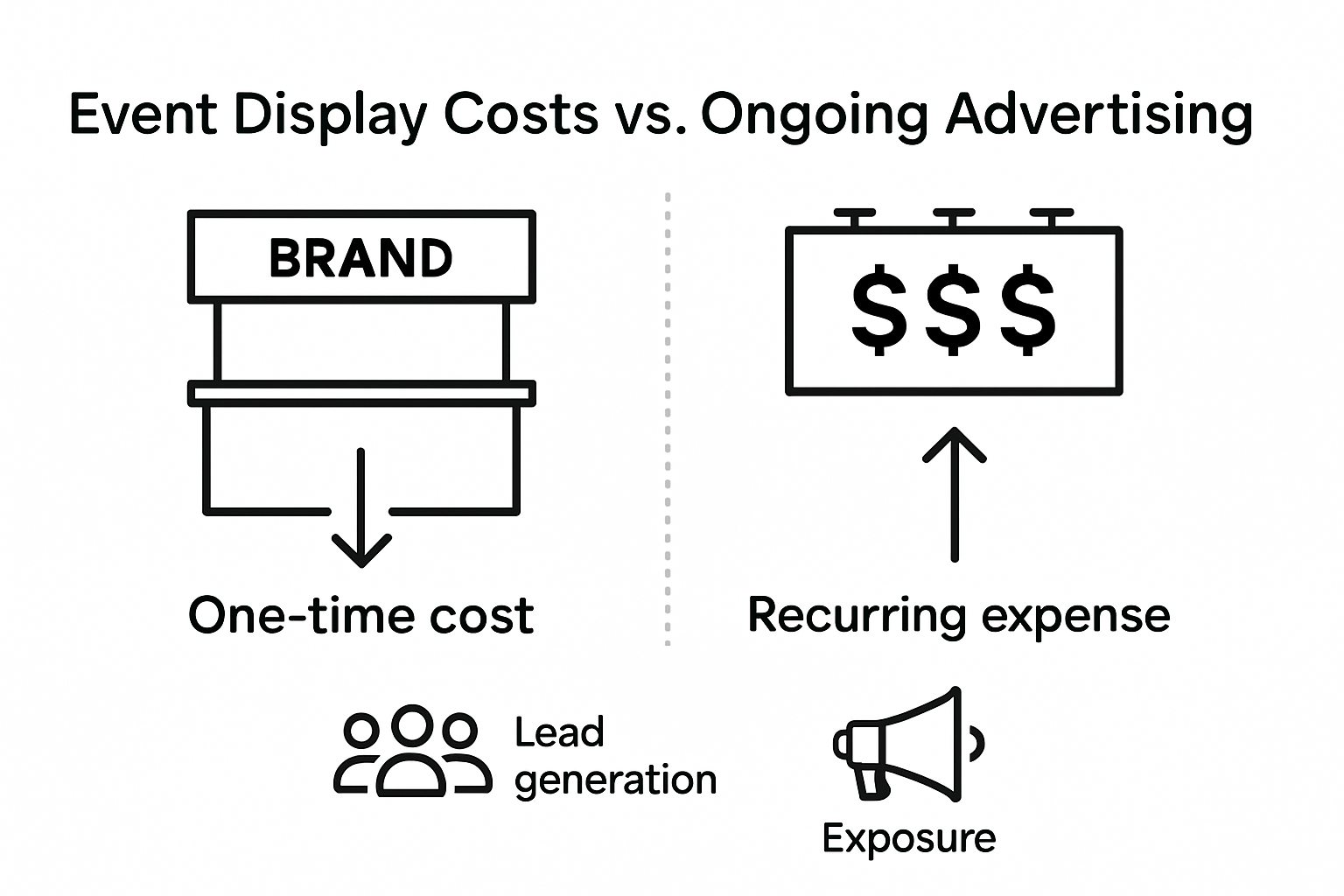
The financial efficiency of event displays extends beyond immediate marketing expenses. These platforms enable businesses to collect real-time customer feedback, conduct market research, and generate qualified leads in a single interaction. Digital and interactive display technologies have further enhanced this cost-effectiveness by providing advanced analytics and engagement tracking. Companies can now precisely measure their marketing investment’s performance, something traditional advertising channels struggle to provide with similar accuracy and depth.
Pro Tip: Budget Optimization: Calculate your event display’s return on investment by tracking lead generation, conversion rates, and potential customer interactions, rather than focusing solely on upfront production costs.
Mistakes to Avoid When Purchasing Displays
Purchasing event displays requires strategic planning and careful consideration to avoid costly mistakes that can undermine marketing effectiveness. When purchasing displays, understanding critical factors like display quality, durability, and system compatibility becomes paramount. Many businesses make hasty decisions based on initial price points without evaluating long-term performance and alignment with their specific event marketing objectives.
One significant error companies frequently make involves neglecting comprehensive compatibility assessments. Display technologies must integrate seamlessly with existing marketing infrastructures, software systems, and brand guidelines. Businesses often purchase visually appealing displays without considering technical requirements, content management capabilities, or potential customization limitations. Digital signage investments require careful alignment with specific event goals to prevent underutilization and ensure maximum return on investment.
Another critical mistake is overlooking scalability and future adaptability. Event displays should not be viewed as single-use assets but as flexible marketing tools capable of supporting multiple event strategies. Companies must evaluate display materials, modular design potential, and potential for brand message reconfiguration. Rigid, single-purpose displays quickly become obsolete, representing poor financial investments. Successful organizations prioritize versatile display solutions that can be easily modified, transported, and repurposed across different marketing contexts.
The following table summarizes common purchase mistakes and their long-term impact:
| Mistake | Long-Term Impact | Prevention Tip |
|---|---|---|
| Ignoring compatibility | Poor system integration, wasted spend | Assess technology needs pre-purchase |
| Prioritizing initial cost only | Low durability, higher replacement costs | Consider lifetime value |
| Overlooking scalability | Limited reuse, obsolete assets | Choose modular, adaptable solutions |
| Neglecting brand alignment | Weak audience connection | Match display to brand guidelines |
Pro Tip: Comprehensive Evaluation: Develop a detailed checklist that assesses technical compatibility, brand alignment, scalability, and long-term performance before finalizing any display purchase, ensuring your investment delivers sustained marketing value.
Transform Your Event Success with Customized Displays from Live Displays
Struggling to capture attention and create memorable brand experiences at your next event Discover how thoughtfully designed event displays can solve your biggest challenges like attracting the right audience and maximizing engagement. Live Displays offers expert solutions including visually striking Roll Up Banner Stands and durable Gazebos that bring your brand story to life with vibrant printing and seamless customization.
Take control of your event impact today Browse our extensive collection on the Home page and find your perfect event display solution. Act now to elevate your presence with high-quality displays designed to engage and impress. Visit https://live-displays.co.uk and start transforming your brand visibility immediately.
Frequently Asked Questions
What are the main benefits of investing in event displays?
Investing in event displays offers numerous benefits, including enhanced brand visibility, lead generation, increased audience engagement, and the ability to create memorable brand experiences that resonate with potential customers.
How do different types of event displays compare in terms of audience engagement?
Different types of event displays offer varying levels of audience engagement. For example, interactive digital displays provide high engagement through real-time interaction, while traditional backdrop banners offer moderate engagement by establishing brand visibility without direct interaction.
What factors should I consider when designing an event display?
When designing an event display, consider your core marketing objectives, target audience, brand identity, and the type of interaction you want to achieve. Ensure that every visual element aligns with your goals and effectively communicates your brand message.
How can I maximize the return on investment for my event display?
To maximize ROI, track key metrics such as lead generation and conversion rates during events. Additionally, choose durable, scalable displays that can be reused across multiple events, ensuring you get the most out of your investment.
Recommended
- Why Invest in Professional Displays: Complete Guide – LIVE DISPLAYS
- Event Promotion Essentials: Boosting Event Visibility – LIVE DISPLAYS
- The Essential Guide to Investing in Custom Displays – LIVE DISPLAYS
- Branded Displays for Events: Complete Guide – LIVE DISPLAYS
- 7 Key Advantages of LED Lighting for Event Spaces - Mirror Balls
Share:
Event Promotion Essentials: Boosting Event Visibility
7 Must-Have Trade Show Materials for Impactful Displays