

Over eighty percent of American businesses report that face-to-face connections at trade shows drive higher quality leads than any other marketing channel. In a world crowded with digital ads, companies from every industry are seeking new ways to stand out. The right trade show display does more than attract attention; it tells a brand’s story, sparks real conversations, and opens the door to lasting partnerships.
Table of Contents
- Defining Trade Show Displays and Their Purpose
- Major Types of Trade Show Displays Explained
- Key Features and Customization Options
- Trade Show Display Setup and Logistics
- Cost Considerations and Common Pitfalls
Key Takeaways
| Point | Details |
|---|---|
| Purpose of Trade Show Displays | Trade show displays are strategic marketing tools to showcase products and services, enhance brand identity, and generate sales leads. |
| Types of Displays | Various display types cater to different needs, including pop-up displays and modular systems that allow flexibility in design and setup. |
| Logistical Planning is Key | Effective logistics involve pre-event preparation, coordination of transportation, and space allocation to maximize audience engagement. |
| Budgeting and Financial Awareness | Businesses must understand the full scope of costs associated with trade shows and avoid common financial pitfalls for successful participation. |
Defining Trade Show Displays and Their Purpose
A trade show display is a strategic marketing tool designed to help businesses showcase their products, services, and brand identity in a dynamic exhibition environment. These carefully crafted presentation spaces serve as powerful visual platforms where companies can attract potential customers and communicate key offerings through engaging visual narratives.
At its core, a trade show display functions as a comprehensive communication vehicle. Organizations use these displays to achieve multiple objectives, ranging from brand awareness to direct sales generation. Why companies invest in strategic display designs typically involves several critical goals:
- Introduce new products or services to targeted professional audiences
- Create memorable visual experiences that distinguish the brand
- Generate qualified sales leads through direct interaction
- Demonstrate product capabilities and technological innovations
- Network with industry professionals and potential business partners
The effectiveness of a trade show display depends on its ability to capture attention quickly and communicate complex information succinctly. Research indicates that successful displays blend strategic visual design with clear messaging. By understanding the specific audience and crafting a display that speaks directly to their interests and needs, businesses can transform these temporary exhibition spaces into powerful marketing platforms that drive meaningful business connections.
Successful trade show displays are not merely about aesthetics but about creating an immersive experience that resonates with potential clients. Whether showcasing cutting-edge technology or highlighting service capabilities, these displays serve as critical touchpoints for businesses seeking to expand their market presence and engage directly with their target audience.
Major Types of Trade Show Displays Explained
Trade show displays come in diverse formats, each designed to meet specific marketing objectives and audience engagement strategies. Modular displays offer versatile solutions that can be reconfigured to suit different event spaces and branding requirements, making them a popular choice for businesses seeking flexibility.
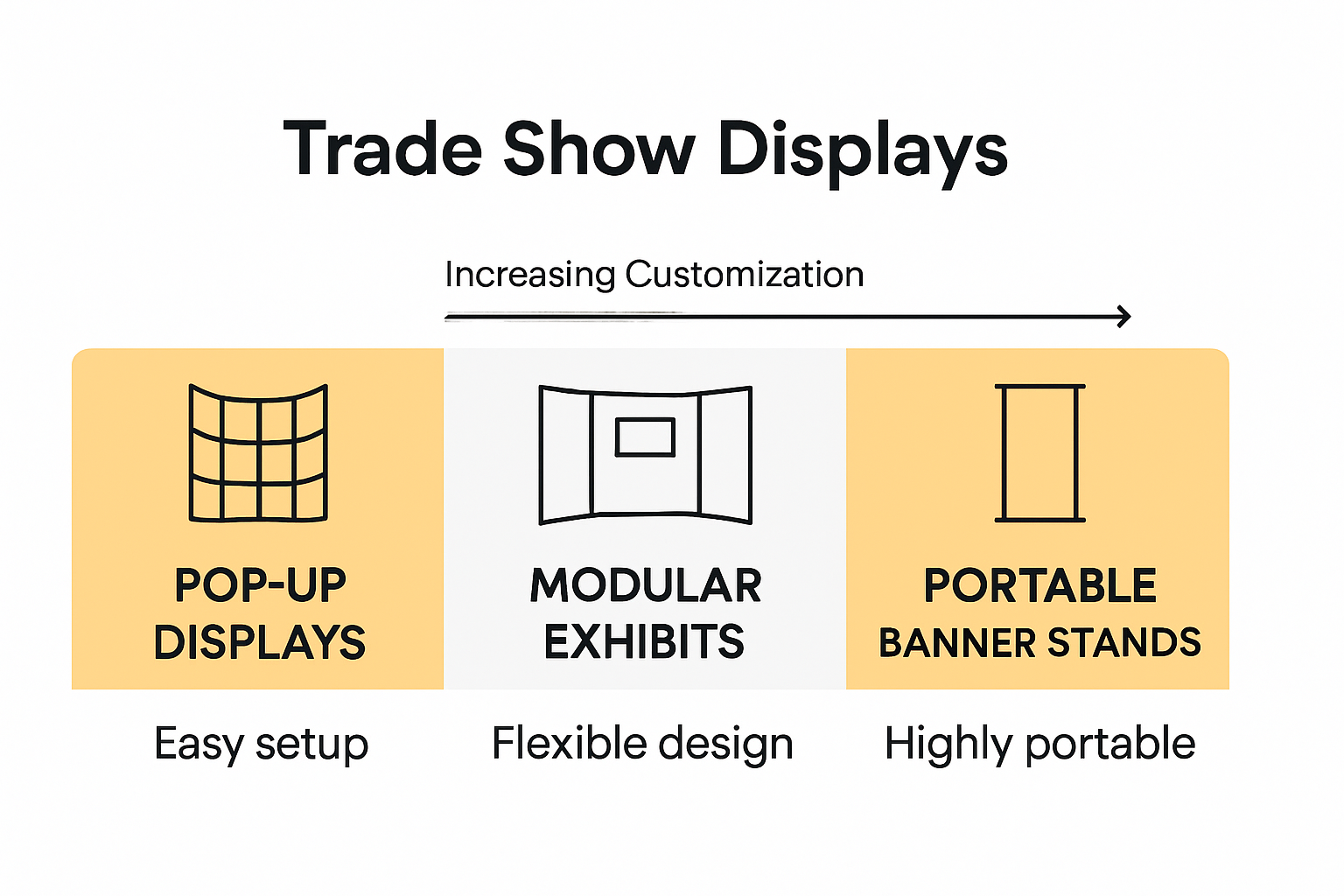
Based on research classifying trade show participation, trade show displays can be strategically categorized across multiple dimensions:
Display Categories by Participant Origin:
- International exhibitions
- National trade shows
- Regional conferences
- Local industry events
Display Types by Design and Function:
- Pop-up displays
- Portable banner stands
- Modular exhibit systems
- Custom-built booth designs
- Tabletop displays
Each display type serves a unique purpose in the marketing ecosystem. Portable banner stands work well for smaller events, offering quick setup and minimal transportation requirements. Comprehensive display booth strategies recommend selecting displays that align with your brand’s visual identity, audience expectations, and specific event goals.
The most effective trade show displays transcend mere visual aesthetics, functioning as strategic communication tools that create immersive brand experiences. Whether targeting business-to-business or business-to-customer audiences, the right display can transform a simple booth into a powerful platform for storytelling, product demonstration, and meaningful audience engagement.
Key Features and Customization Options
Trade show displays represent more than just physical structures. They are strategic communication tools designed to capture audience attention and effectively convey brand narratives. According to research on display effectiveness, an exceptional display must clearly communicate who you are, what you do, and how you can help potential customers.

The core customization options for trade show displays span multiple critical dimensions:
Structural Customization:
- Floor-to-ceiling displays
- Tabletop configurations
- Three-panel designs
- Curved architectural layouts
- Modular and expandable systems
Material Composition Options:
- Foam core panels
- Corrugated cardboard
- Plywood paneling
- Lightweight aluminum frameworks
- Fabric tension systems
Brand visual identity plays a crucial role in display design. Graphics, color schemes, and messaging must align seamlessly to create a cohesive narrative that resonates with target audiences. Professional designers recommend selecting materials and configurations that not only represent your brand aesthetically but also provide practical functionality for transportation, setup, and engagement.
Ultimately, the most successful trade show displays transform from mere physical structures into immersive brand experiences. By carefully selecting customization options that reflect your unique value proposition, businesses can create memorable interactions that extend far beyond traditional marketing approaches, turning casual booth visitors into potential long-term clients.
Trade Show Display Setup and Logistics
Trade show display logistics represent a complex strategic process that requires meticulous planning and execution. Exhibition setup basics demand careful consideration of multiple critical factors to ensure a successful event presence.
Effective trade show planning involves several key strategic stages:
Pre-Event Preparation Stages:
- Set clear selling and non-selling goals
- Select appropriate trade show venues
- Design comprehensive display strategy
- Prepare marketing collateral
- Coordinate transportation logistics
Critical Logistical Considerations:
- Transportation of display materials
- Equipment assembly requirements
- Space allocation and booth configuration
- Electrical and technical setup needs
- Staffing and personnel coordination
Trade show display preparation requires understanding your specific communication objectives and designing exhibits that precisely match those goals. This means carefully evaluating the structure, size, and shape of your display to maximize audience engagement and brand representation.
Successful trade show logistics extend far beyond physical setup. They encompass a holistic approach that integrates strategic planning, creative design, technical execution, and post-event follow-up. By treating your display as a dynamic marketing platform rather than a static structure, businesses can transform complex logistical challenges into opportunities for meaningful audience connection and brand storytelling.
Cost Considerations and Common Pitfalls
Trade show displays represent a significant financial investment for businesses, with multiple complex cost components requiring strategic planning. Trade show participation involves substantial monetary and time investments that extend far beyond initial display design.
Primary Cost Categories:
- Space rental fees
- Booth design and construction
- Telecommunications infrastructure
- Travel expenses
- Staff accommodation
- Promotional materials production
- Marketing collateral printing
Common Financial Pitfalls:
- Underestimating total event expenses
- Insufficient budget allocation
- Overlooking hidden logistical costs
- Poor return on investment tracking
- Inadequate financial contingency planning
Small business managers must approach trade show investments strategically, focusing on comprehensive goal setting and meticulous expense management. This means developing a detailed financial framework that accounts for both direct and indirect costs associated with event participation.
Successful trade show budgeting requires a holistic approach that balances immediate expenses with potential long-term business opportunities. By developing a nuanced understanding of cost structures and maintaining flexibility in financial planning, businesses can transform trade show investments from potential financial burdens into strategic marketing investments that generate meaningful professional connections and potential revenue streams.
Elevate Your Trade Show Experience with Tailored Display Solutions
Struggling to create a trade show display that truly captures attention and communicates your brand message clearly Our guide highlights the critical challenge of transforming exhibit spaces into immersive brand experiences where every detail matters From structural customization to vibrant graphics your display must stand out and engage instantly Live Displays offers exactly what you need to overcome these common problems with ease and professionalism
Explore our versatile collection of Roll Up Banner Stands designed for quick setup and high visibility plus our robust Gazebos that provide a polished, comfortable space for memorable customer interactions
Take control of your trade show success now by choosing custom display solutions that align with your goals and budget Visit Live Displays to get free artwork proofs and start designing displays that convert visitors into lasting clients Don’t settle for ordinary transform your event presence into an extraordinary marketing platform today
Frequently Asked Questions
What is a trade show display?
A trade show display is a strategic marketing tool used by businesses to showcase their products, services, and brand identity in an exhibition environment. These displays serve to attract potential customers and effectively communicate key offerings.
What are the different types of trade show displays?
Trade show displays can be categorized into various types such as pop-up displays, portable banner stands, modular exhibit systems, custom-built booth designs, and tabletop displays. Each type serves different marketing objectives and audience engagement strategies.
How do I customize a trade show display?
Customization options for trade show displays include structural features like floor-to-ceiling displays and modular systems, as well as material choices such as foam core panels or fabric tension systems. It’s essential to align customization with your brand’s visual identity and communication goals.
What are the key elements to consider when planning trade show display logistics?
Important elements for trade show display logistics include transportation of display materials, assembly requirements, booth configuration, electrical needs, and staffing coordination. A strategic approach ensures successful execution and maximizes audience engagement.
Share:
What Are Modular Displays? Complete Trade Show Guide
What Is Bespoke Display Design: Impact on Event Branding