
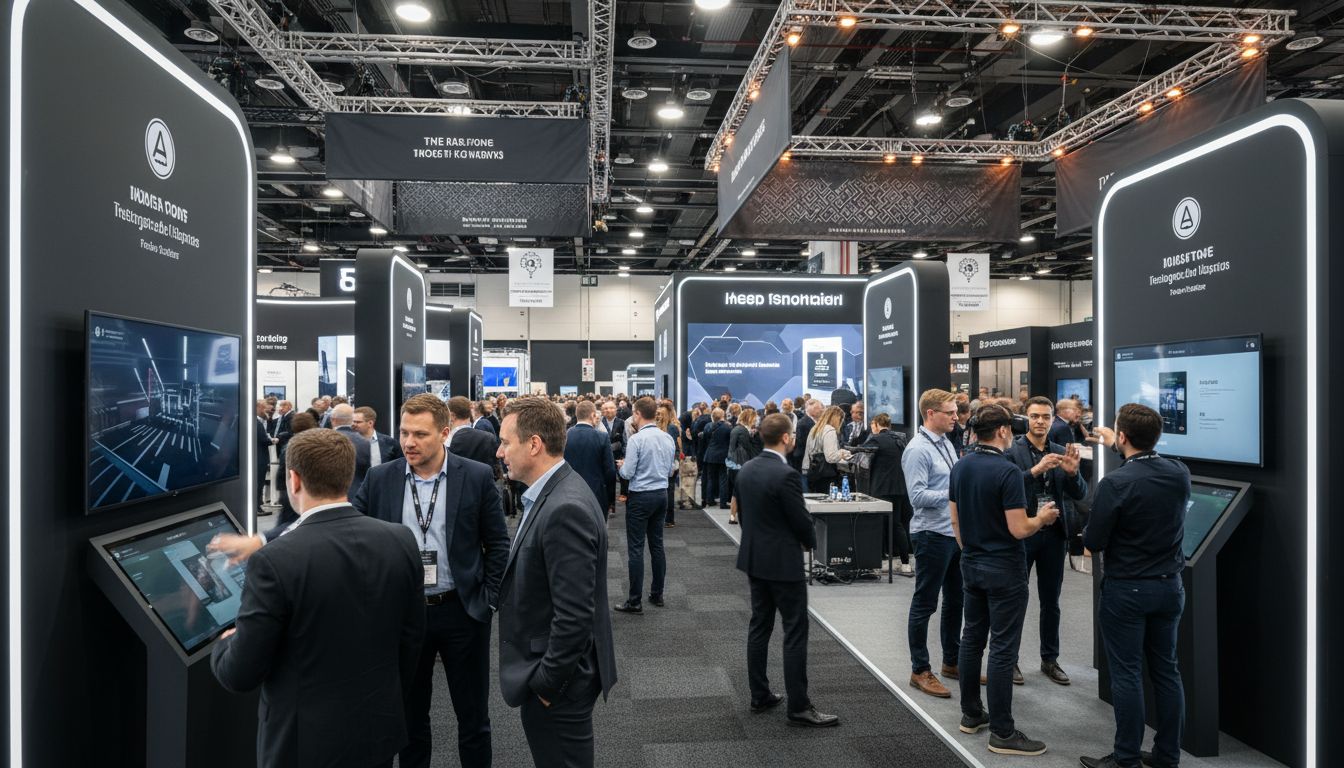
Every year, american companies invest billions in trade show displays to make their brands stand out and connect with new customers. With over 13,000 trade shows held in the United States annually, the competition for attention is fierce. For any business, understanding the true purpose behind these intricate three-dimensional marketing tools can mean the difference between blending in and leaving a lasting impression. This guide breaks down why trade show displays matter and how the right approach makes your brand memorable.
Table of Contents
- Defining Trade Show Displays And Their Purpose
- Main Types Of Trade Show Displays Explained
- Key Features And Customization Options
- Setup, Logistics, And Branding Strategies
- Cost Factors And Common Mistakes To Avoid
Key Takeaways
| Point | Details |
|---|---|
| Purpose of Trade Show Displays | They function as immersive marketing tools that visually represent a brand and engage potential customers. |
| Types of Trade Show Displays | Various configurations, such as island and corner booths, offer unique advantages based on marketing objectives and space limitations. |
| Modern Customization and Features | Integration of technologies like touch screens and VR enhances engagement; customizable elements allow for tailored brand presentations. |
| Logistics and Branding Strategies | Effective planning, including inventory management and booth layout, is essential for maximizing audience engagement and minimizing costs. |
Defining Trade Show Displays and Their Purpose
Trade show displays are sophisticated three-dimensional marketing tools designed to transform a company’s promotional strategy from a flat two-dimensional concept into an immersive, engaging experience. According to UFI, these displays serve as critical communication platforms that enable businesses to effectively visualize and represent their brand, products, and unique value proposition to potential customers.
At their core, trade show displays are strategic communication instruments that blend visual design, branding, and marketing objectives. As research from EDIS indicates, these displays are meticulously crafted to simultaneously sell products and educate audiences, making them versatile marketing assets. The primary purposes of trade show displays include:
- Creating immediate visual brand recognition
- Communicating complex product features and benefits
- Generating meaningful customer interactions
- Establishing professional credibility within an industry
- Capturing potential leads and business opportunities
Successful trade show displays go beyond simple promotional materials. They are carefully engineered experiences that transform abstract business concepts into tangible, memorable interactions. By combining strategic graphic design, thoughtful spatial layout, and compelling storytelling, these displays create a powerful first impression that can significantly influence potential customers’ perceptions and purchasing decisions. Learn more about creating impactful display visuals in our comprehensive guide.
Understanding the nuanced role of trade show displays requires recognizing them as more than just physical structures. They are dynamic marketing tools that bridge the gap between a company’s vision and its target audience’s expectations, transforming brief encounters into potential long-term business relationships.
Main Types of Trade Show Displays Explained
Trade show displays come in diverse configurations designed to meet different marketing objectives and spatial constraints. According to UFI, these displays are fundamentally categorized into four primary booth types: row booths, corner booths, end booths, and island booths, each offering unique advantages in terms of space allocation and audience accessibility.
Building upon this foundational classification, AGR identifies several standard exhibition display configurations that provide exhibitors with remarkable flexibility:
- Panel Displays: Modular systems with interconnected panels for versatile branding
- Exhibit Systems: Comprehensive setups allowing extensive customization
- Table-Top Displays: Compact solutions for smaller spaces or budget-conscious exhibitors
- Pop-Up Displays: Lightweight, easily transportable options with quick assembly
- Pull-Up Stands: Streamlined vertical display solutions for focused messaging
Each display type offers distinct strategic benefits depending on your event goals, booth size, and budget. Pop-up and pull-up displays, for instance, are perfect for businesses seeking portable and quick-to-deploy solutions, while elaborate exhibit systems provide maximum branding opportunities for companies with more substantial trade show investments. Explore our guide to custom display setup for comprehensive event strategies.
Understanding these display variations allows businesses to select the most appropriate format for their specific marketing objectives. Whether you need an immersive island booth to command significant floor presence or a compact table-top display for targeted interactions, matching your display type to your communication strategy is crucial for trade show success.
Key Features and Customization Options
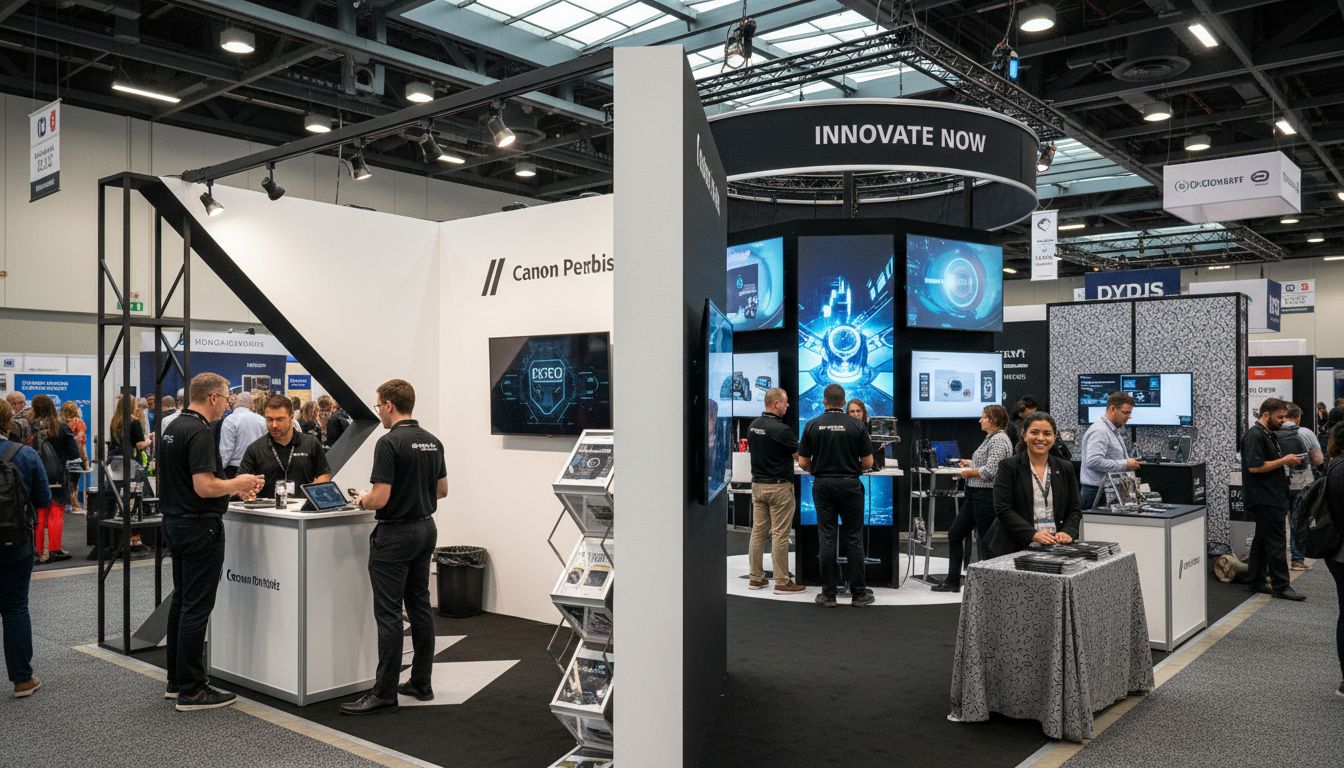
Trade show displays have evolved dramatically, transforming from static promotional spaces into dynamic, interactive marketing platforms. According to Signworld, modern displays now incorporate cutting-edge technologies like touch screens and virtual reality to create immersive brand experiences that go far beyond traditional marketing approaches.
Customization has become a critical aspect of trade show display design, offering businesses unprecedented flexibility in presenting their brand identity. Contemporary display features include:
- Modular design systems for easy reconfiguration
- Advanced graphic printing technologies
- Integrated digital interaction points
- Lightweight, portable construction materials
- Sustainable and eco-friendly design options
Recent design trends highlighted by Blog emphasize the strategic use of organic materials, tensioned fabrics, and sophisticated lighting techniques to create visually stunning and environmentally conscious exhibits.
INFOGRAPHIC:infographic_content] These innovations allow companies to craft displays that are not just marketing tools, but genuine storytelling platforms that engage audiences through sensory and emotional connections. [Discover more about creating impactful display visuals in our comprehensive guide.
Ultimately, the most successful trade show displays blend technological innovation, creative design, and strategic brand messaging. By leveraging customizable features and emerging display technologies, businesses can create memorable experiences that transform brief interactions into meaningful connections with potential clients and partners.
Setup, Logistics, and Branding Strategies
Successful trade show displays demand meticulous planning and strategic execution. According to UFI, effective booth design requires carefully balancing marketing objectives and cost considerations to ensure timely and efficient delivery of exhibits and promotional materials.
Key logistical and branding strategies for trade show success include:
- Pre-event equipment and material inventory management
- Comprehensive shipping and transportation planning
- Precise booth layout and configuration mapping
- Streamlined setup and breakdown protocols
- Clear team communication and role assignment
According to Cademix, strategic brand presentation hinges on critical design elements like precise logo placement, concise promotional messaging, and strategic lighting to maximize visibility and audience engagement. These elements transform a standard display into a powerful brand communication platform. Explore our comprehensive guide on branding impact at trade shows to refine your exhibition strategy.
Ultimately, successful trade show displays are the result of seamless integration between logistical precision and creative branding. By anticipating potential challenges, developing robust contingency plans, and maintaining a clear focus on brand storytelling, businesses can create memorable experiences that resonate with potential clients and partners.
Cost Factors and Common Mistakes to Avoid
Trade show displays represent significant financial investments that require strategic planning and careful budgeting. According to UFI, booth design decisions critically impact both marketing effectiveness and overall budget, necessitating meticulous financial and logistical considerations to prevent unnecessary expenses.
Common costly mistakes in trade show display planning include:
- Underestimating total event-related expenses
- Neglecting transportation and shipping costs
- Choosing low-quality materials that require frequent replacement
- Inadequate staff training for setup and breakdown
- Failing to create a comprehensive contingency budget
As highlighted by Signworld, selecting durable materials and planning effective lighting are crucial strategies for maintaining high-quality displays while controlling long-term costs. Smart exhibitors understand that initial investments in quality design and robust materials can significantly reduce future expenses and enhance overall presentation effectiveness. Learn more about creating impactful display visuals with our comprehensive guide.
Ultimately, successful trade show budgeting requires a holistic approach that balances immediate costs with long-term value. By anticipating potential expenses, investing in quality materials, and developing strategic financial plans, businesses can create compelling displays that maximize return on investment without compromising aesthetic and functional quality.
Elevate Your Trade Show Presence With Custom Displays
Mastering trade show displays requires combining eye-catching design with practical functionality that drives brand recognition and meaningful engagement. If you are looking to transform your presence at events into memorable and impactful experiences you need display solutions tailored to your goals and space constraints. The article highlighted challenges such as selecting the right display type, ensuring vivid visual branding and managing setup logistics that Live Displays addresses directly.
Discover our diverse selection of premium trade show essentials including Roll Up Banner Stands and sturdy Gazebos designed for effortless setup and maximum impact. Our advanced printing technology ensures vibrant graphics that capture attention while customization options let you tell your brand story effectively. Visit Live Displays now for fast quotes, free artwork proofs, and expert support. Take control of your next event experience today and watch your trade show success unfold.
Frequently Asked Questions
What are trade show displays?
Trade show displays are three-dimensional marketing tools designed to effectively communicate a company’s brand, products, and value proposition at events. They transform traditional marketing into interactive experiences.
What are the main types of trade show displays?
The primary types of trade show displays include row booths, corner booths, end booths, and island booths. Additionally, there are various configurations like panel displays, exhibit systems, table-top displays, pop-up displays, and pull-up stands, each serving different marketing objectives.
What key features should I look for in a trade show display?
Important features to consider include modular design for reconfiguration, advanced graphic printing, integrated digital interaction points, lightweight materials for portability, and sustainable design options. These elements help enhance brand identity and audience engagement.
What common mistakes should I avoid when planning a trade show display?
Common mistakes include underestimating total event-related expenses, neglecting transportation and shipping costs, using low-quality materials, inadequate staff training for setup and breakdown, and failing to create a contingency budget. Planning ahead can help mitigate these issues.
Share:
How to Customise Display Stands for Impactful Events
7 Essential Types of Event Displays for Maximum Impact