

Many american businesses underestimate how exhibition setup shapes the impact of their events. A well-designed display can drive up to 60 percent higher audience engagement, yet common misconceptions cause teams to overlook vital details. Understanding the essentials behind exhibition planning, visual storytelling, and technical precision is crucial for anyone aiming to stand out. This guide will help you avoid costly mistakes and make your exhibition presence resonate long after the show ends.
Table of Contents
- Defining Exhibition Setup Basics And Misconceptions
- Essential Types Of Display Solutions Explained
- Step-By-Step Exhibition Setup Process
- Maximizing Branding And Visual Impact
- Budgeting, Safety, And Setup Mistakes To Avoid
Key Takeaways
| Point | Details |
|---|---|
| Exhibition Setup is Strategic | Successful exhibitions require thoughtful planning and execution, transforming displays into immersive experiences that resonate with audiences. |
| Diverse Display Solutions | Effective communication involves choosing the right display technology, from portable to digital solutions, tailored to audience needs and brand messaging. |
| Importance of Preparation | A systematic setup process, including pre-event planning and physical setup, is critical to ensure alignment and audience engagement. |
| Budgeting and Safety are Key | Comprehensive financial planning and safety precautions are essential to avoid common pitfalls and enhance overall exhibition quality. |
Defining Exhibition Setup Basics and Misconceptions
Exhibition setup is far more than simply arranging displays in a space. It represents a strategic process of creating visual narratives that capture audience attention and communicate brand messaging effectively. Much like interactive displays that engage viewers, successful exhibition setups require thoughtful planning and precise execution.
At its core, exhibition setup involves multiple critical components. According to Wikipedia’s research on display cases, showcases are not just about visibility but also protection - a principle that directly translates to exhibition design. Key elements include:
- Strategic spatial planning
- Comprehensive brand representation
- Audience engagement techniques
- Visual storytelling through design
Many professionals harbor misconceptions about exhibition setup, often believing it’s a straightforward process of placing graphics and furniture. In reality, it’s a nuanced art requiring deep understanding of spatial dynamics, audience psychology, and brand communication. Successful exhibitions transform static displays into immersive experiences that resonate with viewers, moving beyond mere visual presentation to create meaningful connections.
Professional exhibition setup demands meticulous attention to detail. From selecting appropriate display technologies to understanding lighting and flow, every element contributes to the overall narrative. Trade show displays require careful customization that reflects your unique brand identity while creating an inviting, professional environment that draws potential clients and partners into your story.
Essential Types of Display Solutions Explained
Display solutions have evolved dramatically, transforming how businesses communicate and engage with their audiences. Modern exhibition environments demand versatile technologies that go beyond traditional static presentations. What is display technology has become a critical question for organizations seeking impactful visual communication strategies.
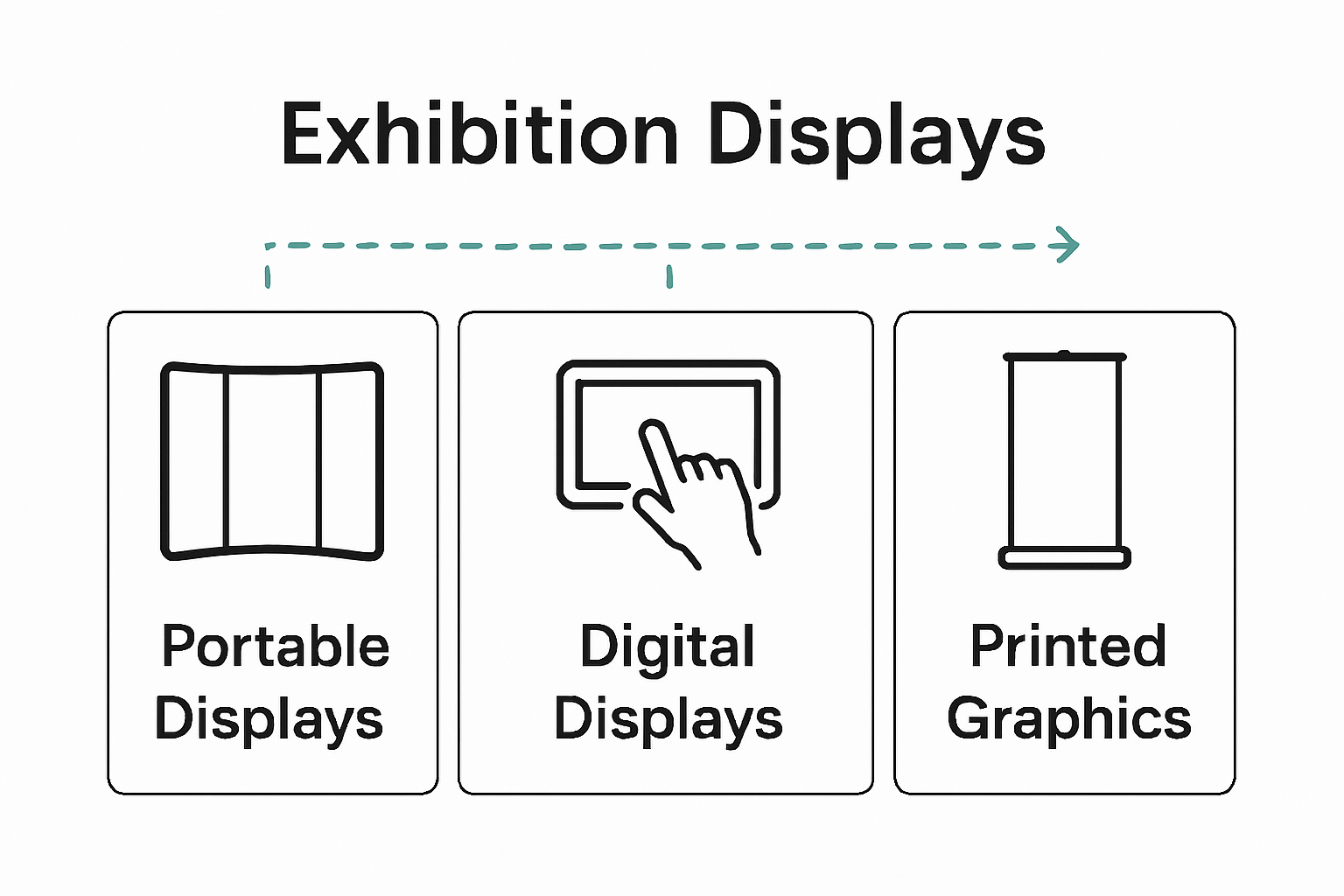
Display technologies range across multiple categories, each serving unique strategic purposes. According to Wikipedia’s research on interactive whiteboards, digital displays now allow direct interaction with content, dramatically expanding engagement potential. The primary types of display solutions include:
-
Portable Displays
- Pop-up stands
- Banner displays
- Modular exhibit systems
-
Digital Displays
- Interactive touchscreens
- LED video walls
- Projection mapping systems
-
Printed Graphics
- Fabric backdrop displays
- Tension fabric systems
- Large format printed panels
Professional exhibition designers understand that selecting the right display solution depends on multiple factors. Venue constraints, audience demographics, brand messaging, and budget all play crucial roles in determining the most effective approach. Each display type offers unique advantages - from the flexibility of portable stands to the immersive potential of interactive digital experiences.
Technology continues pushing boundaries in display solutions. Why use trade show displays goes beyond mere visibility, transforming exhibitions into dynamic storytelling platforms. Cutting-edge technologies like volumetric displays and augmented reality are reshaping how organizations present information, creating multi-dimensional experiences that capture attention and communicate complex narratives with unprecedented clarity and impact.
Step-By-Step Exhibition Setup Process
Exhibition setup is a strategic process that demands meticulous planning and precise execution. Creating impactful display visuals requires a systematic approach that transforms complex logistics into seamless visual storytelling. Professionals understand that successful exhibitions are crafted through careful, intentional preparation.
According to ninteriordesign’s comprehensive exhibition setup guide, the exhibition setup process can be broken down into several critical stages:
-
Pre-Event Planning
- Define exhibition objectives
- Select appropriate display solutions
- Create detailed layout designs
- Confirm venue specifications
-
Design and Preparation
- Develop graphic materials
- Verify technical requirements
- Test equipment compatibility
- Create backup communication plans
-
Physical Setup
- Transport display equipment
- Arrange structural components
- Install graphics and digital displays
- Conduct final alignment checks
The physical setup demands precision and strategic thinking.
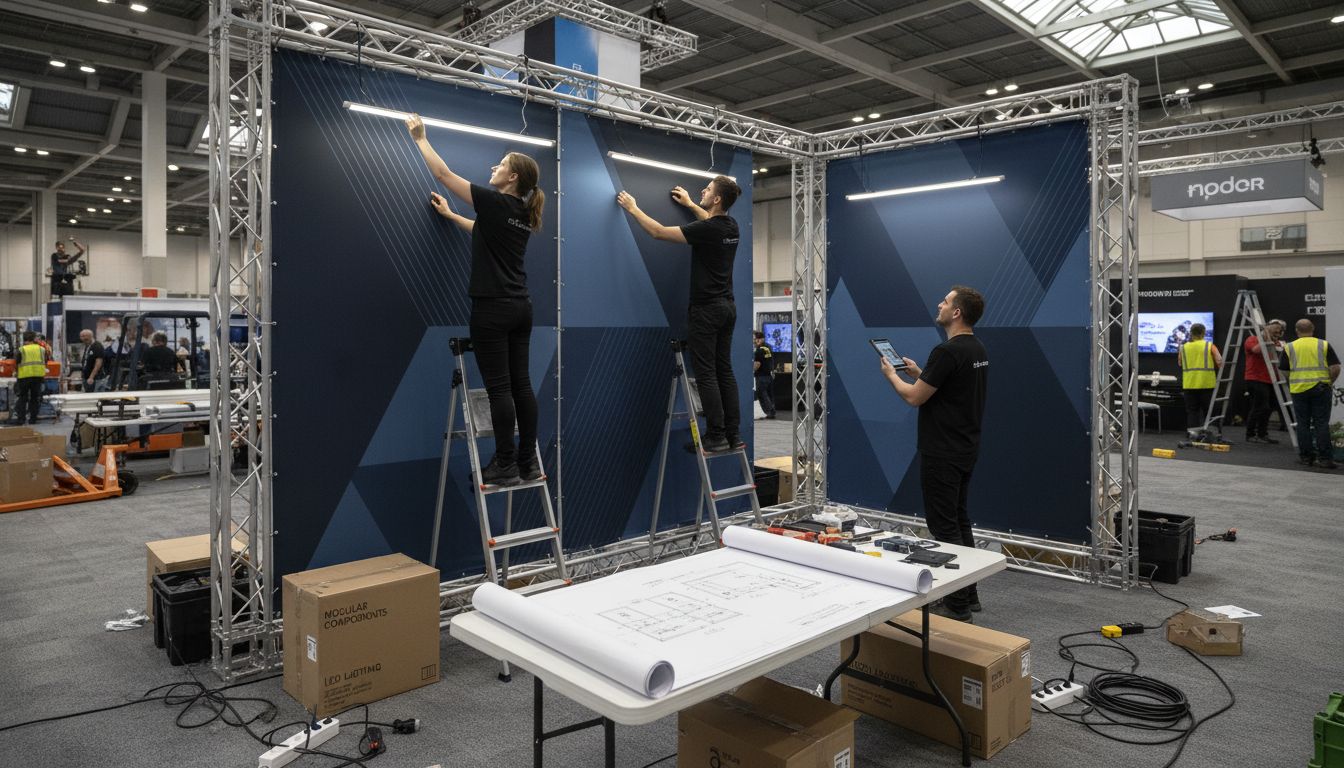 Every element must align perfectly - from booth structure to graphic placement. Professionals know that even minor misalignments can compromise the entire exhibition experience. Lighting, spatial arrangement, and visual flow become critical considerations that transform a simple display into an immersive brand narrative.
Successful exhibition setups require anticipating potential challenges and developing robust contingency strategies. Best display booth ideas emphasize adaptability and creativity. Technical preparedness, combined with a deep understanding of audience engagement techniques, separates extraordinary exhibitions from merely average presentations. The goal is not just to display information, but to create an interactive, memorable experience that resonates with attendees long after the event concludes.
Maximizing Branding and Visual Impact
Creating a memorable exhibition presence requires more than attractive graphics. Branding impact at trade shows demands a holistic approach that transforms your display into a powerful communication platform. Every visual element must work cohesively to tell your brand’s unique story.
According to Soni Design’s innovative exhibition display research, strategic branding goes far beyond traditional marketing techniques. Modern exhibitions require multifaceted approaches that engage audiences through:
-
Visual Storytelling
- Consistent color schemes
- Narrative-driven graphics
- Emotional connection points
-
Interactive Elements
- Digital touchpoints
- Immersive experiences
- Real-time engagement mechanisms
-
Strategic Positioning
- Thoughtful spatial design
- Clear messaging hierarchy
- Dynamic visual flow
Professional exhibitors understand that visual impact is about creating sensory experiences that resonate emotionally. Color psychology, strategic graphic placement, and carefully curated design elements transform static displays into powerful brand communication tools. Each visual choice becomes a strategic decision that communicates your organization’s core values and professional identity.
Drawing from Radon Exhibition’s product display insights, successful visual strategies leverage multiple design principles. The most compelling exhibitions blend technical precision with creative storytelling, turning displays into immersive narratives that capture attention and drive meaningful audience connections. Your goal is not just visibility, but creating memorable brand experiences that continue resonating long after the event concludes.
Budgeting, Safety, and Setup Mistakes to Avoid
Effective exhibition preparation requires strategic financial planning and risk management. Seven essential types of event displays showcase the importance of understanding both budgetary constraints and potential logistical challenges before committing resources to an exhibition project.
According to NInterior Design’s comprehensive exhibition guide, successful exhibition management hinges on anticipating and mitigating potential setup complications. Critical areas of focus include:
-
Budgeting Pitfalls
- Overlooking hidden costs
- Underestimating transportation expenses
- Failing to budget for contingencies
- Neglecting maintenance and repair funds
-
Safety Considerations
- Structural integrity checks
- Electrical system compliance
- Weight distribution analysis
- Emergency access planning
-
Common Setup Mistakes
- Inadequate venue measurements
- Poor equipment compatibility
- Insufficient technical rehearsal
- Lack of backup equipment
Professional exhibitors recognize that financial prudence goes hand in hand with meticulous safety planning. Every dollar spent should serve a strategic purpose, whether it’s enhancing visual appeal, ensuring structural reliability, or creating engaging audience experiences. Budget constraints should never compromise safety or fundamental display quality.
The most successful exhibitions emerge from a balanced approach that combines financial wisdom with comprehensive risk management. By anticipating potential challenges, allocating resources strategically, and maintaining rigorous safety standards, organizations can transform potential obstacles into opportunities for memorable brand experiences. Your exhibition is not just an event - it’s a sophisticated communication platform that requires careful, thoughtful preparation.
Elevate Your Exhibition Setup with Customized Display Solutions
Struggling to create the perfect exhibition setup that truly captivates and engages your audience The challenges of strategic spatial planning, vibrant branding, and seamless display integration can feel overwhelming. You want your exhibition to stand out with impactful visuals that tell your brand’s story and create lasting connections. That is where the right display products make all the difference.
Discover a wide selection of expertly crafted solutions designed to solve common exhibition setup pain points. Whether you need versatile Roll Up Banner Stands for quick impactful visuals or sturdy Gazebos that provide a professional and inviting space you can rely on, Live Displays delivers quality and customization with every product.
Take control of your event presence today by exploring our extensive collection at Live Displays. Benefit from high-quality printing, bespoke customization options, and fast free shipping on qualifying orders to ensure your exhibition setup conveys your brand identity flawlessly. Start crafting your immersive and memorable exhibition experience now and transform your trade show presence into a powerful storytelling platform.
Frequently Asked Questions
What are the essential components of an exhibition setup?
An effective exhibition setup includes strategic spatial planning, comprehensive brand representation, audience engagement techniques, and visual storytelling through design. Each component plays a critical role in creating an immersive experience for the audience.
What type of display solutions are available for exhibitions?
Exhibition displays typically fall into three main categories: portable displays (like pop-up stands and banner displays), digital displays (including interactive touchscreens and LED video walls), and printed graphics (such as fabric backdrops and large format printed panels). Each type serves unique strategic purposes.
What steps should I follow for successful exhibition setup?
The exhibition setup process involves three key stages: Pre-event planning (define objectives, select display solutions, and create layout designs), Design and preparation (develop graphic materials, verify technical requirements), and Physical setup (transport equipment, arrange components, and install graphics). Each step is crucial for a seamless exhibition experience.
How can I maximize my brand’s visual impact at exhibitions?
To maximize branding impact, focus on visual storytelling with consistent color schemes, narrative-driven graphics, and emotional connection points. Incorporate interactive elements and thoughtful spatial design to create a dynamic visual flow that engages your audience effectively.
Share:
How to Design Event Displays for Maximum Brand Impact
Why Invest in Professional Displays: Complete Guide