
Branded displays have become a cornerstone of modern american event marketing, turning simple spaces into immersive brand experiences. Studies show that over 80 percent of professionals believe branded displays directly influence audience perception and engagement. For any american organization aiming to make a memorable impact, understanding the power and nuance of these visual tools is crucial. This guide offers practical insight into how branded displays shape brand recognition and why thoughtful design choices matter for every event.
Table of Contents
- Defining Branded Displays For Events
- Popular Types And Customization Options
- Benefits Of Effective Event Branding
- Design, Printing, And Production Process
- Cost Factors And Budget Management
- Common Mistakes And Compliance Issues
Key Takeaways
| Point | Details |
|---|---|
| Branded Displays Elevate Identity | Branded displays effectively convey an organization’s identity and core messaging at events, acting as vital marketing tools. |
| Customization is Key to Success | Effective branded displays require careful customization to align with organizational identity and event objectives. |
| Event Branding Enhances Engagement | Cohesive event branding boosts audience connection and memorability, transforming passive experiences into active participation. |
| Cost Management is Essential | Smart budgeting for displays requires evaluating them as long-term assets rather than one-time expenses, focusing on total cost of ownership. |
Defining Branded Displays for Events
Branded displays are strategic visual communication tools designed to represent an organization’s identity, messaging, and aesthetic at professional events. Branded displays transform generic event spaces into powerful marketing platforms that immediately capture audience attention and communicate core brand characteristics.
According to Iowa State University Extension, branded displays serve as essential tools for representing an organization’s visual standards and ensuring consistent professional representation. These displays typically include versatile elements like:
- Backdrop systems
- Banners
- Signage
- Promotional graphics
- Interactive multimedia panels
At their core, branded displays function as three-dimensional brand ambassadors. They go beyond simple visual decoration, acting as silent communicators that convey an organization’s personality, values, and professional positioning. How to Design Event Displays for Maximum Brand Impact suggests that effective branded displays should seamlessly integrate visual design, strategic messaging, and audience engagement principles.
Successful branded displays are not one-size-fits-all solutions. They require careful customization that reflects an organization’s unique brand identity, target audience, and specific event objectives. This means considering factors like color psychology, graphic design principles, spatial layout, and interactive potential when creating these powerful marketing tools.
Popular Types and Customization Options
Event professionals have access to multiple branded display solutions designed to meet diverse marketing and communication objectives. Branded displays range from compact tabletop presentations to expansive, immersive architectural installations that transform entire event spaces.
The most popular branded display types include:
- Pop-up Displays: Lightweight, portable solutions perfect for trade shows and conferences
- Tension Fabric Systems: Modern, seamless graphics with sleek aluminum frames
- Modular Exhibition Stands: Flexible configurations adaptable to different event spaces
- Gazebo Displays: Outdoor event solutions with full brand customization
- Banner Stands: Versatile vertical graphics for targeted messaging
Customization options extend far beyond basic graphic placement. The Essential Guide to Investing in Custom Displays highlights that effective branded displays should incorporate multiple personalization strategies. These strategies include custom sizing, specialized fabric selections, strategic color matching, and innovative structural designs that reflect an organization’s unique brand personality.
Selecting the right display involves analyzing specific event requirements, target audience expectations, and logistical constraints. Event marketers must consider factors like transportation ease, setup complexity, graphic durability, and potential reusability when designing their branded display strategy. The goal is creating a visual experience that not only captures attention but also communicates brand values with precision and impact.
Benefits of Effective Event Branding
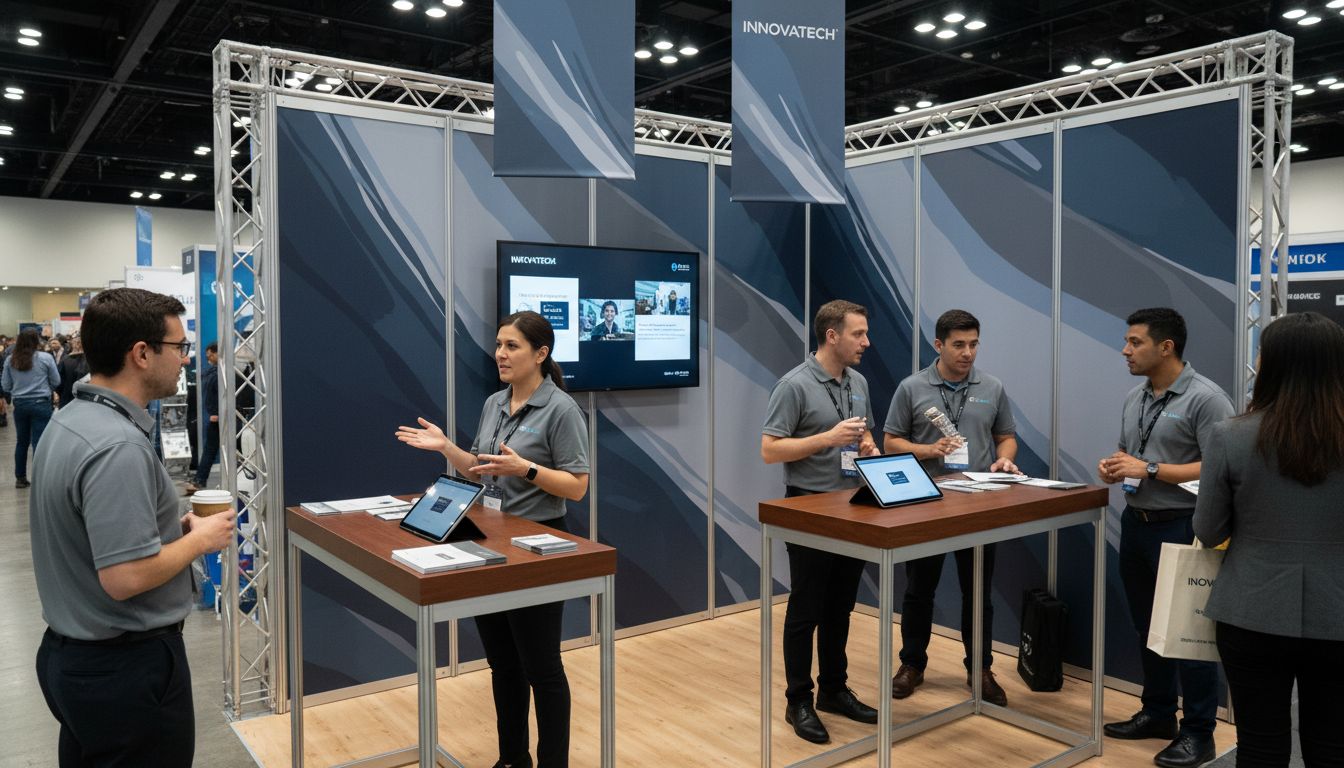
Event branding serves as a powerful strategic tool that transforms passive interactions into memorable brand experiences. Brand visibility at events goes far beyond simple logo placement, creating immersive environments that communicate an organization’s core values, personality, and unique market positioning.
According to Phase 3 Marketing and Communications, cohesive event signage contributes to a unified brand image and can significantly enhance audience engagement. The key benefits of effective event branding include:
- Increased brand recognition
- Enhanced audience connection
- Memorable visual storytelling
- Improved message retention
- Stronger emotional brand associations
Branding Impact at Trade Shows: Complete Guide emphasizes that strategic event branding can transform potential customers from passive observers into active participants. By creating visually compelling and strategically designed brand environments, organizations can generate deeper emotional connections that extend far beyond the immediate event experience.
The true power of event branding lies in its ability to create holistic sensory experiences. Successful brands understand that every visual element, from color schemes to graphic design, communicates a narrative. Event displays become dynamic storytelling platforms that engage attendees through carefully curated visual language, turning brief encounters into lasting brand impressions that resonate long after the event concludes.
Design, Printing, and Production Process
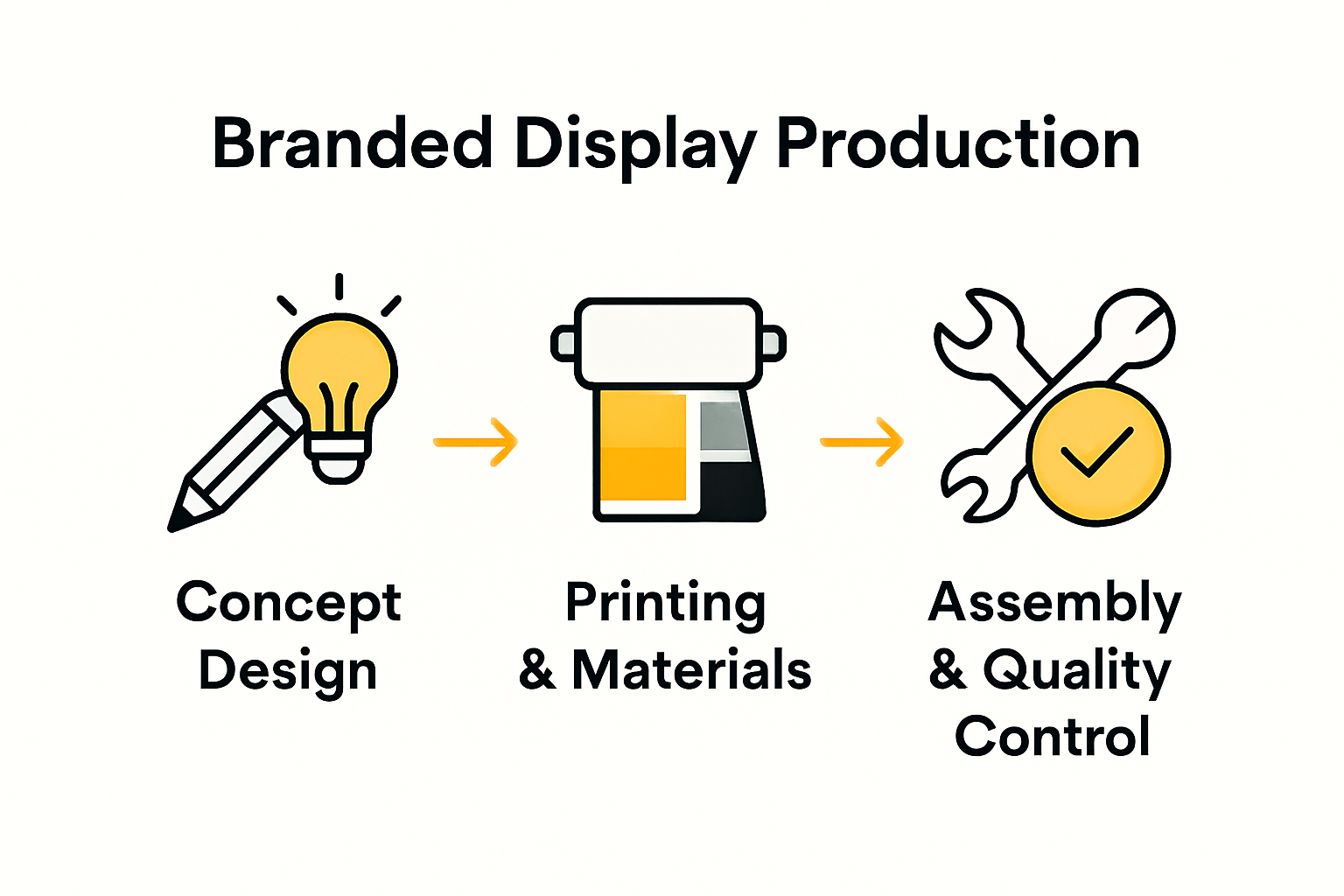
Creating impactful branded displays requires a meticulous, multi-stage approach that transforms initial creative concepts into polished, professional marketing tools. Display production is a sophisticated process that demands precision, creativity, and technical expertise across multiple disciplines.
Kist Displays outlines a comprehensive approach to commercial display creation, emphasizing quality control at each production stage. The typical process involves several critical phases:
- Conceptual Design
- Brand strategy assessment
- Initial creative visualization
- Concept sketching and digital mockups
- Material Selection
- Analyzing durability requirements
- Evaluating substrate compatibility
- Matching materials to event environment
- Graphic Design
- Digital artwork preparation
- Color matching and brand consistency
- Resolution and scalability optimization
- Printing Techniques
- High-resolution digital printing
- Fabric and tension fabric printing
- UV-resistant and weatherproof options
- Final Production
- Structural assembly
- Quality inspection
- Packaging for transportation
Professional display production goes beyond simple printing. Event Signage: Everything You Need to Know highlights the importance of understanding how different printing techniques and material selections can dramatically impact a brand’s visual communication.
Successful branded displays represent a strategic intersection of design thinking, technological capability, and marketing insight. Event professionals must collaborate closely with production teams, ensuring that every visual element precisely reflects the brand’s narrative, values, and strategic objectives. The goal is creating not just a display, but a dynamic, immersive brand experience that captivates and communicates with remarkable efficiency.
Cost Factors and Budget Management
Budgeting for branded displays requires a strategic approach that balances visual impact with financial constraints. Event display investments involve multiple cost considerations that extend far beyond initial purchase prices, demanding comprehensive financial planning and long-term value assessment.
Key cost factors for branded displays typically include:
- Initial design and production expenses
- Material quality and durability
- Customization complexity
- Size and scale of display
- Printing and graphic production
- Transportation and logistics
- Storage requirements
- Potential reuse and adaptability
The Essential Guide to Investing in Custom Displays suggests that smart budgeting involves evaluating displays as strategic marketing assets rather than one-time expenses. Organizations should consider factors like potential reuse across multiple events, brand consistency, and the potential return on visual communication investment.
Savvy event marketers understand that cost-effective display solutions aren’t about finding the cheapest option, but identifying displays that provide maximum strategic value. This means calculating total cost of ownership, which includes production, transportation, storage, maintenance, and potential reuse potential. Smart budgeting involves selecting modular, adaptable display systems that can be reconfigured for different events, ultimately providing greater long-term financial efficiency and brand flexibility.
Common Mistakes and Compliance Issues
Branded displays represent significant investments that can quickly become costly mistakes without proper planning and strategic execution. Brand compliance requires meticulous attention to detail, ensuring that every visual element accurately represents an organization’s core identity and messaging standards.
Iowa State University Extension and Outreach emphasizes the critical importance of maintaining consistent branding guidelines, warning that deviations can lead to brand dilution and audience confusion. Common mistakes in event display development include:
- Inconsistent color reproduction
- Incorrect logo sizing or placement
- Misaligned brand typography
- Using outdated brand assets
- Ignoring resolution and print quality requirements
- Failing to account for different display environments
Branding Impact at Trade Shows: Complete Guide suggests that compliance goes beyond visual consistency. Event professionals must also consider legal and regulatory requirements specific to their industry, ensuring that display materials meet all necessary standards and avoid potential legal complications.
Mitigating risks requires a proactive approach. Organizations should implement comprehensive brand asset management systems, conduct regular design reviews, and establish clear approval processes. This includes creating detailed brand guidelines, providing training for design teams, and developing robust quality control mechanisms that catch potential compliance issues before displays are produced. The goal is creating displays that not only look professional but also protect and enhance the organization’s brand reputation.
Elevate Your Brand Presence with Custom Branded Displays
Struggling to make a lasting impression at your next event? The article highlights critical challenges like ensuring brand consistency, engaging your audience visually, and selecting the right materials and display types that align perfectly with your unique brand identity. These are not just display decisions but strategic moves to transform passive event attendees into active brand advocates through immersive storytelling and eye-catching design.
At Live Displays you can overcome these challenges with our wide range of premium promotional products tailored to your event needs. Whether you need sleek banners or durable gazebos our customization options deliver vibrant visuals that resonate with your target audience. Explore our collection of Roll Up Banner Stands – LIVE DISPLAYS to find portable and impactful solutions designed for trade shows and conferences.
Don’t settle for generic event setups. Visit Live Displays today to discover custom display products that truly reflect your brand story. To complete your event branding experience browse our Lanyards – LIVE DISPLAYS collection and enhance your team’s professional look. Act now to get free artwork proofs and enjoy seamless ordering for an unforgettable brand impact.
Frequently Asked Questions
What are branded displays for events?
Branded displays are strategic visual communication tools designed to represent an organization’s identity and messaging at events. They transform event spaces into marketing platforms that capture attention and communicate brand characteristics.
What are the benefits of using branded displays at events?
Effective branded displays enhance brand visibility, create memorable experiences, improve audience connection, and strengthen emotional brand associations. They turn passive interactions into active engagements.
What factors should be considered when customizing branded displays?
Customization should reflect an organization’s unique brand identity, target audience, and event objectives. Considerations include color psychology, graphic design, spatial layout, and interactivity to ensure the display communicates effectively.
How does the production process for branded displays work?
The production process involves several phases: conceptual design, material selection, graphic design, printing techniques, and final production. Each phase is crucial for ensuring quality and effectiveness in conveying a brand’s message.
Share:
Why Invest in Professional Displays: Complete Guide
Table Display Setup Instructions for Impactful Event Branding