
Over 60 percent of american event professionals report that custom displays lead to stronger audience engagement compared to standard setups. In a crowded marketplace where first impressions can define success, the way brands present their message visually has become a game-changing factor. This guide will highlight how custom displays shape communication, boost brand recognition, and help american organizations stand out with memorable, targeted visual solutions.
Table of Contents
- What Are Custom Displays and Their Purpose?
- Major Types of Custom Displays for Events
- How Custom Displays Elevate Brand Visibility
- Cost Analysis and Return on Investment Factors
- Comparing Custom Vs. Standard Display Solutions
- Best Practices for Maximizing Event Impact
Key Takeaways
| Point | Details |
|---|---|
| Custom Displays Enhance Communication | Tailored visual tools facilitate brand representation and audience engagement, going beyond standard presentations. |
| Strategic Event Display Types | Selecting the right format, such as video walls or interactive displays, depends on specific event and audience needs. |
| Importance of ROI Analysis | A thorough cost-benefit evaluation is essential to justify investing in custom displays as they can drive revenue and enhance branding. |
| Best Practices for Event Impact | Integrating storytelling and interactive elements can significantly amplify audience interaction and overall event success. |
What Are Custom Displays and Their Purpose?
Custom displays are purpose-built visual communication tools designed to present information, promote brands, and engage target audiences across various professional environments. According to research from arXiv, these specialized displays are critical for facilitating human-centered design and collaborative interaction in cyber-physical systems.
Custom displays transform traditional communication methods by offering tailored visual solutions that go beyond standard presentation formats. They can be engineered to match specific user capabilities and task requirements, as highlighted by academic research on technologies for presenting information to human senses Oxford Academic. These displays are not one-size-fits-all solutions but strategic tools that adapt to unique organizational needs.
The primary purposes of custom displays include:
- Brand Representation: Creating visually compelling representations of corporate identity
- Information Transmission: Communicating complex data through intuitive visual interfaces
- Audience Engagement: Designing interactive experiences that capture and maintain viewer attention
- Event Marketing: Developing eye-catching promotional environments for trade shows, conferences, and professional gatherings
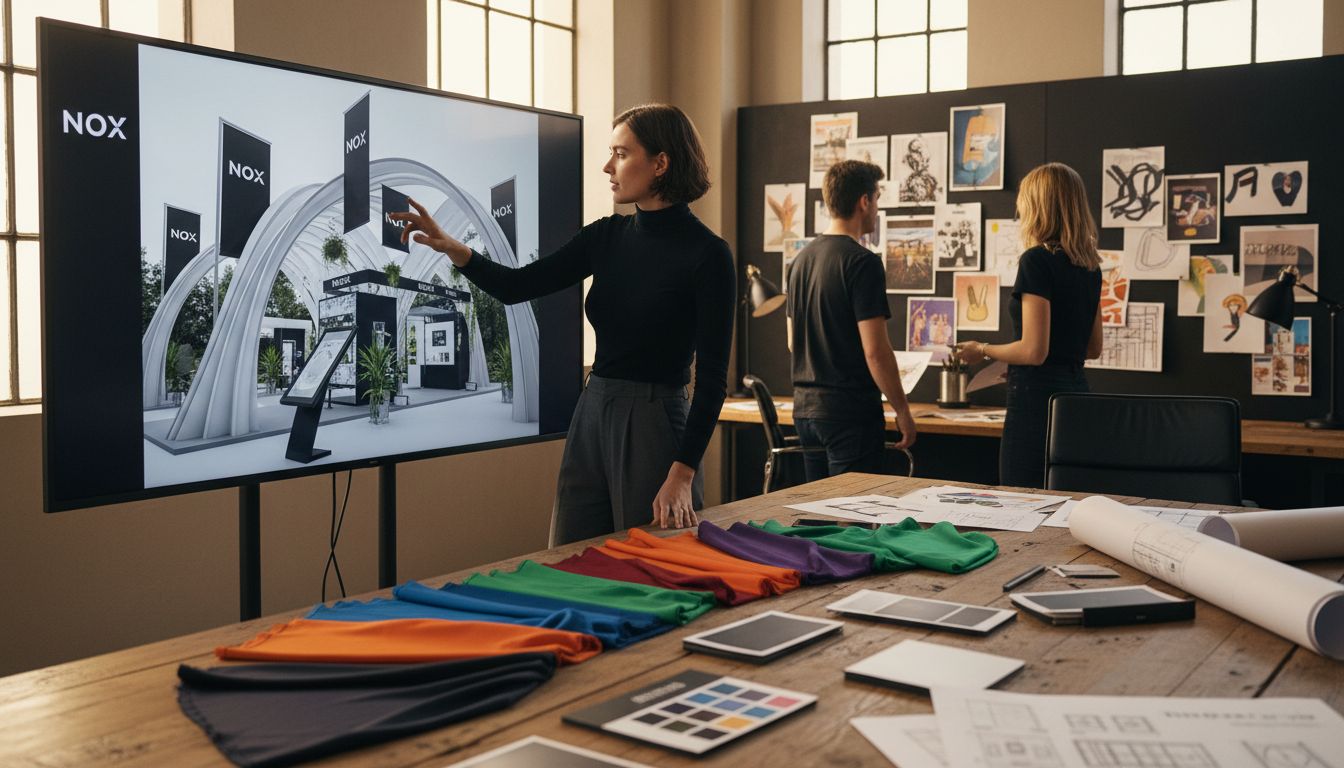
Designing effective custom displays requires understanding audience psychology, technological capabilities, and strategic communication goals. Whether for a small business presentation or a large-scale corporate event, these visual tools can dramatically enhance message clarity and audience connection.
If you want to explore more about creating impactful display solutions, check out our guide on customizing display stands.
Major Types of Custom Displays for Events
Custom displays for events encompass a diverse range of visual communication tools designed to capture attention, convey information, and enhance brand presence. According to Wikipedia, artistic video walls represent one innovative approach, allowing organizations to arrange screens in non-traditional layouts that create unique visual experiences.
Event display types can be categorized into several strategic formats, each serving specific communication objectives. These include:
- Portable Display Stands: Lightweight, easily transportable solutions for trade shows and conferences
- Video Walls: Dynamic digital displays that combine multiple screens for immersive presentations
- Interactive Touchscreen Displays: Engaging platforms that encourage audience participation
- Modular Exhibition Stands: Flexible structures that can be reconfigured for different event spaces
Specialized display solutions like Wikipedia display cases offer secure and attractive methods for showcasing products or artifacts, providing event organizers with versatile presentation options. These transparent cabinets enable precise object presentation while maintaining visual accessibility.
Choosing the right custom display depends on multiple factors including event type, audience demographics, brand messaging, and spatial constraints. Professional event marketers must carefully evaluate their specific communication goals to select the most effective display strategy.
To explore more comprehensive insights about event display strategies, check out our 7 essential types of event displays guide.
How Custom Displays Elevate Brand Visibility
Custom displays are powerful strategic tools that transform brand communication by creating immersive visual experiences. According to Opsmatters, these displays play a crucial role in enhancing branding by creating environments that guide customer navigation and reinforce brand identity through tailored visual presentations.
Brand visibility goes far beyond simple logo placement. Research from Science Direct demonstrates that strategic display formats can significantly influence consumer perceptions and product evaluations. By crafting carefully designed visual narratives, brands can communicate complex messages without saying a word.
Key strategies for elevating brand visibility through custom displays include:
- Visual Storytelling: Creating narrative-driven display designs that communicate brand values
- Sensory Engagement: Designing displays that stimulate multiple senses and create memorable experiences
- Strategic Positioning: Placing displays in high-traffic areas to maximize audience interaction
- Consistent Branding: Maintaining color schemes, typography, and design elements across different display formats
Successful brand visibility requires understanding audience psychology and creating displays that not only attract attention but also forge emotional connections. The most effective custom displays transform passive viewing into active brand engagement.
To learn more about maximizing your branding impact, explore our guide to trade show branding strategies.
Cost Analysis and Return on Investment Factors
Investing in custom displays requires a comprehensive understanding of both upfront costs and potential long-term returns. According to research from Journal of Big Data, advanced visualization technologies can significantly facilitate data analysis and decision-making, potentially generating substantial returns on initial investments.
Financial considerations for custom displays extend beyond simple purchase prices. Science Direct suggests that innovative display technologies like virtual reality can inspire consumer purchase intentions, transforming displays from expense to strategic revenue-generating assets.
Key financial factors to evaluate include:
- Initial Investment Costs: Hardware, design, and production expenses
- Operational Expenses: Maintenance, updates, and potential technology upgrades
- Potential Revenue Impact: Increased customer engagement, brand visibility, and sales conversions
- Long-Term Value: Reusability, adaptability, and brand perception enhancement
Successful ROI analysis requires a holistic approach that considers both quantitative metrics and qualitative brand benefits. Smart organizations view custom displays not as expenses, but as strategic investments in their marketing and communication infrastructure.
Professional event marketers should conduct thorough cost-benefit analyses, considering factors like audience reach, engagement metrics, and potential sales uplift when evaluating display investments.
Comparing Custom vs. Standard Display Solutions
Choosing between custom and standard display solutions requires a nuanced understanding of their unique capabilities and limitations. Research from arXiv highlights the critical differences in collaborative environments, demonstrating how display configurations can significantly impact information sharing and interaction effectiveness.
Display solutions are not one-size-fits-all technologies. According to arXiv, innovative approaches like combining large interactive displays with personal augmented reality can transform traditional visualization strategies, offering more dynamic and engaging presentation methods.
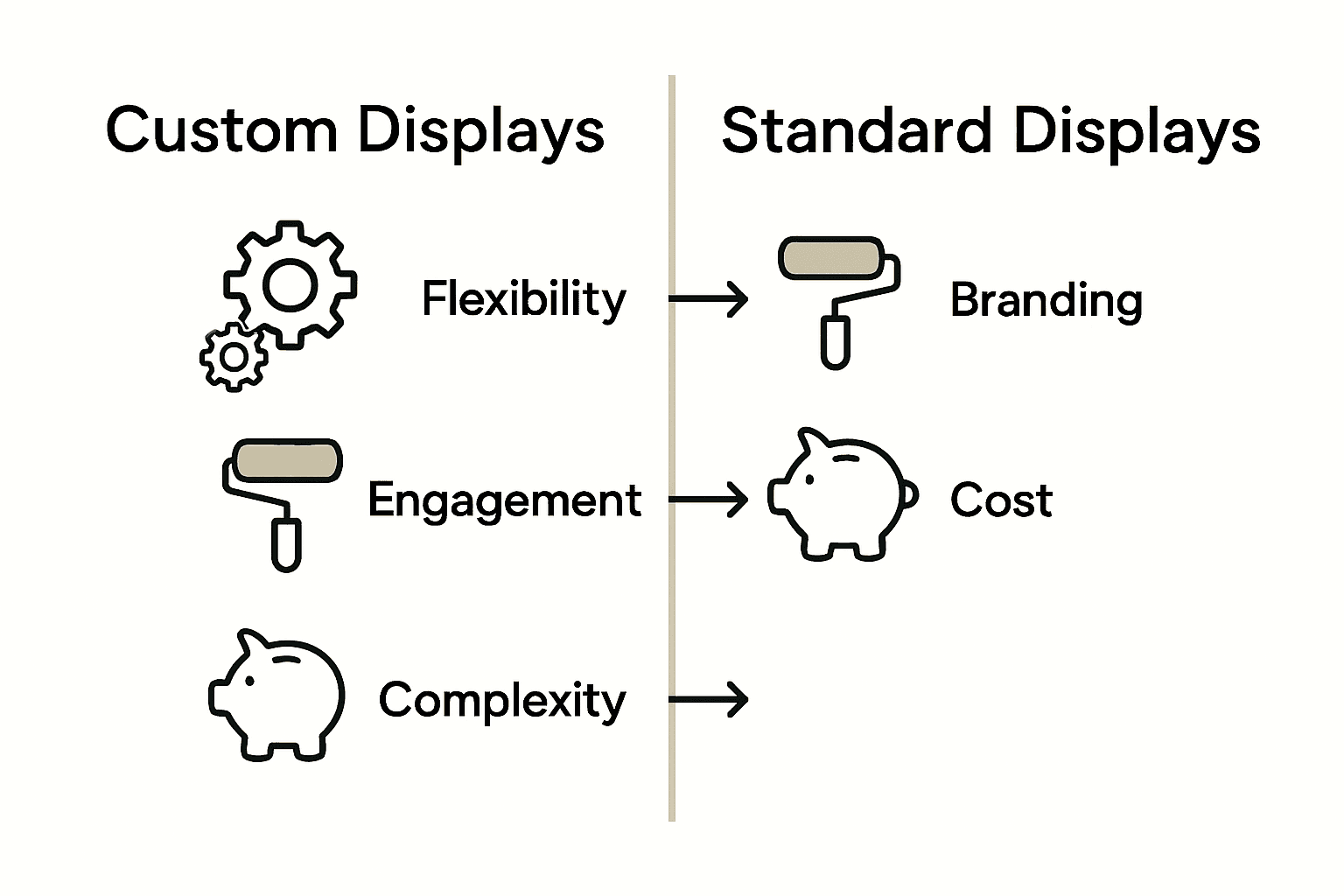
Key comparative factors include:
- Flexibility: Custom displays adapt to specific brand and event requirements
- Engagement: Tailored solutions create more immersive audience experiences
- Cost Efficiency: Standard displays offer lower upfront expenses
- Technical Complexity: Custom solutions require more advanced technical integration
Standard displays provide predictable, budget-friendly options for organizations with straightforward presentation needs. Conversely, custom displays represent strategic investments that can dramatically enhance brand storytelling, audience interaction, and overall event impact.
Professional event marketers must carefully evaluate their specific communication objectives, audience expectations, and budgetary constraints when selecting between custom and standard display solutions. Learn more about display technology in our comprehensive guide.
Best Practices for Maximizing Event Impact
Maximizing event impact requires strategic planning and innovative display approaches. According to The Inscriber Magazine, custom displays can transform event experiences by creating interactive exhibits that facilitate engagement and information transmission.
Event display strategies extend far beyond simple visual presentations. Research from HRMARS highlights the importance of designing user-centered displays that create memorable, immersive experiences.
Key best practices for maximizing event impact include:
- Storytelling Design: Create narrative-driven display layouts that guide audience attention
- Interactive Elements: Incorporate touchpoints that encourage audience participation
- Visual Hierarchy: Structure displays to highlight key messages and brand elements
- Technical Integration: Leverage multimedia and digital technologies for enhanced engagement
Successful event displays transform passive observation into active interaction. By understanding audience psychology and leveraging innovative design principles, organizations can create powerful visual experiences that resonate long after the event concludes.
For practical insights into creating standout display booths, explore our guide to display booth ideas for event success.
Invest Smartly in Custom Displays That Elevate Your Brand
Are you looking to overcome the challenges of engaging your audience and maximizing event impact with custom displays tailored to your unique needs The article highlights the importance of strategic investments in display solutions that do more than just present information They solve critical pain points such as low brand visibility and limited audience interaction while ensuring a strong return on investment
At Live Displays, we understand these goals and offer a comprehensive range of customizable products including Roll Up Banner Stands – LIVE DISPLAYS that combine portability with vibrant visuals Our high-quality printing and bespoke design options empower you to create immersive presentations that captivate and connect with your target audience
Discover how investing now in expertly crafted custom displays can transform your trade show or event presence Start exploring our full collection today and benefit from free artwork proofs and rapid quotes Visit Live Displays to get started and elevate your brand’s visibility with effective, tailored promotional solutions. Don’t miss the chance to make every event your most impactful one
More ideas await in our Lanyards – LIVE DISPLAYS collection to complement your branding efforts
Frequently Asked Questions
What are custom displays and what purpose do they serve?
Custom displays are specialized visual communication tools designed to present information, promote brands, and engage audiences. They transform traditional communication methods and adapt to unique organizational needs, serving purposes such as brand representation, information transmission, audience engagement, and event marketing.
What are the major types of custom displays for events?
Custom displays come in various formats, including portable display stands, video walls, interactive touchscreen displays, and modular exhibition stands. Each type serves specific communication objectives and enhances the overall event experience.
How do custom displays enhance brand visibility?
Custom displays enhance brand visibility by creating immersive visual experiences. They leverage visual storytelling, sensory engagement, strategic positioning, and consistent branding elements to communicate brand values and forge emotional connections with the audience.
What factors should be considered when comparing custom and standard display solutions?
When comparing custom and standard display solutions, consider flexibility, audience engagement, cost efficiency, and technical complexity. Custom displays can adapt to specific needs and provide immersive experiences, while standard displays are more budget-friendly with lower upfront costs.
Share:
The Essential Guide to Displays in Audience Engagement
Complete Guide to the Role of Portable Displays