
Over 80 percent of American businesses consider trade shows vital for brand growth and lead generation. Yet navigating the complexities of event marketing can overwhelm even experienced teams. Clarity in branding objectives and consistent booth visuals set the foundation for real connections and measurable success. This guide outlines practical steps that help your American organization stand out, drive engagement, and transform every trade show appearance into a smart investment.
Table of Contents
- Step 1: Define Clear Branding Objectives For Your Event
- Step 2: Select Custom Display Solutions For Cohesive Visuals
- Step 3: Implement Consistent Brand Messaging Across Materials
- Step 4: Optimize Booth Layout To Attract Target Audiences
- Step 5: Evaluate Brand Presence And Audience Engagement
Quick Summary
| Key Insight | Explanation |
|---|---|
| 1. Define Clear Branding Objectives | Set SMART objectives to guide your trade show strategies effectively. This clarity helps in measuring success post-event. |
| 2. Select Cohesive Display Solutions | Choose display elements that create a unified visual narrative to enhance brand perception and engagement at your booth. |
| 3. Consistent Brand Messaging | Develop a comprehensive messaging guide to ensure unified communication across all materials and interactions during the event. |
| 4. Optimize Booth Layout Strategically | Design your booth layout for effective audience engagement by creating distinct areas for various interactions while ensuring accessibility. |
| 5. Evaluate Brand Presence Post-Event | Use data collection methods to evaluate audience engagement and measure performance against your defined objectives for continuous improvement. |
Step 1: Define clear branding objectives for your event
Successful trade show participation starts with crystal clear branding objectives that transform your event presence from passive display to strategic marketing opportunity. Your objectives become the strategic roadmap guiding every visual, interaction, and communication at the show.
Begin by conducting a comprehensive assessment of what your organization wants to achieve. Exhibitor marketing professionals recommend setting SMART objectives that are Specific, Measurable, Achievable, Relevant, and Time-bound. These might include generating qualified sales leads, introducing a new product line, expanding brand recognition, or networking with industry decision makers. Each objective should connect directly to your broader business strategy and have quantifiable metrics for measuring success.
While defining your objectives, consider the multiple potential outcomes trade shows offer. Trade show marketing guides highlight diverse goals ranging from sales generation to market research, including introducing new services, enhancing customer relationships, conducting competitive analysis, or recruiting talent. Your specific objectives will determine your booth design, staff training, promotional materials, and engagement strategies.
Professional tip: Create a one-page objective worksheet before the event, listing your top three goals, specific metrics for each goal, and the exact tactics you will use to achieve them. This document will serve as your strategic compass during event preparation and post-event evaluation.
Pro tip: Prioritize objectives that align most closely with your current business growth strategy, rather than trying to accomplish everything at once.
Here’s a quick comparison of core trade show branding goals and how they influence booth strategy:
| Branding Objective | Example Metric | Impact on Booth Design |
|---|---|---|
| Generate sales leads | Number of qualified leads | Dedicated meeting areas |
| Launch new products | Demo participation count | Prominent demo station placement |
| Expand brand recognition | Booth visit volume | Bold graphics and clear signage |
| Conduct market research | Survey responses collected | Quiet feedback or survey zones |
| Network with decision makers | Quality of contacts gained | Private areas for discussions |
Step 2: Select custom display solutions for cohesive visuals
Crafting a visually compelling trade show presence requires strategic selection of custom display solutions that communicate your brand story effectively. Your visual presentation serves as a powerful silent ambassador that attracts potential clients and communicates your brand’s unique value proposition.
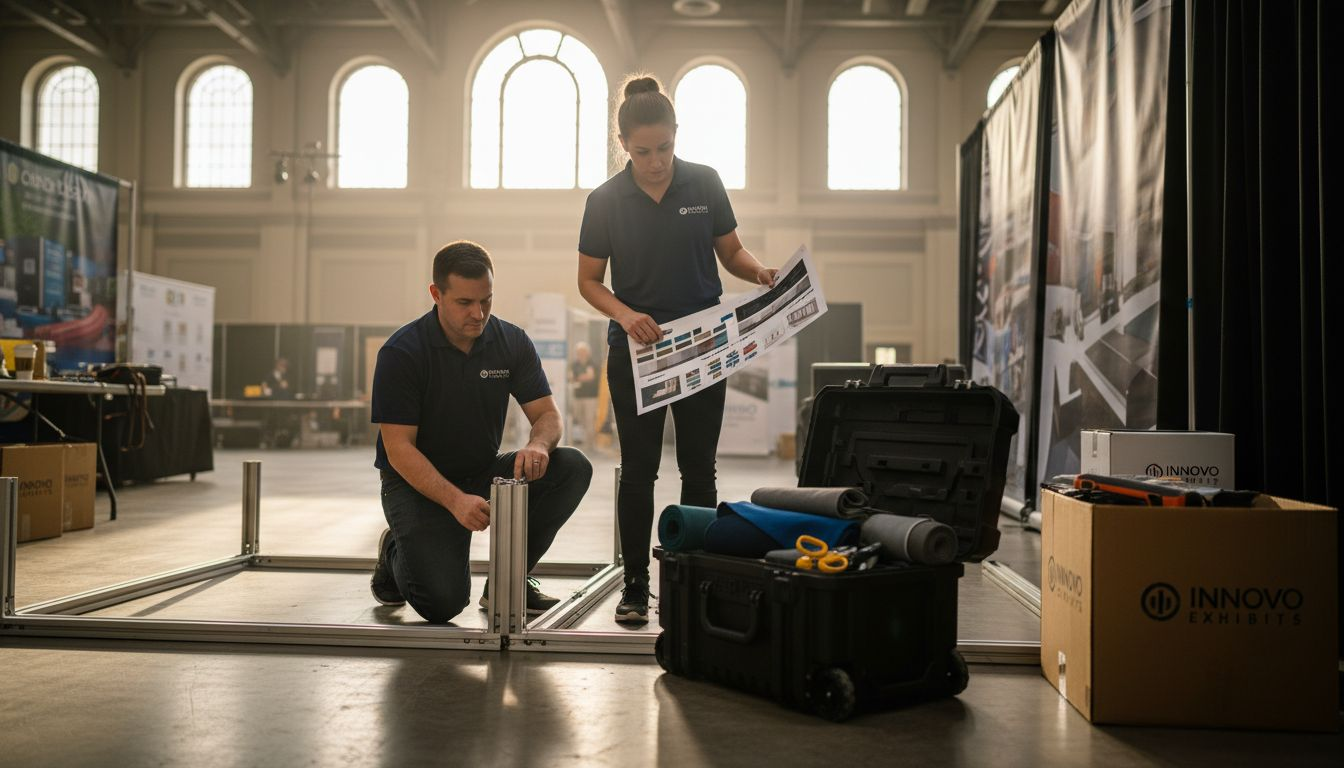
Research on trade show branding demonstrates that integrated visual design significantly enhances brand perception by creating a consistent and memorable experience for attendees. When selecting display solutions, focus on elements that create a unified visual narrative. This means choosing display materials, colors, graphics, and layouts that align seamlessly with your brand identity. Consider custom gazebos, banners, tablecloths, and signage that share a cohesive color palette, typography, and messaging style. Your goal is to create an immersive environment that instantly communicates your brand’s professionalism and unique market positioning.
Start by conducting a comprehensive brand audit of your existing visual assets. Map out your brand guidelines, color codes, logo usage rules, and key messaging pillars. These will serve as the foundation for designing custom display solutions that feel authentic and intentional. Collaborate with design professionals who specialize in trade show exhibits to translate your brand identity into physically engaging display environments. Look for solutions that not only look visually appealing but also facilitate smooth visitor interactions, provide functional spaces for product demonstrations, and create natural flow within your booth space.
Professional tip: Create a visual mood board before designing your trade show displays, collecting inspiration images, color swatches, and design references that capture your brand’s essence and event objectives.
Pro tip: Invest in high quality, versatile display solutions that can be adapted for multiple events, maximizing your marketing investment across different trade show environments.
The table below summarizes key custom display elements and their business effect:
| Display Element | Visual Role | Business Impact |
|---|---|---|
| Custom gazebo | Brand shelter centerpiece | Increases brand visibility |
| Branded banners | Highlight key messaging | Reinforces market positioning |
| Tablecloths | Unified color presentation | Projects professionalism |
| Signage | Wayfinding and identification | Enhances booth approachability |
| Digital screens | Interactive content delivery | Engages visitors actively |
Step 3: Implement consistent brand messaging across materials
Creating a powerful trade show presence requires more than attractive visuals it demands a unified communication strategy that resonates consistently across every touchpoint. Your brand messaging becomes the narrative thread that connects all your event materials and interactions.
Trade show branding experts emphasize the critical importance of maintaining consistent messaging throughout your exhibit experience. This means aligning your verbal communication, printed materials, digital displays, staff interactions, and visual elements to tell a single compelling brand story. Start by developing a comprehensive messaging guide that outlines your key communication points including your unique value proposition core brand messages brand voice characteristics and key talking points. Every brochure banner backdrop business card and staff script should reflect these core messaging principles.
Pay close attention to the nuanced details that create a cohesive brand experience. Your typography color palette language tone and visual graphics should feel interconnected across all materials. Ensure that your booth staff are thoroughly trained to communicate consistently reinforcing the same key messages and brand personality. This means conducting pre event briefings where team members understand not just what to say but how to say it creating a harmonized communication approach that feels authentic and professional.
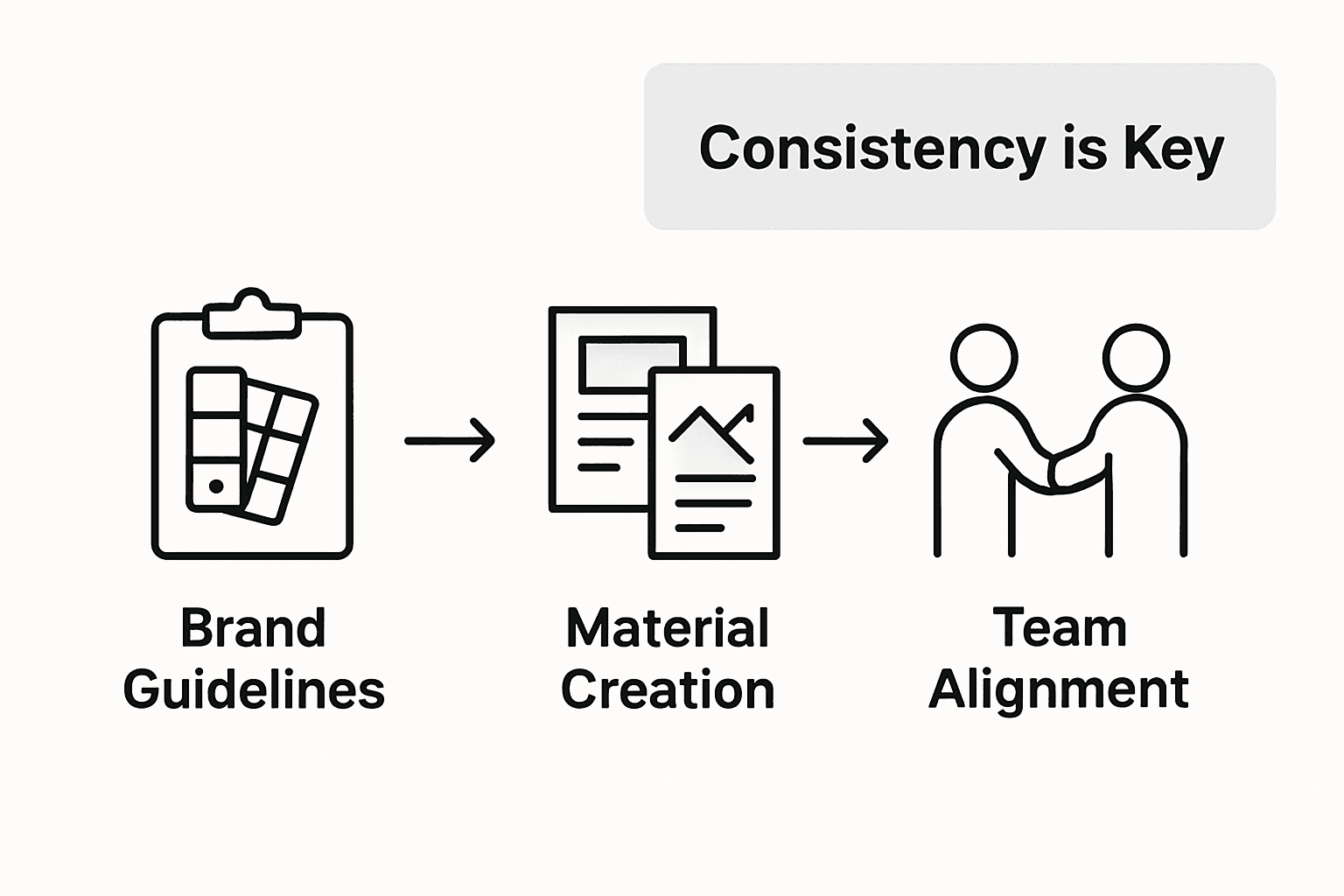
Professional tip: Develop a comprehensive brand messaging checklist that your entire team can reference before and during the trade show to ensure absolute consistency.
Pro tip: Create a compact brand communication guide that fits in your team members pockets allowing them to quickly reference key messaging points during live interactions.
Step 4: Optimize booth layout to attract target audiences
Designing an effective trade show booth layout is a strategic art form that transforms physical space into a powerful audience engagement mechanism. Your booth represents more than just a physical location it serves as an interactive canvas for communicating your brand’s story and value proposition.
Strategic booth design research highlights the importance of understanding audience behaviors and preferences when creating an inviting exhibit space. Start by mapping out your booth’s traffic flow considering how attendees naturally move and interact within trade show environments. Create multiple engagement zones that serve different purposes creating distinct areas for initial attraction product demonstrations private conversations and hands on interactions. Position your most compelling visual elements and product displays strategically to capture immediate attention using clear sightlines and open pathways that invite exploration.
Consider the psychological aspects of spatial design that influence visitor perceptions. Your booth should communicate accessibility and openness through intentional layout choices. Use varied booth heights to create visual interest break up monotonous spaces with interactive stations and ensure sufficient open space that prevents feeling crowded. Train your staff to be strategically positioned to welcome visitors without appearing overwhelming providing a balance between approachability and professional presence. The goal is to create an environment that feels simultaneously professional inviting and uniquely representative of your brand identity.
Professional tip: Conduct a pre event walkthrough of your booth layout using mock visitor paths to identify and eliminate potential friction points in your design.
Pro tip: Create a flexible booth layout that can be quickly reconfigured to accommodate different audience engagement scenarios during the event.
Step 5: Evaluate brand presence and audience engagement
Successful trade show participation requires more than just showing up it demands strategic measurement and analysis of your brand’s performance and audience interaction. Your evaluation process transforms raw event data into actionable insights that drive future marketing strategies.
Event marketing professionals recommend establishing clear metrics for tracking brand presence and audience engagement through comprehensive assessment techniques. Begin by defining specific quantifiable goals before the event such as the number of quality leads generated booth visitor interactions social media mentions or product demonstration participation rates. Utilize multiple data collection methods including digital tracking tools lead scanning systems visitor surveys and staff observation logs. These metrics will help you understand not just the quantity of interactions but the quality of engagement measuring factors like visitor interest level brand recall and potential conversion opportunities.
Implement a structured post event analysis framework that goes beyond surface level numbers. Analyze the depth of audience interactions by examining conversation quality attendee feedback sentiment analysis and alignment with your predefined objectives. Compare your performance against industry benchmarks and your own historical data to identify trends and improvement areas. Pay special attention to nuanced indicators like the duration of booth interactions depth of product discussions and quality of contact information collected. This comprehensive approach transforms your trade show participation from a one time event into a strategic learning opportunity for continuous brand improvement.
Professional tip: Create a standardized evaluation template before the event that allows for consistent and objective measurement of your brand performance.
Pro tip: Develop a real time tracking system that enables your team to make immediate adjustments during the trade show to maximize engagement potential.
Elevate Your Trade Show Branding with Custom Displays from Live Displays
Trade shows demand more than just presence. They require strategic branding solutions that capture attention and clearly communicate your message. If you are aiming to create a cohesive visual identity, attract target audiences, and deliver consistent brand messaging as outlined in the “Trade Show Branding Strategy Guide for Maximum Impact”, then high-quality custom displays are essential. Key challenges like drawing visitors, supporting your sales goals, and making your brand memorable can be solved with the right display products.
At Live Displays, you can find versatile solutions tailored to your trade show objectives. From eye-catching Roll Up Banner Stands that reinforce your key messaging to branded Lanyards that enhance professional interaction and visitor recognition, each product is designed with your brand impact in mind. Our advanced printing technology ensures vibrant colors and crisp logos, helping you stand out amid bustling trade show floors.
Take advantage of premium customization options and free artwork proofs to perfect your trade show look before the event. Visit Live Displays today to explore our full range of custom display solutions. Start transforming your trade show presence now with displays built to maximize your branding impact and lead generation success.
Frequently Asked Questions
What are key branding objectives for a trade show?
Establish clear branding objectives that align with your overall business strategy. Focus on goals such as generating sales leads, launching new products, or networking with decision makers to guide your event strategy.
How can I create a cohesive visual display for my booth?
Select custom display solutions that reflect your brand identity, using a consistent color palette, typography, and messaging. Start by conducting a brand audit to ensure all visual elements are aligned for a unified look.
What is the importance of consistent brand messaging at trade shows?
Consistent brand messaging unifies your communication across all materials and interactions, enhancing your brand’s presence. Develop a messaging guide for your team to reference, ensuring everyone articulates the same key points during the event.
How should I design my booth layout to engage more attendees?
Optimize your booth layout by creating distinct engagement zones and ensuring an open, inviting design. Use clear sightlines to position compelling visuals that attract attention and make it easy for attendees to navigate.
What metrics should I track to evaluate my trade show performance?
Track specific metrics like the number of qualified leads, booth visitor interactions, and social media engagement to assess your performance. Establish a structured analysis framework post-event to gain actionable insights for future participation.
How can I improve visitor engagement during the event?
Encourage visitor engagement by implementing interactive displays and training your staff to actively welcome attendees. Consider using real-time feedback mechanisms to adjust your strategies during the event for maximum impact.
Share:
Impact of Display Visuals on Event Success
Display Collections: Boosting Trade Show Impact