
Most American companies know that nearly 85 percent of trade show visitors remember a brand based on its visual displays alone. Standing out in a crowded exhibition hall is no small feat and banners play a vital role in shaping those memorable first impressions. The impact of a well-designed banner goes beyond branding. It quickly draws attention, communicates your message, and gives your business a valuable advantage over the competition.
Table of Contents
- Defining The Role Of Banners At Trade Shows
- Major Types Of Trade Show Banners Explained
- Essential Design Elements For Effective Banners
- Banner Placement Strategies For Maximum Impact
- Common Mistakes To Avoid With Trade Show Banners
Key Takeaways
| Point | Details |
|---|---|
| Banners as Brand Ambassadors | Trade show banners function as visual communication tools that quickly convey brand identity and messages, standing out in competitive environments. |
| Understanding Banner Types | Different types of banners, such as retractable and pop-up displays, serve distinct purposes and should be selected based on specific event goals. |
| Effective Design Principles | Successful banner design involves clear messaging, strategic use of color and typography, and adherence to visual hierarchy to ensure readability and engagement. |
| Strategic Placement | Banners must be positioned at eye level and along high-traffic areas to optimize visibility and audience interaction during trade shows. |
Defining the Role of Banners at Trade Shows
Trade show banners serve as powerful visual communication tools that transform ordinary exhibition spaces into dynamic brand storytelling platforms. These strategic display elements are far more than simple decorative backdrops - they are critical marketing instruments designed to capture attention, communicate brand messages, and create memorable first impressions within seconds of audience engagement. Trade show branding strategies emphasize how banners act as silent brand ambassadors that communicate complex narratives through compelling graphics and strategic design.
At their core, banners function as strategic visual communication devices that perform multiple crucial roles. They attract potential clients from across crowded exhibition halls, create immediate visual recognition, and provide instant insights into a company’s brand identity, products, or services. Unlike traditional marketing materials, trade show banners operate in high-stimulus environments where organizations have mere moments to distinguish themselves from competitors. Effective banners leverage color psychology, typography, and graphic design principles to communicate key messages quickly and memorably.
The multifaceted role of trade show banners extends beyond pure aesthetic appeal. Types of trade show banners demonstrate their versatility in serving diverse strategic purposes. Some banners function as informational resources, presenting detailed product specifications or company achievements. Others are designed as engagement tools, incorporating interactive elements or provocative visuals that invite attendee interaction. Retractable banners, pop-up displays, and fabric graphics each offer unique advantages in different exhibition contexts, allowing businesses to customize their visual communication approach based on specific event requirements and brand objectives.
Designing impactful trade show banners requires a nuanced understanding of visual communication principles. Successful banners balance aesthetic sophistication with clear, concise messaging. They must be readable from multiple distances, maintain brand consistency, and create an emotional connection with potential clients. Strategic banner design considers factors like color contrast, font legibility, image resolution, and overall visual hierarchy to ensure maximum communication effectiveness in high-traffic, visually competitive environments.
Major Types of Trade Show Banners Explained
Trade show banners are not one-size-fits-all marketing tools, but rather a diverse collection of strategic visual communication instruments designed to meet specific exhibition objectives. Event display options reveal a nuanced landscape of banner types, each engineered to address unique marketing and branding challenges. Understanding these variations allows businesses to select the most appropriate banner style for their specific trade show goals and audience engagement strategies.
The primary categories of trade show banners include retractable banners, pop-up displays, fabric graphics, and tension fabric displays. Retractable banners, also known as roll-up banners, offer exceptional portability and quick setup capabilities. They typically feature a lightweight design with a spring-loaded mechanism that allows graphic panels to roll up into a compact base, making transportation and storage incredibly convenient. Pop-up displays represent another critical banner type, characterized by their expandable frame structure that creates immersive, three-dimensional brand environments within minutes.
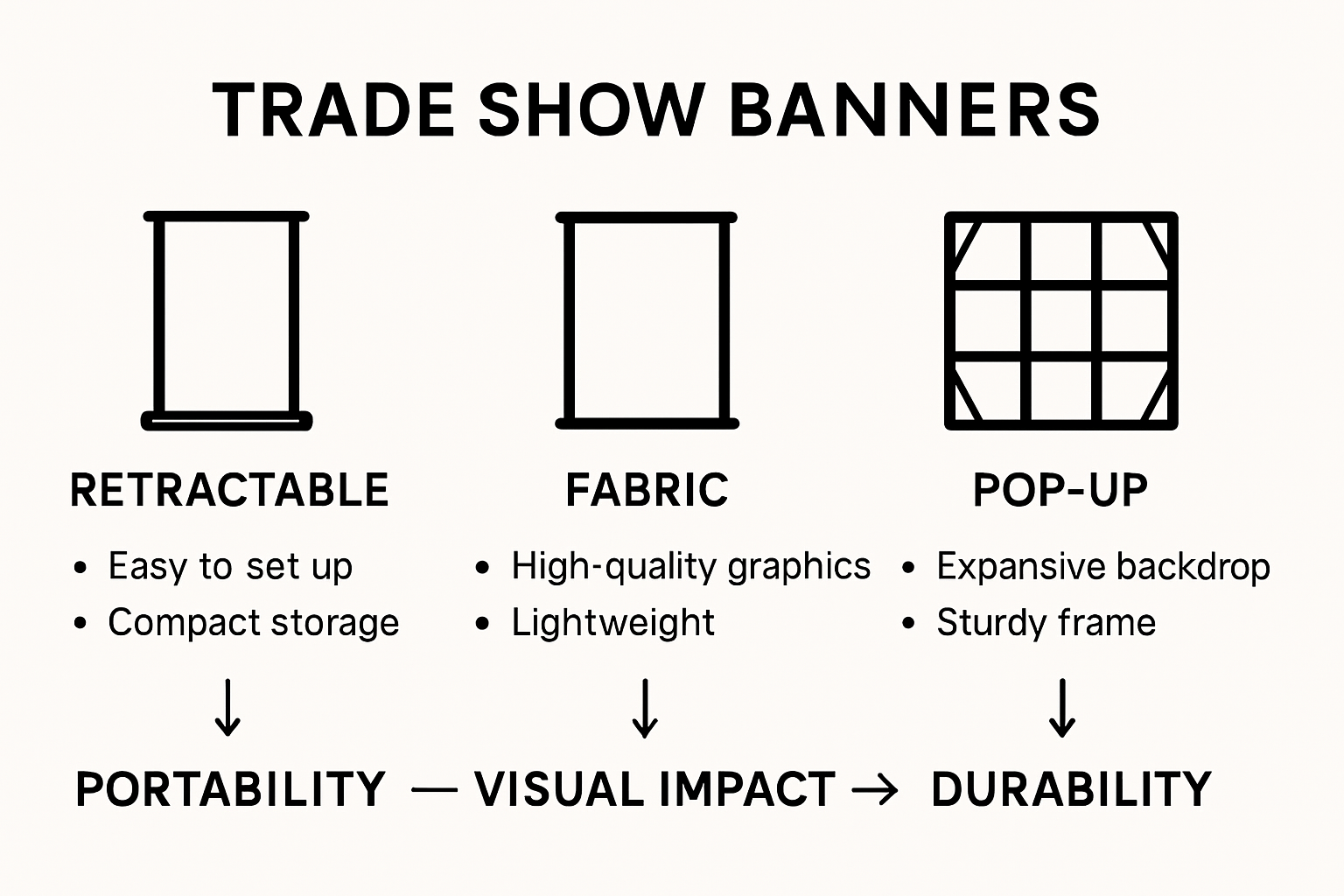
Fabric graphics and tension fabric displays have gained significant popularity in recent years due to their lightweight construction and sophisticated visual appeal. Trade show display configurations demonstrate how these banner types can create seamless, wrinkle-free visual presentations that maintain professional aesthetic standards. Fabric banners offer superior graphic reproduction, vibrant color rendering, and remarkable versatility across different booth sizes and exhibition layouts. Some advanced fabric display systems incorporate modular design elements, allowing businesses to reconfigure their visual presentations rapidly and adapt to changing exhibition requirements.
When selecting trade show banners, organizations must consider several critical factors beyond mere visual aesthetics. Portability, ease of assembly, graphic resolution, durability, and alignment with brand identity are paramount considerations. Each banner type presents unique advantages - retractable banners excel in compact spaces, pop-up displays create immersive environments, and fabric graphics offer unparalleled visual sophistication. The ultimate goal remains consistent: creating a compelling visual narrative that captures audience attention, communicates brand messages effectively, and distinguishes the organization within a competitive exhibition landscape.
Essential Design Elements for Effective Banners
Designing trade show banners requires a strategic approach that goes far beyond aesthetic considerations. Exhibit booth graphics reveal that successful banner design is a complex interplay of visual communication principles, brand identity, and audience engagement strategies. The most effective banners function as powerful visual storytelling tools that can communicate complex brand messages within seconds of viewer interaction.
The fundamental design elements that distinguish exceptional trade show banners include color psychology, typography, graphic resolution, and strategic visual hierarchy. Color selection plays a critical role in emotional engagement and brand recognition. Warm colors like red and orange can create a sense of energy and excitement, while cool colors like blue and green communicate professionalism and stability. Typography must balance readability with brand personality - selecting fonts that are both visually appealing and easily comprehensible from multiple viewing distances. High-resolution graphics are non-negotiable, ensuring that banner images remain crisp and professional, even when viewed up close or from a distance.

Visual hierarchy emerges as a crucial design principle that guides viewer attention and communication flow. Event display design techniques demonstrate that successful banners create a clear visual path, leading viewers through key information points with strategic placement of headlines, graphics, and supporting text. This requires careful consideration of size, placement, and visual weight of design elements. Negative space becomes as important as the graphical content, preventing visual clutter and allowing critical messages to stand out. Effective banners also maintain consistent branding elements - using established color palettes, logos, and messaging that reinforce the organization’s visual identity.
Beyond aesthetic considerations, technical design elements significantly impact banner effectiveness. Material selection, print quality, and structural design contribute to the overall impact and durability of trade show displays. Lightweight, wrinkle-resistant fabrics with high color retention, precision printing techniques, and robust mounting systems ensure that banners can withstand the rigorous environment of trade show exhibitions. The ultimate goal remains creating a banner that not only captures attention but also communicates the brand’s core message with clarity, professionalism, and visual sophistication.
Banner Placement Strategies for Maximum Impact
Strategic banner placement transforms trade show exhibits from static displays into dynamic engagement platforms. Promotional display selection demonstrates that precise positioning can dramatically amplify a brand’s visibility and audience interaction. Effective placement requires understanding both physical exhibition space dynamics and audience movement patterns.
The visual positioning of trade show banners demands meticulous planning. Positioning banners at eye level ensures maximum audience engagement, creating immediate visual connections with potential clients and visitors. Research indicates that banners positioned between 5 and 7 feet high capture optimal attention, allowing viewers to absorb messaging without physical strain. Strategic placement also involves understanding booth traffic flow - positioning banners at entry points, near demonstration areas, and along primary walking paths can significantly increase exposure and interaction rates.
Banner placement strategies must also consider the technical aspects of exhibition environments. Proximity to lighting sources, distance from competing visual stimuli, and alignment with booth architectural elements play crucial roles in visual impact. Some exhibitors strategically layer banners, using multiple heights and angles to create depth and visual intrigue. Complex booth layouts might utilize vertical banner arrangements to guide visitor movement, creating deliberate pathways that funnel attendees toward key product displays or interaction zones.
Technical considerations extend beyond visual aesthetics into practical exhibition requirements. Banners must withstand environmental challenges like ambient lighting, potential physical contact, and constant movement. Robust mounting systems, tension-based display mechanisms, and materials resistant to wrinkles and color fading become essential. The ultimate placement strategy balances visual communication objectives with practical exhibition constraints, ensuring that each banner serves as an effective, durable marketing instrument designed to maximize brand visibility and audience engagement.
Common Mistakes to Avoid with Trade Show Banners
Trade show banner design and deployment requires strategic precision, as even minor errors can significantly diminish marketing effectiveness. Exhibition signage strategies reveal that many organizations unintentionally sabotage their own marketing efforts through preventable banner design mistakes. Understanding these common pitfalls becomes crucial for businesses seeking to maximize their trade show investments.
One of the most critical errors involves overcrowding banner designs with excessive text and complex graphics. Many exhibitors mistakenly believe that more information translates to better communication, when in reality, it overwhelms viewers and dilutes core messaging. Successful banners communicate key points rapidly, using concise language and clean visual hierarchies. Font selection plays a pivotal role - small, illegible typefaces or overly decorative fonts can render critical information unreadable from typical booth viewing distances. Color contrast and readability must be carefully considered, ensuring that text stands out clearly against background graphics.
Technical execution represents another significant area where organizations frequently stumble. Custom display setup highlights the importance of proper banner material selection, printing quality, and structural integrity. Common mistakes include using low-resolution images that appear pixelated when enlarged, selecting inappropriate fabric materials that wrinkle easily, and neglecting professional finishing techniques. Improper banner mounting can lead to sagging, misalignment, or unstable displays that undermine overall presentation professionalism. Exhibitors must invest in high-quality printing, durable materials, and robust mounting systems that withstand the dynamic trade show environment.
Perhaps the most nuanced mistake involves misalignment between banner design and broader brand identity. Banners should not exist in isolation but must seamlessly integrate with an organization’s overall visual communication strategy. This means maintaining consistent color palettes, typography, and messaging across all marketing materials. Inconsistent branding can confuse potential clients and diminish perceived professionalism. Successful banner design requires holistic thinking - understanding how individual visual elements contribute to a comprehensive brand narrative that resonates with target audience expectations and industry expectations.
Elevate Your Trade Show Presence with Customized Banner Solutions
Trade shows demand more than just presence—they require impact and immediate recognition. The article highlights the challenge of capturing attention quickly amid crowded exhibition halls by using thoughtfully designed banners that combine color psychology, legible typography, and strategic placement. Common pain points such as overcrowded text, poor readability, and inconsistent branding can weaken your message and reduce audience engagement. Live Displays understands these hurdles and offers expertly crafted roll-up banners tailored for maximum visibility and ease of use, helping you create a bold, lasting impression.
Experience the power of banners that work as silent brand ambassadors at your events. Our Roll Up Banner Stands – LIVE DISPLAYS provide high-quality printing with vibrant colors and durable materials designed for quick set up and portability. 
Ready to transform your trade show booth into a captivating brand story? Visit Live Displays today to explore our full range of custom display solutions including banners, gazebos, and more. Don’t miss out on free artwork proofs and streamlined ordering that ensure your visuals look professional and communicate your message clearly. Seize the moment and boost your event impact now with displays that truly stand out.
Frequently Asked Questions
What are trade show banners?
Trade show banners are visual communication tools used at events to capture attention, convey brand messages, and create a memorable presence. They play a crucial role in differentiating a brand from competitors in crowded exhibition environments.
What types of trade show banners are available?
There are several types of trade show banners, including retractable banners, pop-up displays, fabric graphics, and tension fabric displays. Each type serves different purposes and offers unique advantages in portability, setup, and visual appeal.
How important is banner design for trade shows?
Banner design is critical for trade shows as it affects visibility and audience engagement. Effective banners balance aesthetics with clear messaging, using elements like color psychology, typography, and visual hierarchy to communicate the brand’s message quickly and memorably.
What are common mistakes to avoid when using trade show banners?
Common mistakes include overcrowding banner designs with too much text, using poor quality images, failing to maintain brand consistency, and improper mounting. These issues can undermine the banner’s effectiveness and diminish overall presentation professionalism.
Recommended
- 7 Key Types of Trade Show Banners Every Exhibitor Should Know – LIVE DISPLAYS
- Branding Impact at Trade Shows: Complete Guide – LIVE DISPLAYS
- Why Use Trade Show Displays: Complete Guide – LIVE DISPLAYS
- Trade Show Branding Guide: Boost Visibility and Impact – LIVE DISPLAYS
- Visual Communication Skills: Complete Expert Guide - Projector Display
Share:
7 Must-Have Steps for Your Event Marketing Checklist
Trade Show Branding Guide: Boost Visibility and Impact