
Every American event organizer wants displays that capture attention and stay memorable long after the doors close. With over 80 percent of trade show attendees saying large visuals shape their first impression, the right display printing technology has become vital for effective brand communication. This guide reveals what sets display printing apart, how it creates a visual impact, and why choosing the proper process can set your next event apart from the competition.
Table of Contents
- Defining Display Printing Technology for Events
- Major Types of Display Printing Processes
- How Display Printing Creates Visual Impact
- Applications in Trade Shows and Promotions
- Key Cost, Quality, and Durability Factors
Key Takeaways
| Point | Details |
|---|---|
| Understanding Display Printing | Display printing is a large format technique that creates visually striking materials for events, allowing for greater engagement and brand storytelling. |
| Selecting the Right Process | Choosing the appropriate printing method, such as digital or screen printing, is crucial for matching material type and desired visual effects. |
| Importance of Material Selection | Different substrates affect the durability and visual impact of prints; selecting the right material ensures optimal performance at events. |
| Emphasizing Visual Impact | High-resolution graphics and color precision are essential to transforming event spaces into engaging experiences that resonate with audiences. |
Defining Display Printing Technology for Events
Display printing represents a specialized large format printing technique designed to create expansive visual materials for event marketing and promotional purposes. Large format printing utilizes advanced technological processes to generate oversized graphics that capture audience attention across diverse event environments, from trade shows to corporate conferences.
The core characteristic of display printing involves producing high-resolution visual materials on expansive print surfaces. These materials can range from vinyl banners and pop-up displays to billboard-sized graphics, enabling businesses to communicate complex brand messages through visually striking mediums. Unlike standard digital printing, display printing accommodates larger print dimensions, allowing for more dramatic and immersive visual storytelling that transforms event spaces into engaging brand experiences.
Typically, display printing technologies leverage sophisticated equipment capable of handling multiple print materials including fabric, vinyl, mesh, and specialized event signage substrates. The printing process involves precise digital imaging techniques that ensure crisp color reproduction, sharp text clarity, and durability necessary for professional event presentations. Professionals can select from various printing methods like dye sublimation, UV printing, and screen printing to achieve specific visual effects and performance characteristics suited to their event requirements.
Pro Tip: Always request print material samples before your event to verify color accuracy, material durability, and visual impact, ensuring your display printing meets exact brand specifications and environmental conditions.
Major Types of Display Printing Processes
Display printing encompasses several specialized techniques, with primary processes that vary in ink application and material compatibility. The most common display printing methods include offset lithography, flexography, gravure, screen printing, and digital printing, each offering unique advantages for event marketing and promotional materials.
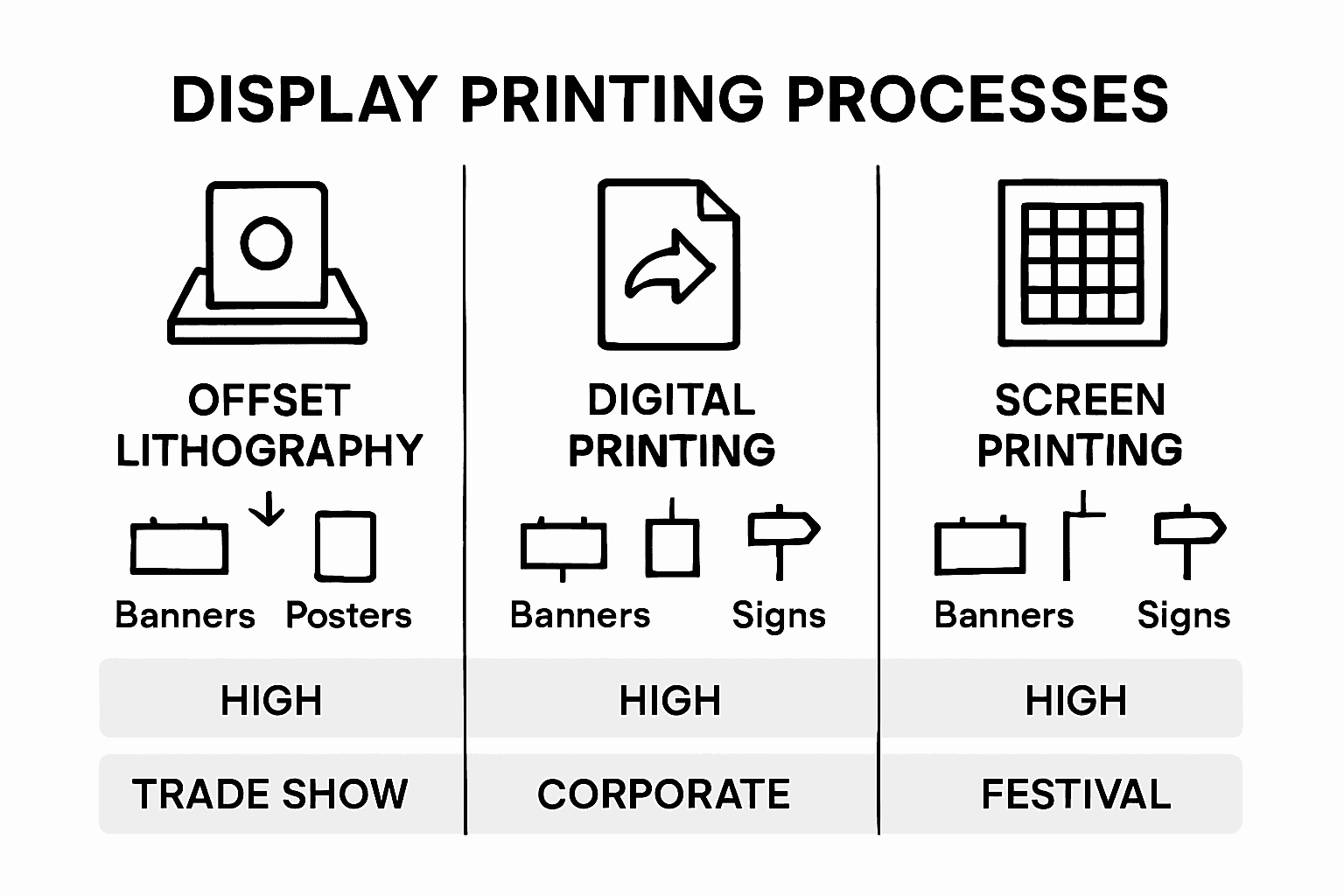
Offset Lithography represents a traditional printing technique where ink is transferred from a metal plate to a rubber blanket and then onto the print surface. This method excels in producing high-volume, detailed graphics with exceptional color consistency, making it ideal for large event banners and multi-page event programs. Screen Printing, alternatively, involves pushing ink through a mesh screen onto the substrate, allowing for vibrant color application on diverse materials like fabric, vinyl, and specialized event signage.
Digital printing has revolutionized display printing by enabling direct image transfer from digital files to print surfaces with remarkable precision. This method offers unprecedented flexibility, allowing event organizers to create custom graphics quickly and cost-effectively. Gravure and Flexography provide additional specialized printing techniques, with gravure using etched cylinders for high-volume print runs and flexography utilizing flexible relief plates perfect for printing on non-traditional substrates like event promotional materials.
Pro Tip: Consult with print professionals to match your specific event display requirements with the most appropriate printing process, considering factors like material type, color complexity, and desired visual impact.
Here’s a comparison of major display printing processes and their ideal event applications:
| Printing Method | Best Use at Events | Print Quality | Material Compatibility |
|---|---|---|---|
| Offset Lithography | Large banners, multi-page programs | Consistent, high-detail | Paper, cardboard |
| Digital Printing | Customized signage, quick turnaround | Sharp, vivid images | Vinyl, fabric, synthetic |
| Screen Printing | Outdoor signage, textiles | Bold, durable colors | Fabric, vinyl, mesh |
| Gravure | Long-run promotional materials | Fine detail, smooth tones | Glossy paper, films |
| Flexography | Non-traditional substrates | Good for simple graphics | Plastics, metallic foils |
How Display Printing Creates Visual Impact
Display printing transforms event communication by enabling large-scale visual storytelling through expansive print areas. By leveraging advanced printing technologies, organizations can craft immersive visual experiences that capture audience attention and communicate complex brand narratives through stunning graphic presentations.
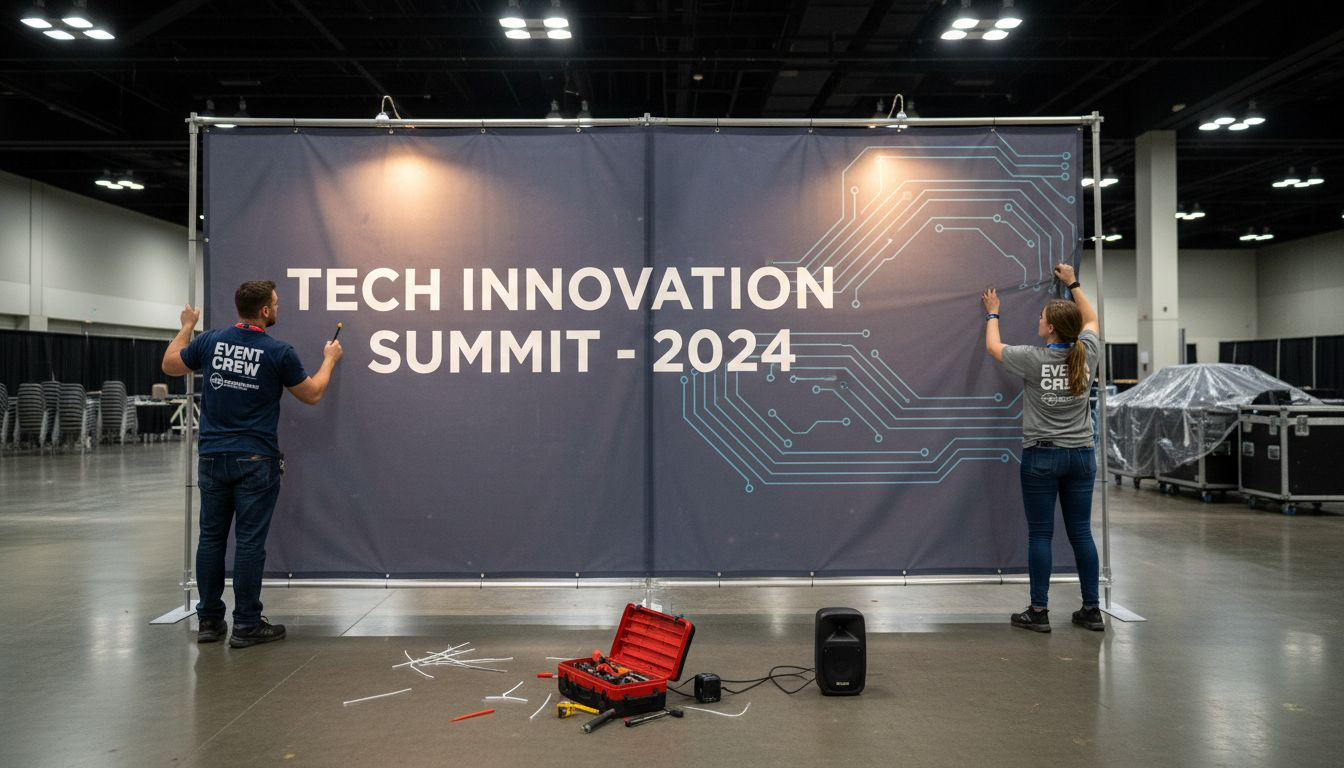
Color Dynamics play a critical role in display printing’s visual impact. High-resolution printing techniques allow for extraordinary color reproduction, enabling event designers to create vibrant, saturated graphics that stand out in crowded environments. Color precision means brands can maintain consistent visual identity across different print materials, from massive backdrop banners to intricate promotional signage. The ability to reproduce precise color gradients and nuanced tonal ranges transforms display printing from a mere communication tool into a sophisticated visual communication medium.
The scale and versatility of display printing significantly enhance visual storytelling. Large format printing accommodates massive graphic designs that can transform entire event spaces, creating immersive brand experiences that extend beyond traditional marketing approaches. Event organizers can now produce wall-sized graphics, floor decals, hanging banners, and three-dimensional display elements that engage audiences through comprehensive visual narratives. This approach allows for unprecedented creativity in communicating brand messages, turning physical spaces into dynamic, interactive visual environments.
Pro Tip: Prioritize high-resolution image files and consult with professional print technicians to ensure your display graphics maintain crisp details and color accuracy across different print substrates and sizes.
Applications in Trade Shows and Promotions
Display printing has become an essential strategy for businesses seeking to maximize their visibility and engagement at trade shows and promotional events, transforming complex information into visually compelling presentations. This versatile printing technology enables organizations to create dynamic visual narratives that capture audience attention and communicate brand messages with unprecedented clarity and impact.
Research Posters and Informational Displays represent a critical application of display printing in professional settings. By leveraging high-resolution printing techniques, companies can produce intricate graphic presentations that break down complex data and research findings into digestible, visually engaging formats. These displays serve multiple purposes, from academic conferences to industry trade shows, allowing presenters to communicate sophisticated information through carefully designed visual layouts that guide viewer comprehension and maintain professional credibility.
Trade show environments demand exceptional visual communication, and display printing meets this need through versatile graphic solutions. Large-scale banners, backdrop displays, floor graphics, and interactive signage can be precisely crafted to create immersive brand experiences. Event organizers and marketing professionals can now design comprehensive visual ecosystems that transform booth spaces into dynamic storytelling platforms, using oversized graphics, strategically placed informational panels, and three-dimensional display elements that draw attendees into deeper engagement with brand narratives.
Pro Tip: Design your trade show graphics with a clear visual hierarchy, using bold headlines, concise text, and high-contrast imagery to ensure your message remains readable and impactful from multiple viewing distances.
Key Cost, Quality, and Durability Factors
Display printing technologies present a complex landscape of trade-offs between printing process selection, cost efficiency, and output quality. Understanding these critical factors helps event professionals make informed decisions that balance budgetary constraints with visual performance requirements.
Print Volume Considerations significantly impact cost-effectiveness and quality outcomes. Offset lithography emerges as the most economical solution for large print runs, delivering consistently high-quality graphics with exceptional color accuracy and sharp detail reproduction. Conversely, digital printing offers remarkable flexibility for smaller quantity productions, allowing businesses to generate customized graphics without substantial upfront investment. Each printing method carries unique economic implications, with screen printing standing out for its exceptional durability in demanding environmental conditions, particularly for outdoor event displays and promotional materials.
Material selection plays a crucial role in determining display printing performance and longevity. Different substrates like vinyl, fabric, mesh, and specialized synthetic materials interact uniquely with printing technologies, influencing factors such as color vibrancy, weather resistance, and overall visual impact. Event professionals must carefully evaluate substrate compatibility, considering elements like UV resistance, tear strength, and potential environmental exposures. Advanced printing techniques now enable precise material matching, allowing organizations to select print methods that optimize both aesthetic appeal and functional durability for specific event requirements.
Pro Tip: Conduct thorough material and printing method tests before large-scale production, requesting sample prints to verify color accuracy, durability, and visual performance across different lighting and environmental conditions.
This summary table highlights key factors to consider when selecting display printing for your event:
| Factor | Why It Matters | Resulting Impact |
|---|---|---|
| Print Volume | Determines cost efficiency | Higher runs lower unit cost |
| Material Choice | Impacts durability and quality | Affects color vibrancy |
| Process Type | Matches visual requirements | Influences detail and finish |
| Environmental | Affects longevity | UV and weather resistance |
Elevate Your Event Presence with Expert Display Printing Solutions
Struggling to make a bold visual impact at your trade show or promotional event? The challenge lies in choosing the right display printing technology and materials that deliver vibrant colors, sharp details, and durability you can trust. With advanced techniques like digital printing and screen printing offering diverse options for vinyl banners, fabric backdrops, and custom signage, you need a partner who understands how to bring your brand stories to life on a grand scale.
Partner with Live Displays to transform your event space with custom solutions designed for maximum visual impact and lasting quality. Whether you need striking banners, stylish gazebos, or attention-grabbing tablecloths, we provide high-resolution printing and material choices that match your unique requirements. Experience the ease of free artwork proofs, fast quotes, and seamless shopping all at Live Displays. Don’t let your message blend into the background. Visit our site now and start crafting your perfect display today.
Frequently Asked Questions
What is display printing technology?
Display printing technology is a large format printing method used to create high-resolution visual materials for marketing at events, such as banners and graphics that enhance brand visibility.
What are the main types of display printing processes?
The primary display printing processes include offset lithography, digital printing, screen printing, gravure, and flexography, each suited for different materials and visual effects based on specific event requirements.
How does display printing impact event marketing?
Display printing transforms event marketing by creating immersive visual experiences that effectively communicate brand messages through large-scale graphics and thoughtful designs that capture audience attention.
What factors should I consider when choosing a display printing method?
When selecting a display printing method, consider factors such as print volume, material compatibility, desired visual quality, and environmental durability to ensure the printed materials meet your specific event needs.
Recommended
- What Is Display Technology? Complete Guide for Events – LIVE DISPLAYS
- Complete Guide to the Role of Interactive Displays – LIVE DISPLAYS
- Complete Guide to the Role of Portable Displays – LIVE DISPLAYS
- Why Invest in Professional Displays: Complete Guide – LIVE DISPLAYS
- Teknologi DLP vs LCD: Panduan Lengkap Kelebihan & Aplikasi - Projector Display
- Digital Printing: The Impact of Technology on Garment Printers - Recent blog posts
Share:
7 Must-Have Trade Show Materials for Impactful Displays
7 Key Exhibitor Booth Essentials for Trade Show Success